Raptis Rare Books Adopts Invisible Marking System to Protect Books from Theft
- by Michael Stillman
Matthew Raptis with a Shakespeare Fourth Folio.
Raptis Rare Books has become the first antiquarian bookseller to employ what is known as "synthetic DNA" to protect its clients from theft. Synthetic DNA is an invisible marker that is placed on books that provides a unique identification. This marker is produced by SelectaDNA, which provides synthetic DNA for various crime prevention purposes. The maker explains that the synthetic DNA uses a combination of thousands of unique microdots which assures that each item can be identified with certainty when located. Once a stolen book is found, either for sale, in another collection, or in the possession of thieves, it can be identified, even if the thieves attempt to hide its identification by altering the book.
The marker does not deface the book because it is invisible. It is only visible when viewed under a specific wavelength of ultraviolet light. SelectaDNA keeps a database of marked items so authorities anywhere can quickly identify the source of an item. Once they do, its ownership can be irrefutably established.
Matthew Raptis, owner of Raptis Rare Books, said, "Raptis Rare Books takes extraordinary measures to ensure authenticity of its collection of literary treasures. The use of SelectaDNA is an excellent complement to our rigorous authentication protocols, which provides our clients with added confidence in purchasing these rare literary gems."
The synthetic DNA is sprayed onto the item to be identified. This gives rise to one of the more interesting applications of the marker. It can placed in a spray applicator by a store's doorway. With the use of a panic alarm button or existing alarm system, it can be released. When the intruder leaves, he is sprayed with the marker, which is not easy to remove. It is sort of like the exploding colored die that banks include with a sack of money when they are robbed. The difference here is the thief may not know that he has been sprayed, or where the telltale marker has covered his skin or clothing.
This is an excellent idea for protecting books. Various library stamps and similar markings used to establish ownership can deface books and show thieves what needs to be altered or removed to cover up its history. Additionally, this could be a great way of establishing long term provenance if a record is kept of the changing ownership associated with the unique marker.
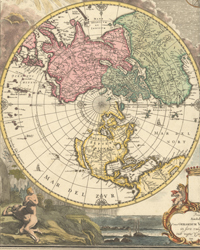
Old World Auctions (Sept 16): Lot 11. Blaeu's Superb World Map on a Polar Projection (1695) Est. $5,500 - $7,000
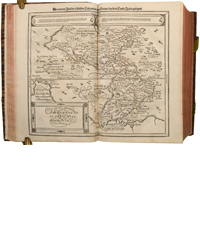
Old World Auctions (Sept 16): Lot 702. Munster's Largest 16th Century Edition, with Over 220 Woodcut Maps (1598) Est. $18,000 - $20,000
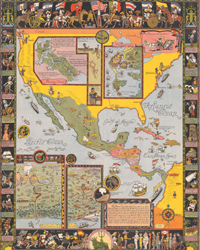
Old World Auctions (Sept 16): Lot 101. Rare Jo Mora "Carte" Showing a NYC-to-Seattle Route through Panama Canal (1933) Est. $900 - $1,100
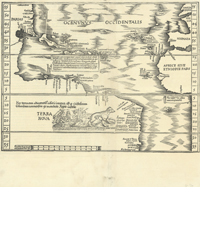
Old World Auctions (Sept 16): Lot 65. The Waldseemuller/Fries "Admiral's Map" (1541) Est. $8,000 - $9,500
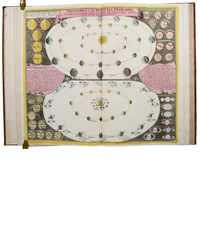
Old World Auctions (Sept 16): Lot 46. Contains all 30 Plates from Atlas Coelestis in Full Original Color (1742) Est. $16,000 - $18,000
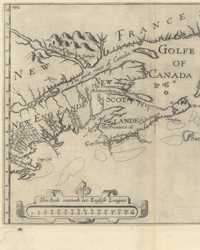
Old World Auctions (Sept 16): Lot 129. The First Map to Name New Scotland and Cape Cod (1625) Est. $8,000 - $9,500
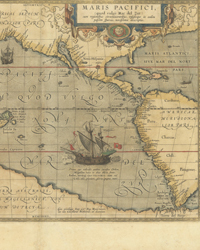
Old World Auctions (Sept 16): Lot 663. The First Printed Map Devoted to the Pacific in Full Contemporary Color (1589) Est. $7,500 - $9,000
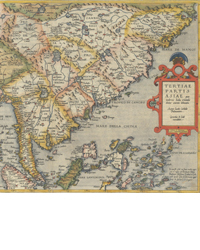
Old World Auctions (Sept 16): Lot 629. De Jode's Rare Map of Eastern Asia (1593) Est. $7,500 - $9,000
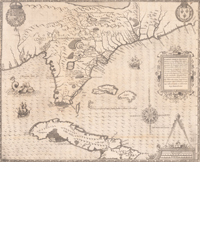
Old World Auctions (Sept 16): Lot 171. De Bry's Influential Map of Colonial North America (1591) Est. $11,000 - $13,000
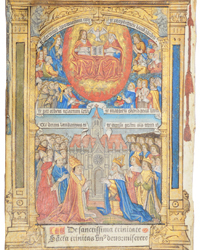
Old World Auctions (Sept 16): Lot 691. Superb Hand-Colored Image of the Holy Trinity (1502) Est. $800 - $950
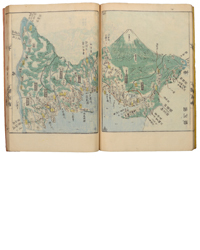
Old World Auctions (Sept 16): Lot 606. Important, Early Atlas of Japan with 75 Woodcut Maps in Printed Color (1837) Est. $2,000 - $2,300
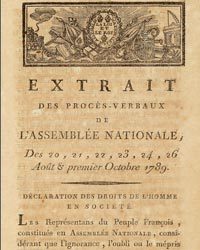
Koller, Sep. 16: FRANZÖSISCHE REVOLUTION - ASSEMBLÉE NATIONALE - Extrait des Procès-Verbaux de L'Assemblée Nationale, Des 20, 21, 22, 23, 24, 26 Août & premier Octobre 1789.
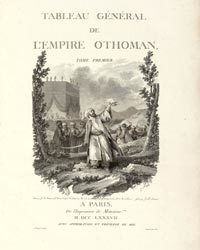
Koller, Sep. 16: MOURADJA D'OHSSON, IGNACE. Tableau général de l'Empire Othoman, divisé en deux parties dont l'une comprend la Législation Mahométane, l'autre l'histoire de l'Empire Othoman [... ]
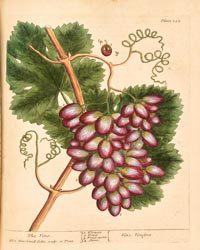
Koller, Sep. 16: BOTANIK - Blackwell, Elisabeth. A curious herbal, containig five hundred cuts, of the most useful plants, which are now used in the practice of physick.
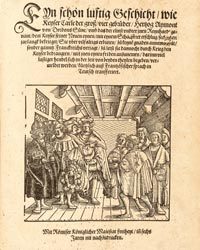
Koller, Sep. 16: HAIMONSKINDER – Eyn schön lustig Geschicht, wie Keyser Carle der groß, vier gebrüder, Hertzog Aymont von Dordons Süne [...]
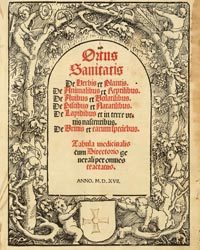
Koller, Sep. 16: KRÄUTERBÜCHER - HORTUS SANITATIS - [H]ortus Sanitatis. De herbis et plantis. De animalibus et reptilibus. De avibus et volatilibus. De piscibus et natalibus…
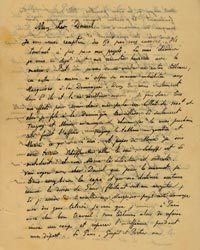
Koller, Sep. 16: GAUGUIN, PAUL, MALER (1848-1903). Eigenhändiger Brief mit Unterschrift und Couvert. An den Künstler und Freund Daniel de Monfreid in Paris.
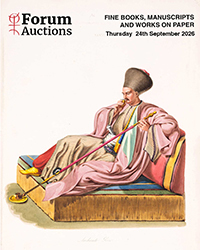
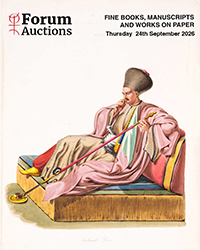
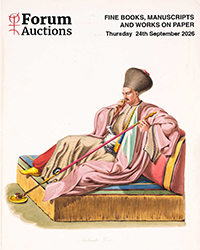
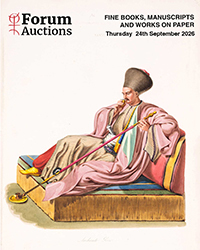
Forum Auctions Fine Books, Manuscripts and Works on Paper 24th September 2026
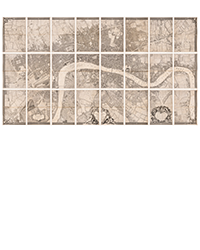
Forum, Sep. 24:A Plan of the Cities of London and Westminster and Borough of Southwark, 1746 [bound with] A Plan of the Cities of London and Westminster, [c.1755]. £30,000 - £50,000
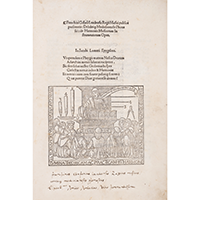
Forum, Sep. 24: Gafurius (Franchinus). De Harmonia Musicorum Instrumentorum Opus, first edition, Milan, Gotarto da Ponte, 1518. £20,000 - £30,000
Forum, Sep. 24: Tolkien (J.R.R.) The Hobbit, first edition, first impression, 1937. £10,000 - £15,000
Forum Auctions Fine Books, Manuscripts and Works on Paper 24th September 2026
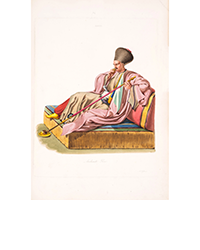
Forum, Sep. 24: Stackelberg (Otto Magnus v). Costumes et Usages des Peuples de la Grece Moderne, first edition, Rome, 1825. £15,000 - £20,000
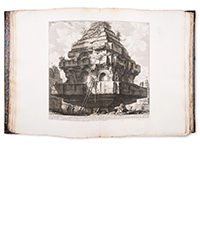
Forum, Sep. 24: Piranesi (Giovanni Battista). Le Antichita Romane, 4 vol., Rome, Bouchard and Gravier, 1756. £10,000 - £15,000
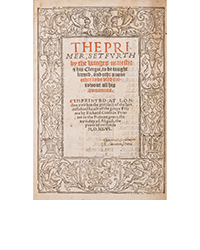
Forum, Sep. 24: Henry VIII's Primer.- Church of England.- The Primer, set foorth by the Kynges maiestie and his clergie…,, first edition, by Richard Grafton printer to the Princes grace, 1545; bound with 2 others, similar. £10,000 - £15,000
Forum Auctions Fine Books, Manuscripts and Works on Paper 24th September 2026
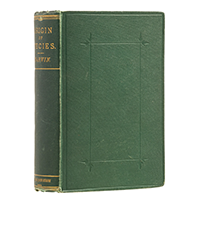
Forum, Sep. 24: Darwin (Charles). On the Origin of Species by Means of Natural Selection, fifth edition, ink inscription in the author's hand laid down to half-title, 1869. £6,000 - £8,000
Forum, Sep. 24: Siebold (P.F. von) J.G. Zuccarini and F.A.W. Miquel. Flora Japonica, 2 vol., first edition, Leiden, for the author, 1835-70. £6,000 - £8,000
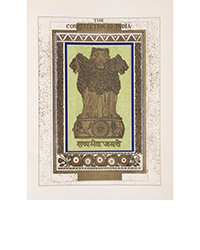
Forum, Sep. 24: Illuminated manuscript facsimile.- Constitution Of India (The), Dehra Dun, Survey of India Offices, [c. 1950]. £3,500 - £5,000
Forum Auctions Fine Books, Manuscripts and Works on Paper 24th September 2026
Forum, Sep. 24: Mao Tse-tung. Quotations of Chairman Mao, prototype edition, Shenyang, compiled and printed by the Political Department, Air Force Division of Shenyang Military Region, 1963. £3,000 - £4,000
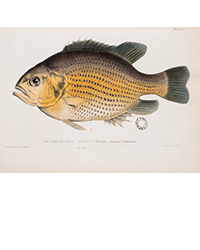
Forum, Sep. 24: Richardson (John). Fauna Boreali-Americana; or the Zoology of the Northern Parts of British America, 4 vol., first edition, Norwich, Josiah Fletcher, 1829-37. £4,000 - £6,000
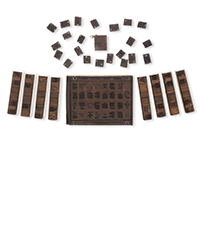
Forum, Sep. 24:Mite (The), the printer/publisher's own copy with the original type and printing blocks for all three of its editions (1891, 1893 & 1896), Grimsby, Ernest A. Robinson, 1891. £3,000 - £4,000.
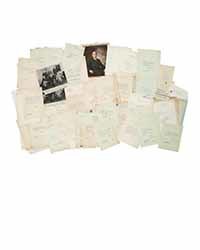
Leland Little, September 11: Kenneth Claiborne Royall (1894-1971), Large Archive with Letters from Harry S. Truman and Dwight D. Eisenhower.
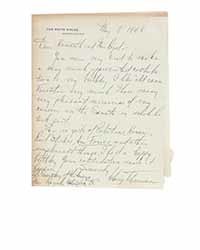
Leland Little, September 11: Harry S. Truman, Scarce Autograph Letter Signed as 33rd U.S. President.
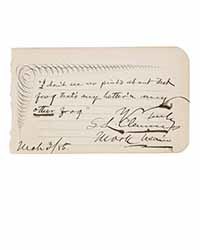
Leland Little, September 11: Mark Twain (Samuel Clemens) (1835-1910), Autograph Quotation Signed.
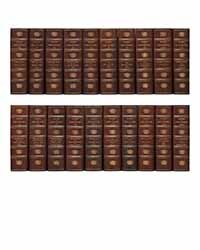
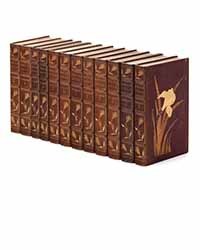
Leland Little, September 11:The History of North America, the Extremely Scarce Deluxe "Edition of the Presidents."
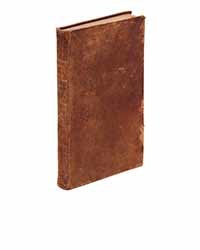
Leland Little, September 11: Scarce First Edition of Krafft's The American Distiller.
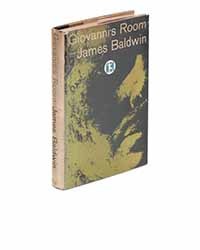
Leland Little, September 11: Inscribed First Edition of James Baldwin's Giovanni's Room.
Leland Little, September 11: A Signed Limited Edition of Love in the Time of Cholera.
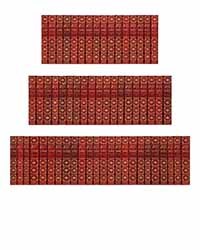
Leland Little, September 11: The Extremely Scarce Limited and Extra-Illustrated Edition of The Works of Charles Dickens.
Leland Little, September 11: A Beautifully Bound Limited Edition of Émile Zola's The Rougon-Macquart.
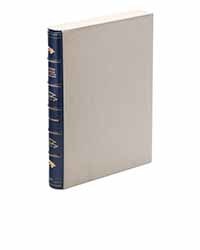
Leland Little, September 11: The Elaborately Bound and Extremely Scarce The Shakespeare Gallery.
Leland Little, September 11:Hunting, Hawking, Shooting, A Signed Limited Edition Four Volume Set.
Leland Little, September 11: Signed Limited Edition of Salmon-Salmon with a Chapter on Iceland.
Sotheby’s Original Film Posters 10 September 2026
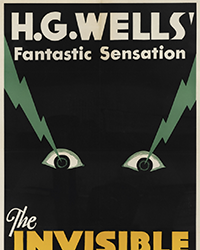
Sotheby’s, Sep. 10: The Invisible Man (1933). Extremely Rare US Leader Press One Sheet. £20,000 to £26,000.
Sotheby’s, Sep. 10: You Only Live Twice (1967). Italian Advance Quattro Fogli. £10,000 to £15,000.
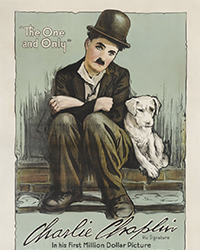
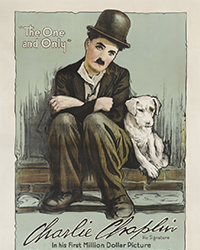
Sotheby’s, Sep. 10: A Dog's Life (1918). Extremely Rare US One Sheet. £50,000 to £70,000.
Sotheby’s, Sep. 10: La Belle et la Bête/Beauty and the Beast (1946). French Style A Grande. £12,000 to £18,000.
Sotheby’s, Sep. 10: Harry Potter and the Prisoner of Azkaban (2004). US Lenticular Prototype One Sheet. £10,000 to £15,000.
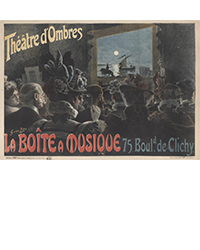
Sotheby’s, Sep. 10: Théâtre d’Ombres (1897). Exceptionally Rare French Poster. £8,000 to £12,000.