Researchers at the University of Southern Denmark's library made a startling discovery recently about three of their 16th and 17th century books. Their covers are filled with poison. To be exact, they contain serious concentrations of arsenic. The bindings are probably more recent, likely the 19th century. Still, there are no murderous motives here, no makings of an Agatha Christie mystery. Arsenic was regularly used for a variety of purposes in those days.
The discovery came innocently enough. Bookbinders in past times often used paper or velum from even older books and manuscripts in their bindings. Those older books were just trash then, but today, it is often the case that the books they bound are of less interest than the older material used in the bindings. They may hold lost or unique writings that fill gaps in human knowledge. Still, the libraries or other owners who hold these books don't necessarily want them torn apart. The answer is to use modern, x-ray technologies that enable researchers to look through the covers and read the ink on the pages used in those bindings.
In the case of the books at the University of Southern Denmark, researchers discovered there was old parchment used in the bindings. Unfortunately, the x-rays were having a hard time reaching the elements used in writing the letters. There was a wall of green paint in the way. The x-rays revealed that the green paint was made from arsenic. It is most likely what is known as "Paris green" or "emerald green,"a substance that was used both as paint and poison. That was an unfortunate combination as it led to the use of a poisonous substance on items regularly handled by humans.
Among its uses as paint, Paris green was commonly used in wallpaper in the 19th century. People didn't realize its dangers. Even as they became aware of its toxic qualities, the belief remained that as long as you didn't lick your wallpaper, you would be all right. Unfortunately, it is not quite that simple. Notably in England where the pigment was commonly used and damp weather is abundant, mold can grow on the paper. It releases a toxic gas which contains the wallpaper's arsenic. Children were literally dying in their bedrooms. It is one of the reasons why people believed drier weather to be healthier. They became ill in their wallpapered homes in a damp climate, but not where dry weather prevented mold from growing.
Other places where the pigment was used included paintings. If you have an impressionist painting with shiny green, you should refrain from licking it. Clean with a soft, dry brush instead. Various other products regularly touched by humans, who might then put their fingers in their mouths, included items that can be worn, or toys children used for play.
Meanwhile, Paris green had another use. The reason it was most commonly known as Paris rather than emerald green is they used to throw it in the Paris sewers to kill the rats. People regularly kept some in their homes for that purpose. Later on, it was commonly used as an insecticide on crops. It was sprayed on apples and other fruits to prevent worms. In America, it was used to control the native Colorado potato beetle, noted for destroying potato crops. It was used in spray to kill gypsy moths invading northern forests and disease-carrying mosquitoes. It was applied to kill moths that attack tobacco plants, giving you a chance to smoke as well as eat the substance.
So, why was Paris green used in a bookbinding? Obviously, not for its color, since however attractive it may be, the arsenic paint was buried under the covers. Most likely, it was applied to prevent insect damage. Just as it can keep worms from boring through apples, arsenic can keep bookworms from boring through books. Now all it needs is a layer of asbestos in the covers and the books can be safe from fire damage too.
The Danish library will now store its poisonous books in separate boxes in a ventilated cabinet. It also plans to digitize the books so they don't have to be physically handled. Of course, the computers and monitors you use to view those digitized copies are probably laden with toxic heavy metals such as lead, cadmium, and mercury. There is no escaping the environment. You pick your poison.
The complete story of the discovery by Jakob Povl Holck and Kaare Lund Rasmussen of the University of Southern Denmark can be found on the website of The Conversation.
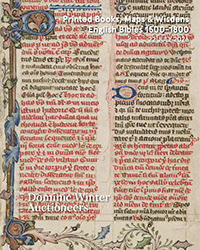
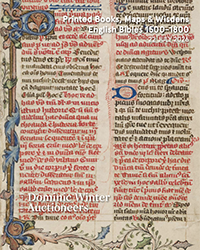
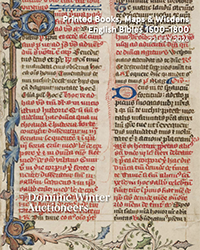
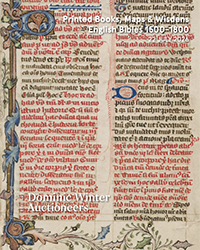
Dominic Winter Auctioneers Printed Books, Maps & Wisdens, English Bibles 1500-1800 22nd July 2026
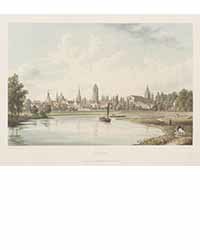
Dominic Winter, July 22: Lot 83 – Westall & Owen. Picturesque Tour of the River Thames, 1st edition, 1828. £2,000-3,000.
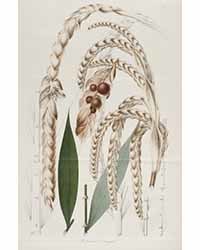
Dominic Winter, July 22: Lot 88 – Blume. Rumphia, Botanicae de plantis Indiae Orientalis, 1835-1848. £2,000-3,000.
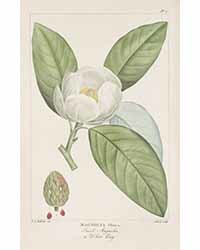
Dominic Winter, July 22: Lot 101 – Michaux. Histoire des arbres forestiers de l'Amérique septentrionale, 1810-1812. £700-1,000.
Dominic Winter Auctioneers Printed Books, Maps & Wisdens, English Bibles 1500-1800 22nd July 2026
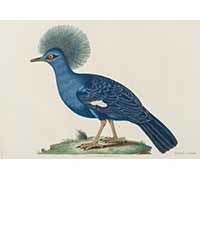
Dominic Winter, July 22: Lot 102 – Miller & Shaw. Cimelia Physica, 1796 [but c. 1816]. £3,000-5,000.
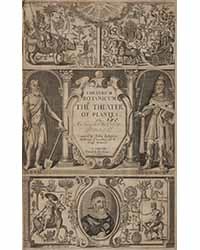
Dominic Winter, July 22: Lot 104 – Parkinson. Theatrum Botanicum: The Theater of Plants, London: Thomas Cotes, 1640. £800-1,200.
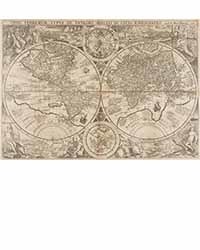
Dominic Winter, July 22: Lot 159 – Plancius. Orbis Terrarum..., double hemisphere map, 1594-99. £5,000-8,000.
Dominic Winter Auctioneers Printed Books, Maps & Wisdens, English Bibles 1500-1800 22nd July 2026
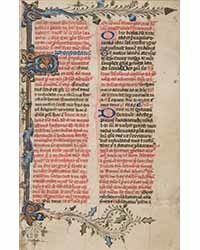
Dominic Winter, July 22: Lot 217 – Illuminated Medieval Manuscript. From a Breviary, 14th/15th c. £3,000-4,000.
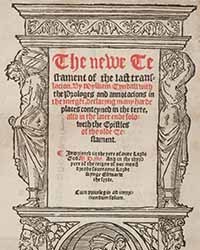
Dominic Winter, July 22: Lot 224 – The newe Testament … By Wylliam Tyndall…, 1549. £3,000-5,000.
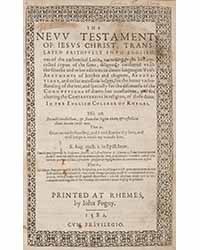
Dominic Winter, July 22: Lot 238 – Douay-Rheims Bible. 3 volumes, 1582/1609/1610. £7,000-10,000.
Dominic Winter Auctioneers Printed Books, Maps & Wisdens, English Bibles 1500-1800 22nd July 2026
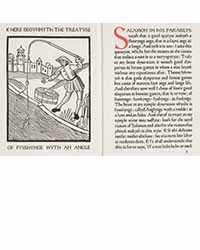
Dominic Winter, July 22: Lot 336 – Ashendene Press. A Treatyse of Fysshynge with an Angle, 1903. £1,000-1,500.
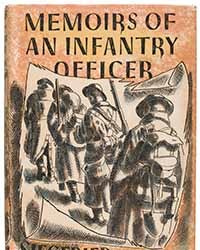
Dominic Winter, July 22: Lot 393 – Sassoon. Memoirs of an Infantry Officer, signed limited edition, 1931. £800-1,200.
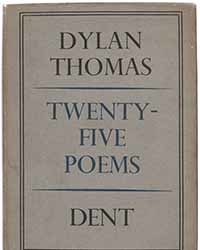
Dominic Winter, July 22: Lot 402 – Dylan Thomas. Twenty-Five Poems, 1st edition in d.j., 1936. £400-600.
Forum Auctions The 10th Anniversary Sale Fine Books, Manuscripts and Works on Paper July 16, 2026
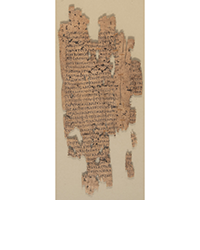
Forum, July 16: Inundation papyrus. P.Michael 4, the ‘Inundation papyrus’, a geographical account of the Nile near Canopus, in Greek, remains of two columns from a manuscript scroll on papyrus, Egypt, second century CE. £12,000-18,000
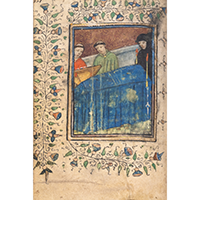
Forum, July 16: Book of Hours, use of Sarum, manuscript on vellum, 6 full-page miniatures, with famous Middle English inscriptions, Southern Netherlands for the English market, [c.1430]. £30,000-50,000
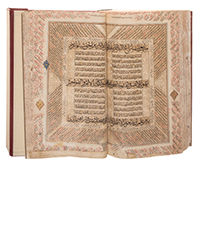
Forum, July 16: Qu'ran, Arabic manuscript on burnished, stencilled, and gold-flecked paper, 447ff., Sultanate Gujarat, Ahmadabad, [after 1411 but no later than 1442]. £15,000-20,000
Forum Auctions The 10th Anniversary Sale Fine Books, Manuscripts and Works on Paper July 16, 2026
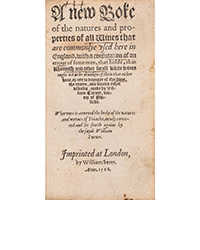
Forum, July 16: Turner (William). A New boke of the natures and properties of all wines that are commonly vsed here in England, rare first edition of the first English book on wine, By William Seres, 1568. £20,000-£30,000
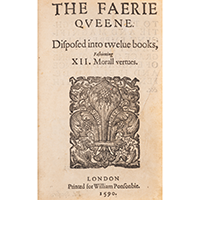
Forum, July 16: Spenser (Edmund). The Faerie Queene. first edition, Printed [by John Wolfe] for William Ponsonbie, 1590. £30,000-40,000
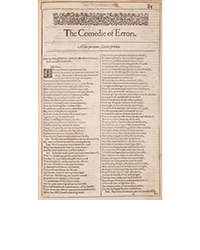
Forum, July 16: Shakespeare (William). The Comedie of Errors, extracted from the first folio, Isaac Jaggard and Edward Blount, 1623. £15,000-20,000
Forum Auctions The 10th Anniversary Sale Fine Books, Manuscripts and Works on Paper July 16, 2026
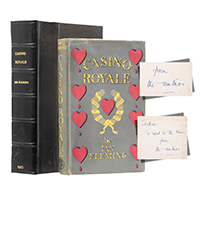
Forum, July 16: Fleming (Ian). Casino Royale, first edition, signed presentation inscription from the author, 1953. £40,000-60,000
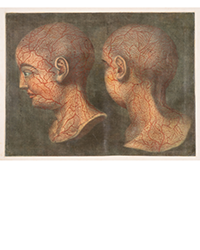
Forum, July 16: d'Agoty (Jacques-Fabien Gautier). Anatomie de la Tête, first edition, Paris, chez le Sieur Gautier, 1748. £10,000-15,000
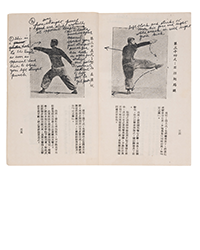
Forum, July 16: Martial Arts.- Lee (Bruce). 'Praying Mantis style' Kung Fu book, containing numerous annotations, diagrams and graphs in Bruce Lee's hand, c. 1960. £50,000-70,000
Forum Auctions The 10th Anniversary Sale Fine Books, Manuscripts and Works on Paper July 16, 2026
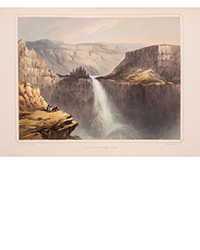
Forum, July 16: Warre (Capt. Henry James). Sketches in North America and the Oregon Territory, first edition, rare hand-coloured issue, 1848. £30,000-40,000
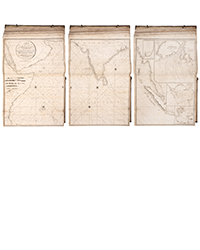
Forum, July 16: Norie (John William). The Marine Atlas, or Seaman's Complete Pilot for all the principal places in the known world..., 1826. £30,000-50,000
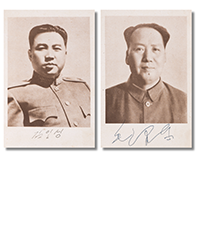
Forum, July 16: Mao Tse-tung.- Kim Il-sung.-[Note book for visitors from China to Korea], signed by Mao and Kim, [Beijing, 1954]. £10,000-15,000
Case Auctions 2026 Summer Auction August 1st and 2nd
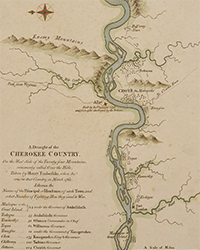
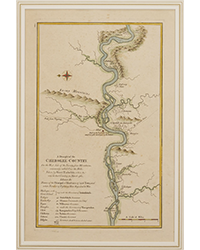
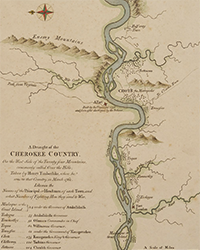
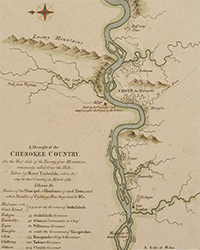
Case Antiques, Aug. 1: Timberlake, Henry: A DRAUGHT OF THE CHEROKEE COUNTRY on the West Side of the Twenty Four Mountains, Commonly Called "Over the Hills". $18,000 to $22,000.
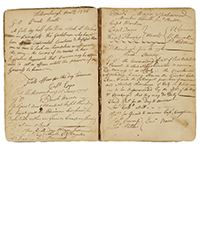
Case Antiques, Aug. 1: Manuscript orderly book detailing day to day activities of multiple Virginia regiments in the Continental Army during the Revolutionary,1776-1777. $7,000 to $8,000.
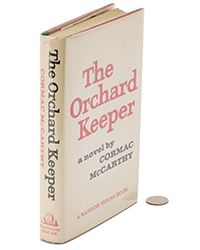
Case Antiques, Aug. 1: Cormac McCarthy, The Orchard Keeper, Random House, New York, 1965. Signed 1st Edition. $3,800 to $4,200.
Case Auctions 2026 Summer Auction August 1st and 2nd
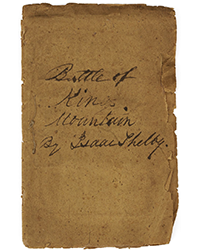
Case Antiques, Aug. 1: Battle of Kings Mountain Pamphlet by Isaac Shelby, April 1823, Signed. $1,800 to $2,200.
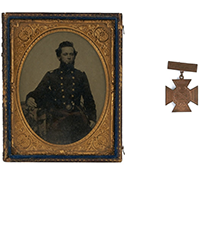
Case Antiques, Aug. 1: Large Tintype CSA Lt. Col. Thomas Coke Johnson, 19th GA, w/ Southern Cross, Book. $1,400 to $1,800.
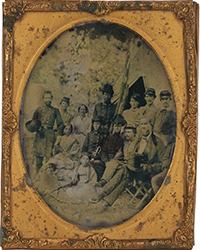
Case Antiques, Aug. 1: Rare Civil War Ambrotype, 19th GA Infantry with Johnson Family of GA. $800 to $1,200.
Case Auctions 2026 Summer Auction August 1st and 2nd
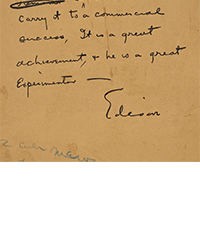
Case Antiques, Aug. 1: A signed note written by Thomas Alva Edison to an unknown recipient, in which he shares his thoughts on Guglielmo Marconi, regarded as the inventor of the radio. $800 to $1,200.
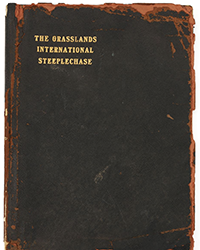
Case Antiques, Aug. 1: Rare 1931 TN Grasslands Steeplechase Book, Gallatin. $800 to $1,000.
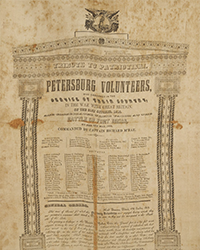
Case Antiques, Aug. 1: War of 1812 related Broadside, Petersburg Volunteers. $700 to $800.
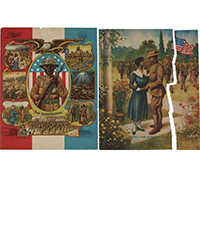
Case Antiques, Aug. 1: 2 World War I Posters, “Our Colored Fighters” and “No Slacker”. $800 to $1,000.