Rare Book Monthly

Articles - March - 2018 Issue

The Curtis Census – Locating Every Extant Copy of Edward Curtis' North American Indian

In 1906 Edward Curtis took on a massive project. Curtis was a self-taught photographer, a man with no more than an eighth grade education who managed to set up a studio in Seattle doing photographic portraits. Along the way, he met noted anthropologist George Bird Grinnell, who invited him along as a photographer on the Harriman expedition to Alaska in 1899. The following year, Grinnell asked him to visit a Blackfoot tribe in Montana. Curtis' fate was sealed.


On returning to Seattle, he began running exhibitions of his photography and publishing magazine articles. He next hatched the idea to produce a mammoth work on America's natives, both text and photographs. Such an undertaking was well beyond his means. Curtis approached someone for whom it was not, J. Pierpont Morgan, one of the richest men in the world. Morgan, who undoubtedly got many such requests, initially brushed him off, but with persistence, Curtis was able to secure $75,000 from Morgan. Indeed, Morgan pushed him to create "the most beautiful set of books ever published."


What Curtis produced lived up to Morgan's wishes. The New York Herald called it "the most ambitious enterprise in publishing since the production of the King James Bible." As Curtis explained in his prospectus, the work would consist of 20 volumes of text of approximately 350 pages each, containing 1,500 full-page photographic plates, many hand colored. There would also be 20 portfolios, each with thirty-six 12" x 16" photogravure plates, bringing the number of large photographs to 2,220. The sets would be printed on high quality paper with leather bindings. The regular set would sell for $3,000, the deluxe for $3,850. That amounts to roughly $75,000 and $100,000 today. The foreword was provided by another supporter of the project, the naturalist-conservationist President of the United States, Theodore Roosevelt.


The schedule, Curtis explained, would be three volumes a year, completing the project in seven years, or 1914. Curtis missed that target by a mile. The final volume was released in 1930, 23 rather than seven years later. The project dominated Curtis' life and dissipated his resources. His wife divorced him as he was away for so long. The stock market crash made it impossible to sell more once the project was completed. By 1930, people didn't care much about Indians anymore anyway. His ex-wife sued him for alimony. He required hospitalization after a mental breakdown. He tried to write his memoirs, but they were never published. Curtis died in 1952, broke, he and his work essentially forgotten. It would take another couple of decades before he gained the recognition he has today.


More recently, Tim Greyhavens has also taken on a massive project. Perhaps it is not quite so massive as the one undertaken by Curtis, but nonetheless, an enormous challenge of its own, especially since Morgan is no longer around to finance his venture. Greyhavens is trying to find the location of every copy of Curtis' The North American Indian still extant. Many can readily be located in libraries, but not all libraries have records easily available online, and those in private collections are much harder to track down. It has been close to a century now since they left Curtis' hands.


Curtis' plan was to produce 500 copies of his set. However, it is believed that no more than 300 were ever produced. Morgan died in 1913, and after that, funding became more difficult. As of this writing, Greyhavens has definitively located 134 copies. He has found historical references to another 170 copies, or 304 if totaled up. However, it is likely some of these are inaccurate, or possibly duplicates. Unfortunately, Curtis was stretched so thin with his work he did not keep records.


The sets were supposed to be numbered, with the highest number Greyhavens has found 474. However, there are some significant gaps in the numbering, along with an occasional duplicate, some unnumbered copies, and some with different numbers in different volumes, including one known to be the same as originally received, not a later combined set.


We asked Greyhavens what ever led him to get involved in a project of this magnitude. He responded by email, "I’m a data geek at heart, so when I first looked at the numbers (“only” 300 or so possible sets) I thought that it was really a small dataset to take on. I now realize that the number alone is misleading since there are so many intricacies to the publication. Nonetheless, I love a good mystery, and the game is afoot!"


It should be noted that in hindsight, Curtis gets some critical reviews. His purpose was noble in that he wanted to preserve what was still left of native culture now a century or more under the influence of non-indigenous society. He naturally saw Indians through the eyes of a white man, at times staging photographs to be consistent with what he believed to be accurate. Still, none of this diminishes the fact that he created an enormous trove of data and photography of America's natives earlier than anyone else on this level, preserving much of their history and culture that would otherwise have been lost.


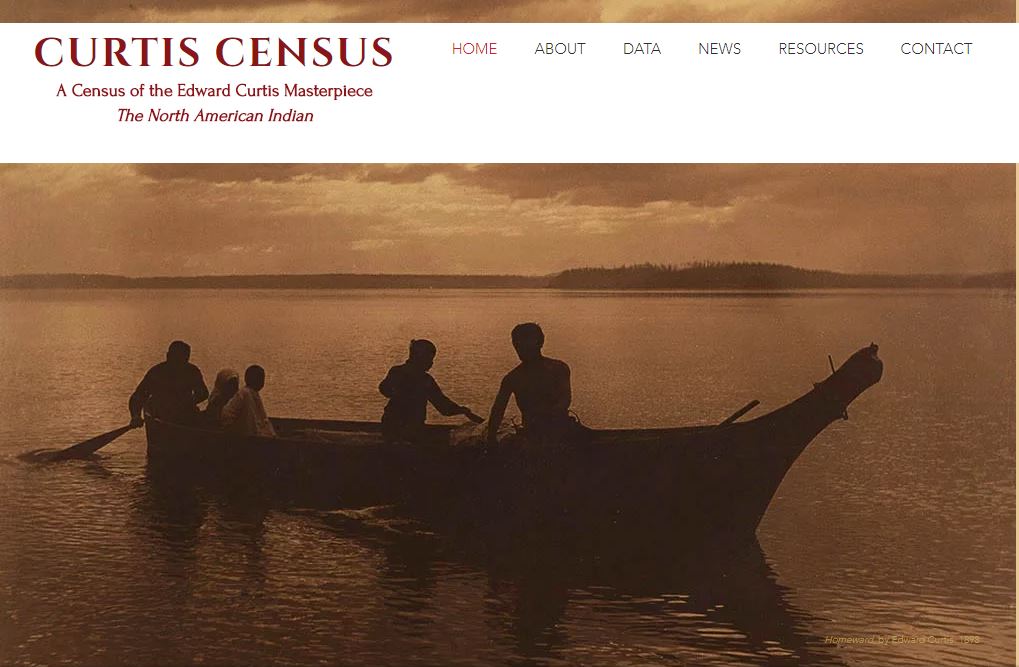
Greyhavens project is called the Curtis Census. There is a wonderful, detailed website he has created, www.curtiscensus.com. You will learn much about Curtis and his book from it. Most importantly, you will find a current census of the books he has found (and other copies he thinks still exist), with details such as where they are located, condition, original subscriber, original cost, and sequence number. He also has a favor to ask of those who share his enthusiasm for Curtis and his census. He is seeking volunteers for the project, and of particular note, if you are aware of a copy not on his census, such as one in private hands, he would especially like to hear. There is a contact form to reach him on the census website.


Link to the Curtis Census: www.curtiscensus.com

Rare Book Monthly

  • Aste Bolaffi, June 17-18: Galileo Galilei. Dialogo sopra i due massimi sistemi del mondo tolemaico, e copernicano. Firenze, 1632
    Aste Bolaffi, June 17-18: Saverio Manetti. Storia naturale degli uccelli. Firenze, 1771-76
    Aste Bolaffi, June 17-18: Fortunato Depero. Depero futurista. Rovereto, 1927
    Aste Bolaffi, June 17-18: Nicolas Visscher. Atlas minor sive totius orbis terrarum contracta delineat ex conatibus. Amsterdam, circa 1649-95
    Aste Bolaffi, June 17-18: Andreas Vesalius. Anatomia. Addita nunc. Antiquorum Anatome. Venezia, 1604
    Aste Bolaffi, June 17-18: Tristan Tzara and Salvador Dalì. Grains et Issues. Parigi, 1935
  • Bonhams, June 14-23: Franklin D. Roosevelt Presentation Gold Pocket Watch. Estimate: $20,000 - 30,000
    Bonhams, June 14-23: Presentation Copy of the First Issue of the Lincoln Douglas Debates Signed by Abraham Lincoln in Pencil to a Sangamon County Illinois Republican. Estimate: $150,000 - 250,000
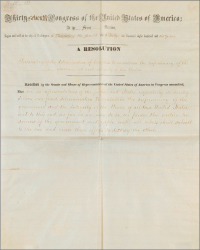
    Bonhams, June 14-23: A Senate Resolution Signed in the Tense Days After the Union's Humiliating Defeat at the First Battle of Bull Run. Estimate: $80,000 - $120,000
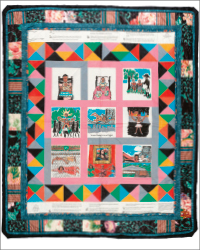
    Bonhams, June 14-23: Seven Passages to a Flight, an Artists Book with a Story Quilt by Faith Ringgold, the Publisher's Own Copy. Estimate: $80,000 - 120,000
    Bonhams, June 14-23: A New Charter for Virginia, A Response to the First Armed Rebellion in the American Colonies. Estimate: $15,000 - 25,000
    Bonhams, June 14-23: Earliest obtainable printing of the Bill of Rights. Estimate: $8,000 - 12,000
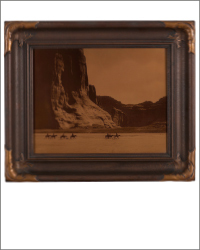
    Bonhams, June 14-23: Edward Curtis Orotone. Estimate: $7,000 - 9,000
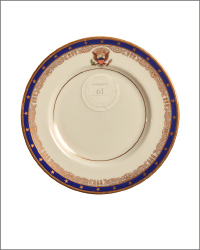
    Bonhams, June 14-23: Owned by Jacqueline Kennedy Onassis: A Butter or Dessert Plate from FDR's State Dinner Service. Estimate: $3,000 - 5,000
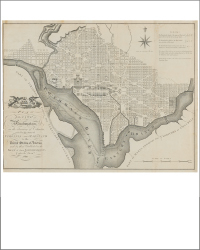
    Bonhams, June 14-23: An Early Large-Format Plan of the City of Washington. Estimate: $1,500 - 2,500
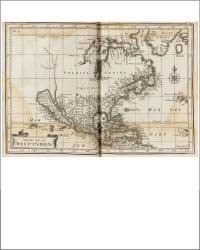
    Bonhams, June 14-23: Containing the First Map to Name the Hudson River. Estimate: $20,000 - 30,000
    Bonhams, June 14-23: America's First Major Novelist, a Complete Chapter in Autograph Manuscript by James Fenimore Cooper. Estimate: $15,000 - 20,000
    Bonhams, June 14-23: The Only Full-Length Book by Jefferson, with the Justly Famous Map. Estimate: $12,000 - 18,000
  • June 25, 2026
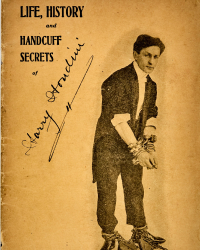
    Doyle, June 25: Houdini's biography, boldly signed. $3,000 to $5,000.
    Doyle, June 25: A volume from Abraham Lincoln's library, signed just before heading to Washington for his inauguration. $20,000 to $30,000.
    Doyle, June 25: A very early Confederate recruiting manual belonging to the chief commissary in Lee's Army. $600 to $800.
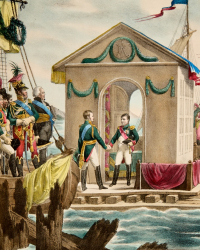
    Doyle, June 25: Rare hand-colored lithographs of the life of Napoleon. $20,000 to $30,000.
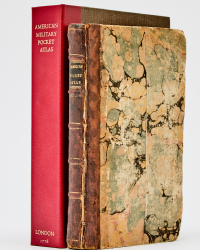
    Doyle, June 25: The "Holster Atlas" of the American Revolution. $5,000 to $8,000.
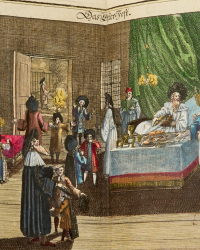
    Doyle, June 25: Jewish ceremonies in fine hand-colored engravings. $7,000 to $10,000.
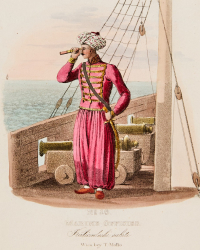
    Doyle, June 25: A very rare work on Turkish military costume. $1,000 to $1,500.
    June 25, 2026
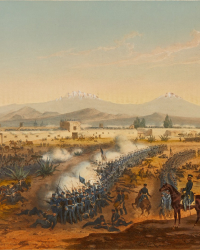
    Doyle, June 25: The most important illustrated work on the Mexican-American War. $10,000 to $15,000.
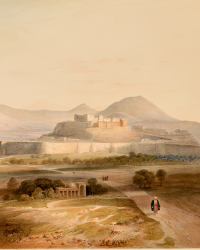
    Doyle, June 25: The finest illustrated book on Afghanistan. $10,000 to $15,000.
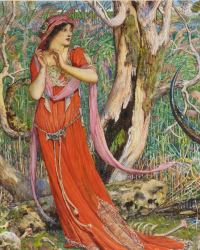
    Doyle, June 25: Henry Justice Ford St. George rescues the Princess from the horrible Dragon. $2,000 to $3,000.
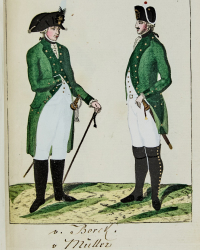
    Doyle, June 25: A rare work of Prussian Army uniforms under Frederick William II, with exquisite hand-colored engravings. $800 to $1,200.
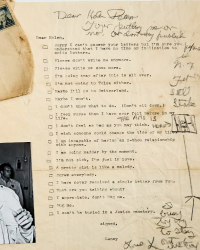
    Doyle, June 25: Lenny Bruce typed letter signed to a Village bohemian during his obscenity trials, with a manuscript note and drawing. $300 to $500.
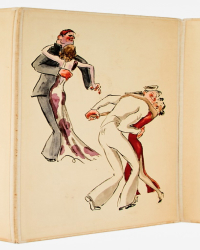
    Doyle, June 25: Schiff's scarce Shanghai Sketchbook. $300 to $500.
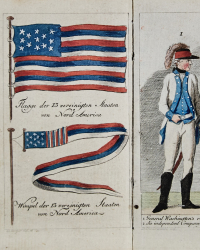
    Doyle, June 25: The first accurate published representation of the American flag. $2,000 to $4,000.
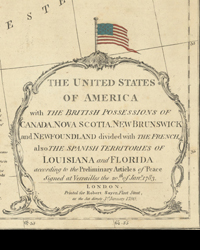
  • Old World Auctions (June 17): Lot 123. Celebrate 250 Years of Independence with Original Stars and Stripes (1790) Est. $1,400 - $1,700
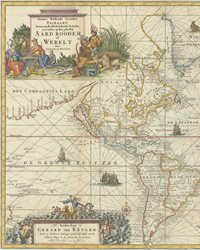
    Old World Auctions (June 17): Lot 20. Keulen's Spectacular Chart of the World Featuring California as an Island (1728) Est. $12,000 - $15,000
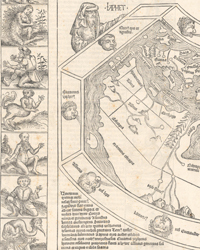
    Old World Auctions (June 17): Lot 42. Schedel's Ancient World Map with Fantastic Humanoid Creatures (1493) Est. $14,000 - $17,000
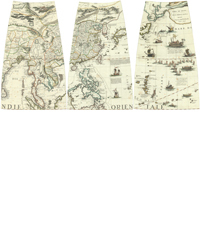
    Old World Auctions (June 17): Lot 591. Matching Set of 3 Stunning Globe Gores of Eastern Asia from Coronelli's 3.5 Foot Globe (1688) Est. $5,500 - $7,000
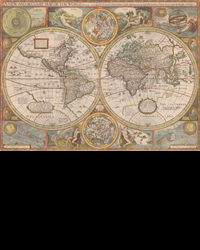
    Old World Auctions (June 17): Lot 9. Speed's Popular World Map with Allegorical Representations of the Elements (1651) Est. $14,000 - $17,000
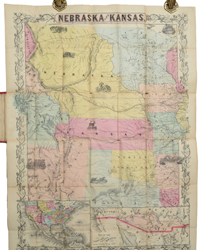
    Old World Auctions (June 17): Lot 168. First Separate Map of Kansas & Nebraska Territories (1854) Est. $5,500 - $7,000
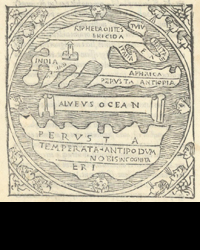
    Old World Auctions (June 17): Lot 43. Only Macrobius Map with Britain Attached to Europe (1515) Est. $800 - $950
    Old World Auctions (June 17): Lot 250. Rare Map of Boston and One of the Earliest Maps of the Revolutionary War (1775) Est. $2,000 - $2,300
    Old World Auctions (June 17): Lot 79. Schenk's Uncommon Map Featuring Two Figurative Title Cartouches (1696) Est. $1,200 - $1,500
    Old World Auctions (June 17): Lot 681. Hand-Colored Image of the Annunciation to the Shepherds (1502) Est. $800 - $950
  • Sotheby's Book Week
    2 June - 9 July
    Sotheby’s, June 25: Smith, Adam. The Wealth of Nations, on its 250th anniversary. $180,000 to $250,000.
    Sotheby’s, June 17: Fontana, Lucio. Concetto Spaziale. 1967. Leporello en papier doré. Bel exemplaire signé. €4,000 to $€,000.
    Sotheby’s, June 25: Fitzgerald, F. Scott. "So we beat on, boats against the current, borne back ceaselessly into the past”. $150,000 to $200,000.
    Sotheby’s, June 25: Washington, George (as First President). Washington decries “an ostentatious imitation, or mimickry of Royalty” in his Presidency. $250,000 to $500,000.
    Sotheby’s, June 17: Lope de Vega. Rare manuscrit autographe signé de la préface dédicatoire de "El Cardenal de Belen" (le cardinal de Bethléem), pièce composée en 1610. €40,000 to €60,000.

Article Search

Archived Articles