Alexander Hamilton: On Exhibit in New York and Online
- by Michael Stillman
none
Those freed from facing constant election battles would be freer to act in the interests of the nation and its people. It must be remembered that in those days, voting was primarily a privilege of the propertied, not a means for the “little guy" to assert his rights. Today these concerns don't seem so far fetched. Senators and congressmen to a large extent do effectively hold their positions for life, but the fundraising necessary to maintain their power forces them to become beholden to special interests. Just as Hamilton foresaw America's greatness, he could also foresee some of its weaknesses.
One more point needs to be made about Hamilton and his positions regarding the privileged versus the ordinary citizens. Hamilton has been adopted by people of more conservative leanings because of his strong support of the market system, a system which left unfettered by government restraint, can strongly favor the wealthy and powerful. In time, that would come to pass, but Hamilton lived in a different era. America was still an agrarian society. The powerful trusts Theodore Roosevelt would fight a century later did not yet exist. It was more likely to be wealthy landowners, people like Jefferson, who stood in the way of ordinary people's advancement. To Hamilton, the young capitalist system he embraced represented an opportunity for everyone, against a system stacked in favor of wealthy landowners. The ultimate irony is that the Virginia landowners, who spoke eloquently of freedom and democracy, were also slaveholders. Hamilton, on the other hand, was one of the founders of New York's abolitionist society. Hamilton's capitalistic views, like his abolitionist and pro-strong federal government opinions, were quite radical, not conservative, for his time.
The very existence of this exhibition by the New-York Historical Society was not without its controversy. The placement of the Gilder-Lehrman collection of Hamiltonia at the Historical Society led to debate over the role that the society should play. Some felt that focus on a national figure such as Hamilton was pulling the Society away from its role of preserving New York history. I, for one, am happy to see it playing a role in the rediscovery of the contributions of this man so many know only as the face on the $10 bill. For, while Hamilton was a national figure, this man born on the West Indies island of Nevis, was the quintessential New Yorker.
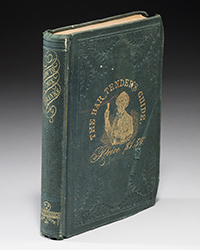
Heritage, Dec. 15: Jerry Thomas. How to Mix Drinks, or the Bon-Vivant's Companion, Containing Clear and Reliable Directions for Mixing All the Beverages Used in the United States…
Rare Book Hub is now mobile-friendly!
Bonhams, Dec. 8-18: Autograph Letter Signed ("Martinus Luther") to His Friend the Theologian Gerhard Wiskamp ("Gerardo Xantho Lampadario"). $100,000 - $150,000.
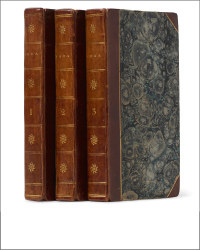
Bonhams, Dec. 8-18: An Exceptionally Fine Copy of Austenís Emma: A Novel in Three Volumes. $40,000 - $60,000.
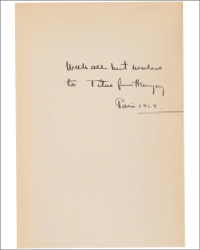
Bonhams, Dec. 8-18: Presentation Copy of Ernest Hemmingwayís A Farewell to Arms for Edward Titus of the Black Mankin Press. $30,000 - $50,000.
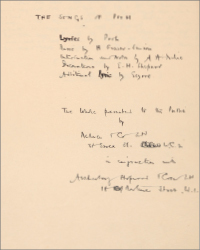
Bonhams, Dec. 8-18: Autograph Manuscript Signed Integrally for "The Songs of Pooh," by Alan Alexander. $30,000 - $50,000.
Bonhams, Dec. 8-18: Autograph Manuscript of "Three Fragments from Gˆtterd‰mmerung" by Richard Wagner. $30,000 - $50,000.
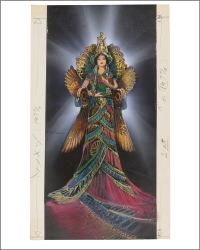
Bonhams, Dec. 8-18: Original Preliminary Artwork, for the First Edition of Snow Crash. $20,000 - $30,000.
Bonhams, Dec. 8-18: Autograph Letter Signed ("T.R. Malthus") to Economist Nassau Senior on Wealth, Labor and Adam Smith. $20,000 - $30,000.
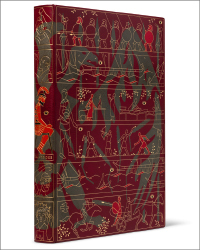
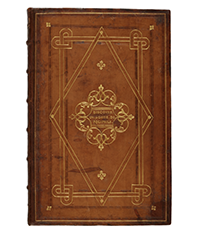
Bonhams, Dec. 8-18: History of the Peloponnesian War by Thucydides Finely Bound by Michael Wilcox. $20,000 - $30,000.
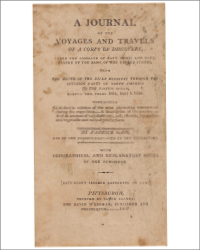
Bonhams, Dec. 8-18: First Edition of Lewis and Clark: Travels to the Source of the Missouri River and Across the American Continent to the Pacific Ocean. $8,000 - $12,000.
Bonhams, Dec. 8-18: Original Artwork for the First Edition of Neal Stephenson's Groundbreaking Novel Snow Crash. $100,000 - $150,000.
Bonhams, Dec. 8-18: A Complete Set Signed Deluxe Editions of King's The Dark Tower Series by Stephen King. $8,000 - $12,000.
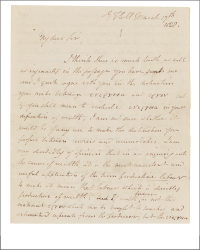
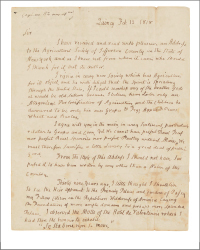
Bonhams, Dec. 8-18: Autograph Letter Signed ("John Adams") to James Le Ray de Chaumont During the Crucial Years of the Revolutionary War. $8,000 - $12,000.
Sotheby’s Book Week December 9-17, 2025
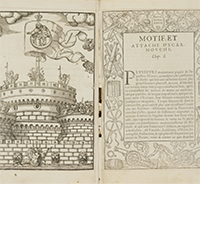
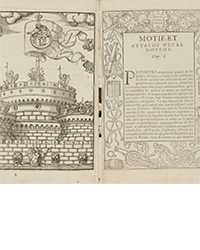
Sotheby’s, Dec. 17: Francesco Colonna. Hypnerotomachie, Paris, 1546, Parisian calf by Wotton Binder C for Marcus Fugger. €200,000 to €300,000.
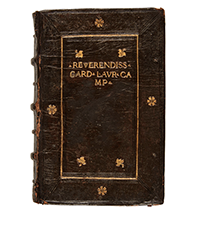
Sotheby’s, Dec. 17: Nausea. De principiis dialectices Gorgias, and other works, Venice, 1523, morocco gilt for Cardinal Campeggio. €3,000 to €4,000.
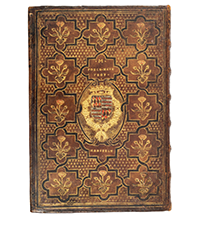
Sotheby’s, Dec. 17: Billon. Le fort inexpugnable de l'honneur, Paris, 1555, Parisian calf gilt for Peter Ernst, Graf von Mansfeld. €120,000 to €180,000.
Sotheby’s Book Week December 9-17, 2025
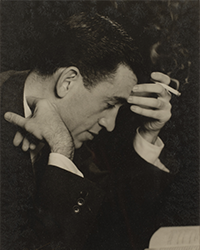
Sotheby’s, Dec. 16: Salinger, J.D. The Graham Family archive, including autographed letters, an inscribed Catcher, a rare studio photograph of the author, and more. $120,000 to $180,000.
Sotheby’s, Dec. 16: [Austen, Jane]. A handsome first edition of Sense and Sensibility, the author's first novel. $60,000 to $80,000.
Sotheby’s, Dec. 16: Massachusetts General Court. A powerful precursor to the Declaration of Independence: "every Act of Government … without the Consent of the People, is … Tyranny." $40,000 to $60,000.


![<b>Heritage, Dec. 15:</b> John Donne. <i>Poems, By J. D. With Elegies on the Author's Death.</i> London: M[iles]. F[lesher]. for John Marriot, 1633.](https://ae-files.s3.amazonaws.com/AdvertisementPhotos/8caddaea-4c1f-47a7-9455-62f53af36e3f.jpg "<b>Heritage, Dec. 15:</b> John Donne. <i>Poems, By J. D. With Elegies on the Author's Death.</i> London: M[iles]. F[lesher]. for John Marriot, 1633.")





![<b>Sotheby’s, Dec. 16:</b> [Austen, Jane]. A handsome first edition of <i>Sense and Sensibility,</i> the author's first novel. $60,000 to $80,000.](https://ae-files.s3.amazonaws.com/AdvertisementPhotos/9a74d9ff-42dd-46a1-8bb2-b636c4cec796.png "<b>Sotheby’s, Dec. 16:</b> [Austen, Jane]. A handsome first edition of <i>Sense and Sensibility,</i> the author's first novel. $60,000 to $80,000.")