
Rare Book Monthly

Articles - August - 2017 Issue

The New York Academy of Medicine is Set to Help You Pass Your Hogwarts O.W.L Exam

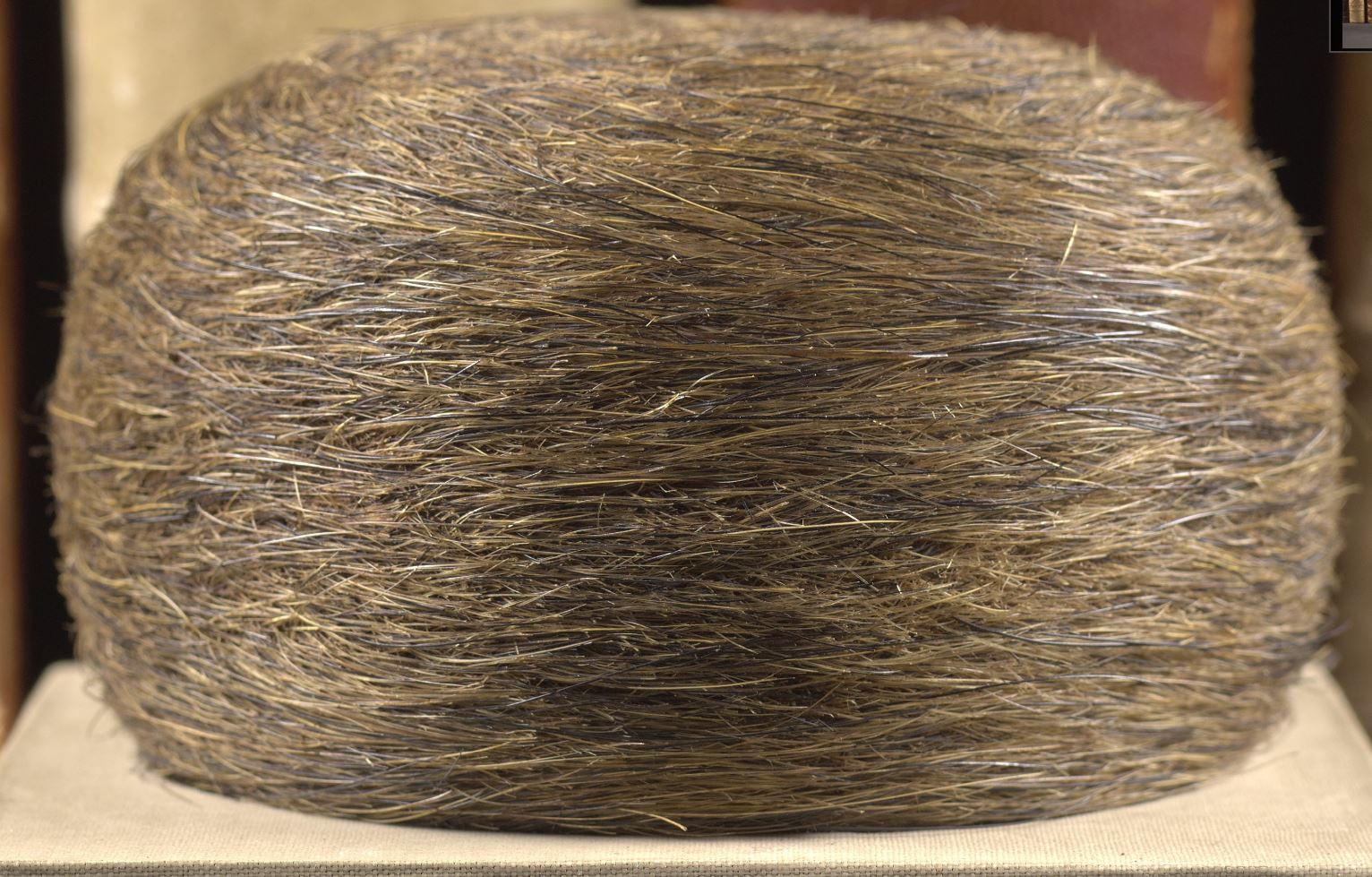
A bezoar will cleanse away poisons (most are more rock-like). From NYAOM collection.

A bezoar will cleanse away poisons (most are more rock-like). From NYAOM collection.

Books are a place where fantasy intersects with reality. There is perhaps no better example than the most popular children's book series of this century, the Harry Potter books. They are filled with fantastical magic, and yet, with a closer look, we find much of it is based on yesterday's science, or "science" if you will. The New York Academy of Medicine delved deeper into the series and discovered much of what is known to be fiction today was based on real beliefs from centuries ago. Author J. K. Rowling didn't just have a fertile imagination, she also had a substantial knowledge of history. The New York Academy of Medicine is revealing that connection in a new digital collection: How to Pass Your O.W.L.s at Hogwarts: A Prep Course.


The Academy has divided its "prep course" into seven sections: Care of Mystical Creatures, Defense Against the Dark Arts, Divination, Herbology, History of Magic, Potions, and Transfiguration. Within these categories, you can find images and descriptions of items and processes either mentioned in the Potter books or similar to them. For example, you can peer at a basilisk, a serpent of sorts described in Rowling's books, but not for the first time. The Academy shows us a "real" one presented by Ulisse Aldrovandi in the late 16th century. Where he came up with this creature is unclear, as nothing in nature looks much like it. In those days, such depictions were often created from tales by voyagers who traveled great distances exploring new worlds. Whether they made up their stories, heard tales from others, or just let their imaginations run wild is unclear, but these images were not created in the tradition of Dr. Seuss. Many were believed to be real.


Perhaps the most fascinating object displayed is the bezoar. That is Persian for "antidote." It was used to neutralize poisons. It makes its appearance in the Harry Potter books as an ingredient in potions, but the thing was actually used as an antidote many centuries ago. Once upon a time it was believed to cure any kind of poisoning. Essentially, a bezoar a hairball, a giant hairball your cat could not imagine in its worst nightmares. This thing is more baseball size and comes from the stomach of a cow. Why it was thought to be a cure-all is mystifying, since it wouldn't have taken much testing to realize it was a failure, but the scientific method was not in use in those days. People just reached conclusions and those conclusions, if from "experts," were accepted. This sounds incomprehensible, but then again, you can find a myriad of herbal and other supplements and medicines at drug and health food stores with no more scientific testing than was conducted on bezoars in the 16th century. That doesn't stop people from shelling out their money. Perhaps we have not come such a long way after all.


If you are facing your Ordinary Wizarding Level exams at Hogwarts or Harvard, go to the prep course being offered online at the New York Academy of Medicine. Selections have been carefully culled from their collections to assist you. The medical science described can't help but be honest and true. After all, it comes with the imprimatur of the New York Academy of Medicine. The course can be found by clicking here.
Rare Book Monthly

  • Swann
    Maps & Atlases, Natural History & Color Plate Books
    December 9, 2025
    Swann, Dec. 9: Lot 156: Cornelis de Jode, Americae pars Borealis, double-page engraved map of North America, Antwerp, 1593.
    Swann, Dec. 9: Lot 206: John and Alexander Walker, Map of the United States, London and Liverpool, 1827.
    Swann, Dec. 9: Lot 223: Abraham Ortelius, Typus Orbis Terrarum, hand-colored double-page engraved world map, Antwerp, 1575.
    Swann
    Maps & Atlases, Natural History & Color Plate Books
    December 9, 2025
    Swann, Dec. 9: Lot 233: Aaron Arrowsmith, Chart of the World, oversize engraved map on 8 sheets, London, 1790 (circa 1800).
    Swann, Dec. 9: Lot 239: Fielding Lucas, A General Atlas, 81 engraved maps and diagrams, Baltimore, 1823.
    Swann, Dec. 9: Lot 240: Anthony Finley, A New American Atlas, 15 maps engraved by james hamilton young on 14 double-page sheets, Philadelphia, 1826.
    Swann
    Maps & Atlases, Natural History & Color Plate Books
    December 9, 2025
    Swann, Dec. 9: Lot 263: John Bachmann, Panorama of the Seat of War, portfolio of 4 double-page chromolithographed panoramic maps, New York, 1861.
    Swann, Dec. 9: Lot 265: Sebastian Münster, Cosmographei, Basel: Sebastian Henricpetri, 1558.
    Swann, Dec. 9: Lot 271: Abraham Ortelius, Epitome Theatri Orteliani, Antwerp: Johann Baptist Vrients, 1601.
    Swann
    Maps & Atlases, Natural History & Color Plate Books
    December 9, 2025
    Swann, Dec. 9: Lot 283: Joris van Spilbergen, Speculum Orientalis Occidentalisque Indiae, Leiden: Nicolaus van Geelkercken for Jodocus Hondius, 1619.
    Swann, Dec. 9: Lot 285: Levinus Hulsius, Achtzehender Theil der Newen Welt, 14 engraved folding maps, Frankfurt: Johann Frederick Weiss, 1623.
    Swann, Dec. 9: Lot 341: John James Audubon, Carolina Parrot, Plate 26, London, 1827.
  • Sotheby’s
    Book Week
    December 9-17, 2025
    Sotheby’s, Dec. 11: Darwin and Wallace. On the Tendency of Species to form Varieties..., [in:] Journal of the Proceedings of the Linnean Society, Vol. III, No. 9., 1858, Darwin announces the theory of natural selection. £100,000 to £150,000.
    Sotheby’s, Dec. 11: J.K. Rowling. Harry Potter and the Philosopher's Stone, 1997, first edition, hardback issue, inscribed by the author pre-publication. £100,000 to £150,000.
    Sotheby’s, Dec. 11: Wolfgang Amadeus Mozart. Autograph sketchleaf including a probable draft for the E flat Piano Quartet, K.493, 1786. £150,000 to £200,000.
    Sotheby’s, Dec. 12: Hooke, Robert. Micrographia: or some Physiological Descriptions of Minute Bodies made by Magnifying Glasses. London: James Allestry for the Royal Society, 1667. $12,000 to $15,000.
    Sotheby’s, Dec. 12: Chappuzeau, Samuel. The history of jewels, first edition in English. London: T.N. for Hobart Kemp, 1671. $12,000 to $18,000.
    Sotheby’s, Dec. 12: Sowerby, James. Exotic Mineralogy, containing his most realistic mineral depictions, London: Benjamin Meredith, 1811, Arding and Merrett, 1817. $5,000 to $7,000.
  • Rare Book Hub is now mobile-friendly!

Article Search

Archived Articles