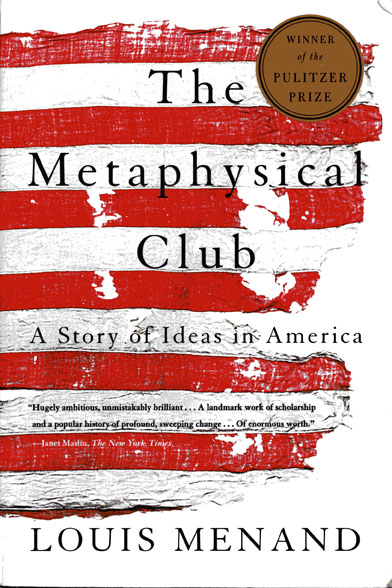
A remarkable historical perspective on changing ideas.
Review by Bruce McKinney
The Metaphysical Club was a short lived group in the early 1870s that met in Cambridge, Massachusetts "to discuss alternative intellectual, philosophical, and historical perspectives that in time became pragmatism, a movement of varying but associated theories and distinguished by the doctrine that the meaning of an idea or a proposition lies in its observable practical consequences." In other words, leave the ice box door open and the ice cream melts. We are all neo-pragmatists today because we have learned to see the results on television and jump to conclusions, with the aid of paid flacks that stalk the network sets to offer fifteen second interpretations. We no longer read or comprehend and we certainly no longer need to think. Stupid is in. America digests what TV barflies vomit and we prance about with these conclusions without having to understand anything. It is now enough just to begin with conclusions and select facts to fit. But it hasn't always been that way.
Two hundred years ago intellectuals focused on explaining the world they inhabited. The focus was on knowing and the brain was a keyboard of white keys. While life was short and uncertain religion filled in blanks. Explanation focused on experience and that which could not be explained, was consigned, with a leap of faith, to the "other side" where belief is the currency of the realm. The prevailing theory was essentially that a supernatural intelligence existed and that the universe was the result of an idea. The God you worshipped was its author. Scientific predication, the handmaiden of more modern theory, was only beginning to come on the scene.
Along the way advocates and apologists developed theories to explain why their kind were up and other people were down. Absent scientific certainty to extinguish bizarre theories many unsubstantiated ideas found adherents and support. Many such ideas became the waist around which the hula-hoops of explanation revolved - always with tiring effect. White people took comfort in Lamarck's theory of progressive adaptation which in simple language said acquired information is heritable. White people had more knowledge and passed it on thereby maintaining and increasing their advantage over other races. Oh well. No one with teenagers of any color is able to confirm this theory.
By the time Charles Darwin published his On the Origin of Species in 1859 the world of the explicables was quickly increasing and the unknowns and inexplicables, the residual left for religion to explain, shrinking. Darwin sought to establish that all living things evolve by natural selection effectively moving a significant percentage of hitherto imponderables into the science category. God wasn't yet dead but he was headed for under-employment.
Heritage, Dec. 15: Jerry Thomas. How to Mix Drinks, or the Bon-Vivant's Companion, Containing Clear and Reliable Directions for Mixing All the Beverages Used in the United States…
Rare Book Hub is now mobile-friendly!
Bonhams, Dec. 8-18: Autograph Letter Signed ("Martinus Luther") to His Friend the Theologian Gerhard Wiskamp ("Gerardo Xantho Lampadario"). $100,000 - $150,000.
Bonhams, Dec. 8-18: An Exceptionally Fine Copy of Austenís Emma: A Novel in Three Volumes. $40,000 - $60,000.
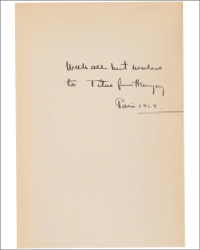
Bonhams, Dec. 8-18: Presentation Copy of Ernest Hemmingwayís A Farewell to Arms for Edward Titus of the Black Mankin Press. $30,000 - $50,000.
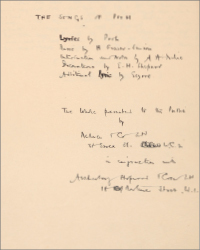
Bonhams, Dec. 8-18: Autograph Manuscript Signed Integrally for "The Songs of Pooh," by Alan Alexander. $30,000 - $50,000.
Bonhams, Dec. 8-18: Autograph Manuscript of "Three Fragments from Gˆtterd‰mmerung" by Richard Wagner. $30,000 - $50,000.
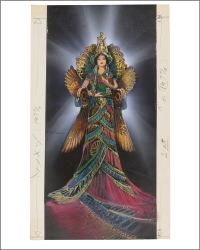
Bonhams, Dec. 8-18: Original Preliminary Artwork, for the First Edition of Snow Crash. $20,000 - $30,000.
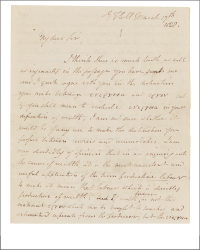
Bonhams, Dec. 8-18: Autograph Letter Signed ("T.R. Malthus") to Economist Nassau Senior on Wealth, Labor and Adam Smith. $20,000 - $30,000.
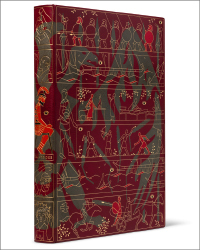
Bonhams, Dec. 8-18: History of the Peloponnesian War by Thucydides Finely Bound by Michael Wilcox. $20,000 - $30,000.
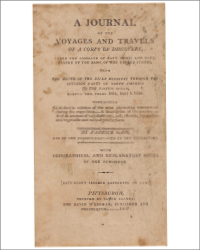
Bonhams, Dec. 8-18: First Edition of Lewis and Clark: Travels to the Source of the Missouri River and Across the American Continent to the Pacific Ocean. $8,000 - $12,000.
Bonhams, Dec. 8-18: Original Artwork for the First Edition of Neal Stephenson's Groundbreaking Novel Snow Crash. $100,000 - $150,000.
Bonhams, Dec. 8-18: A Complete Set Signed Deluxe Editions of King's The Dark Tower Series by Stephen King. $8,000 - $12,000.
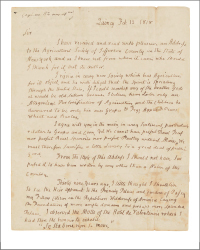
Bonhams, Dec. 8-18: Autograph Letter Signed ("John Adams") to James Le Ray de Chaumont During the Crucial Years of the Revolutionary War. $8,000 - $12,000.
Sotheby’s Book Week December 9-17, 2025
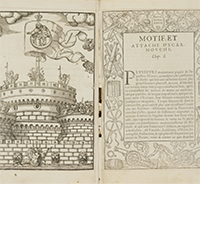
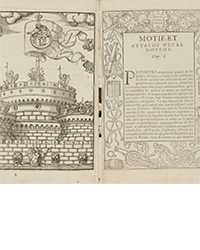
Sotheby’s, Dec. 17: Francesco Colonna. Hypnerotomachie, Paris, 1546, Parisian calf by Wotton Binder C for Marcus Fugger. €200,000 to €300,000.
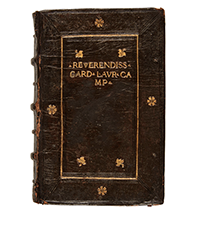
Sotheby’s, Dec. 17: Nausea. De principiis dialectices Gorgias, and other works, Venice, 1523, morocco gilt for Cardinal Campeggio. €3,000 to €4,000.
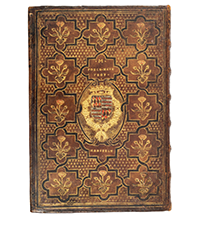
Sotheby’s, Dec. 17: Billon. Le fort inexpugnable de l'honneur, Paris, 1555, Parisian calf gilt for Peter Ernst, Graf von Mansfeld. €120,000 to €180,000.
Sotheby’s Book Week December 9-17, 2025
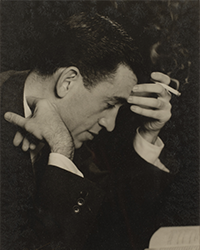
Sotheby’s, Dec. 16: Salinger, J.D. The Graham Family archive, including autographed letters, an inscribed Catcher, a rare studio photograph of the author, and more. $120,000 to $180,000.
Sotheby’s, Dec. 16: [Austen, Jane]. A handsome first edition of Sense and Sensibility, the author's first novel. $60,000 to $80,000.
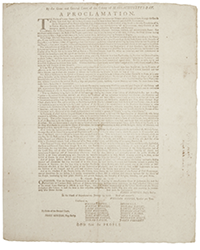
Sotheby’s, Dec. 16: Massachusetts General Court. A powerful precursor to the Declaration of Independence: "every Act of Government … without the Consent of the People, is … Tyranny." $40,000 to $60,000.

![<b>Heritage, Dec. 15:</b> John Donne. <i>Poems, By J. D. With Elegies on the Author's Death.</i> London: M[iles]. F[lesher]. for John Marriot, 1633.](https://ae-files.s3.amazonaws.com/AdvertisementPhotos/8caddaea-4c1f-47a7-9455-62f53af36e3f.jpg "<b>Heritage, Dec. 15:</b> John Donne. <i>Poems, By J. D. With Elegies on the Author's Death.</i> London: M[iles]. F[lesher]. for John Marriot, 1633.")






![<b>Sotheby’s, Dec. 16:</b> [Austen, Jane]. A handsome first edition of <i>Sense and Sensibility,</i> the author's first novel. $60,000 to $80,000.](https://ae-files.s3.amazonaws.com/AdvertisementPhotos/9a74d9ff-42dd-46a1-8bb2-b636c4cec796.png "<b>Sotheby’s, Dec. 16:</b> [Austen, Jane]. A handsome first edition of <i>Sense and Sensibility,</i> the author's first novel. $60,000 to $80,000.")