Media on both the right and left commend this book.
The book is actually a series of essays that can be read separately. Zakaria devotes about 50 pages to an interesting idea: that Democracy may be a stage that leads to other, potentially unsavory possibilities. He speaks of the decline of democracy through the death of central authority and speaks of American state referendums as evidence of this decline. To the extent that referendums determine funding policy elected officials are left to debate and argue only the funding details while being held accountable for government performance. He argues that government is weakened by moving financial decision making away from those whose job it is to administer the money. Think of it this way. The passengers on a ship vote and decide to determine the precise route their ship will take to New York. The Captain and the officers get to sound the alarms but not change course. This is an accurate way to see state government in California and a dangerous way to run government. He points to deteriorating roads and schools as evidence of this failing approach.
His alternative is a leap-of-faith to a separation of specific government powers that do not, in his view function as well when subject to the electoral process. He gives two examples on the Federal level where appointment insulates administrators from political pressure: the Federal Reserve chairmanship and the Supreme Court. He would like to see economic policy including tax policy moved into this more insulated environment. Tax policy should not be a political marketing tool. It's hard to argue with this.
He also discusses the breakdown of traditional government. He writes
"[Americans] think that something has gone fundamentally wrong with their country - specifically, with their political system. Simply put, most Americans have lost faith in their democracy. If you examine what lies underneath America's disquiet, you will find that the troubles of American democracy are similar to those being experienced by countries across the globe. The democratic wave has hit America hard, perhaps harder than any other Western country. Founded as a republic that believed in a balance between the will of the majority and the rights of the minority - or, more broadly, between liberty and democracy - America is increasingly embracing a simple-minded populism that values popularity and openness as the key measures of legitimacy. This ideology has necessitated the destruction of old institutions, the undermining of traditional authority, and the triumph of organized interest groups, all in the name of "the people." The result is a deep imbalance in the American system, more democracy but less liberty."
While this is a short book it is a slow read because every few pages there's an idea that needs to be considered carefully. Mr. Zakaria is to be commended for extraordinary insight.
The Future of Freedom is available in hardcover and paperback at bookstores around the world.
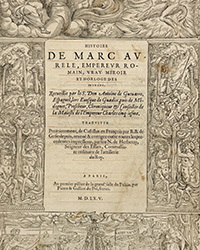
ALDE, Apr. 8: GUEVARA (ANTONIO DE). Histoire de Marc-Aurèle, Empereur Romain, vray miroir et horloge des Princes. Paris, Pierre et Galliot du Pré, frères, 1565. €3,000 to €4,000.
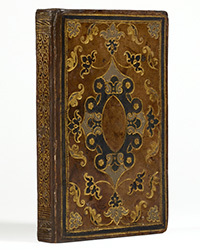
ALDE, Apr. 8: HEURES DE LA VIERGE. Horæ in laudem beatissimæ virginis Mariæ ad usum Romanum. Paris, Charles L'Angelier, 1556. €4,000 to €5,000.
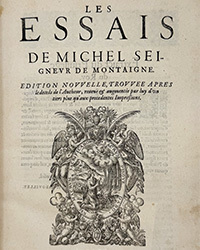
ALDE, Apr. 8: MONTAIGNE (MICHEL DE). Les Essais. Édition nouvelle, trouvée après le deceds de l'autheur… Paris, Abel L'Angelier, 1595. €6,000 to €8,000.
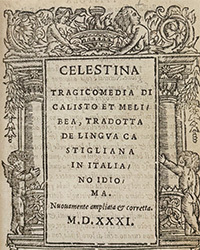
ALDE, Apr. 8: [ROJAS (FERNANDO DE)]. Celestina, tragicomedia di Calisto et Melibea, tradotta de lingua castigliana in italiano idioma… Venise, 1531. €2,000 to €3,000.
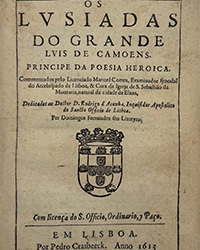
ALDE, Apr. 8: CAMÕES (LUÍS DE). Os Lusiadas. Lisbonne, Pedro Crasbeeck, 1613. €2,000 to €3,000.
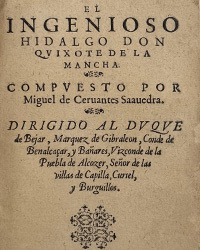
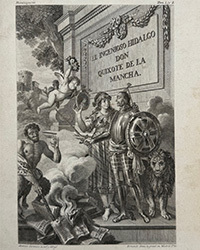
ALDE, Apr. 8: CERVANTES (MIGUEL DE). El Ingenioso hidalgo Don Quixote de la Mancha. Bruxelles, Roger Velpius & Huberto Antonio, 1611. €6,000 to €8,000.
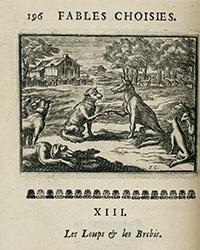
ALDE, Apr. 8: LA FONTAINE (JEAN DE). Fables choisies, mises en vers. Paris, Denys Thierry et Claude Barbin, 1678-1694. €6,000 to €8,000.
ALDE, Apr. 8: CERVANTES (MIGUEL DE). El Ingenioso hidalgo Don Quixote de la Mancha. Madrid, Joaquin Ibarra, 1780. €3,000 to €4,000.
ALDE, Apr. 8: DIDEROT (DENIS) ET JEAN LE ROND D'ALEMBERT. Encyclopédie, ou dictionnaire raisonné des sciences, des arts et des métiers. Paris, 1751-1765. €15,000 to €20,000.
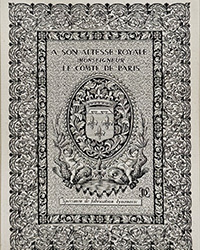
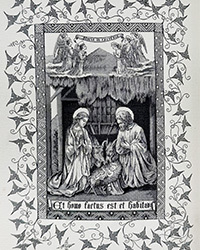
ALDE, Apr. 8: [LIVRE TISSÉ]. LAMARTINE (Alphonse de). Les Laboureurs. Poème tiré de Jocelyn… Lyon, J. A. Henry, 1883. €8,000 to €10,000.
ALDE, Apr. 8: [LIVRE TISSÉ]. Livre de prières tissé d'après les enluminures des manuscrits du XIVe au XVIe siècle. Lyon, [A. Roux], 1886. €5,000 to €6,000.
Sotheby’s Books, Manuscripts & Objects from Three Important Collections Open for Bidding 2-17 April
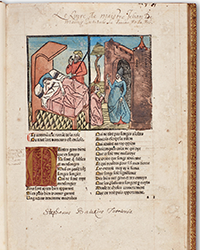
Sotheby’s, Apr. 2-17: [Guillaume de Lorris and Jean de Meun]. Le Roman de la Rose, [Geneva or Lyons, c.1481], first printed edition of the most important medieval French vernacular poem. £200,000 to £300,000.
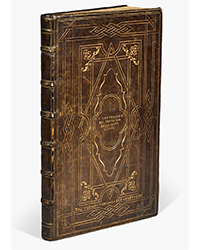
Sotheby’s, Apr. 2-17: Castiglione. Il libro del cortegiano. [Venice], April 1528, first edition, in a magnificent binding by Jean Picard for Jean Grolier. £100,000 to £150,000.
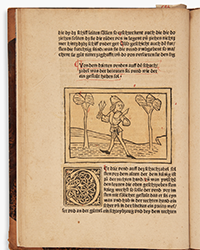
Sotheby’s, Apr. 2-17: Jacobus de Cessolis. Schachzabelbuch, Strasbourg, 1483, von der Lasa copy. £50,000 to £70,000.
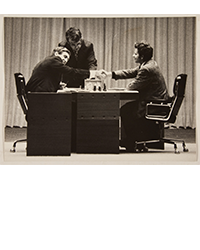
Sotheby’s, Apr. 2-17: World Championship, 1972. A collection of 84 press photographs of the famed match between Spassky and Fischer. £2,000 to £3,000.
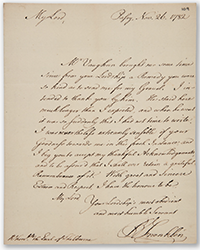
Sotheby’s, Apr. 2-17: Ben Franklin. Autograph letter signed, to Lord Shelburne, British Prime Minister, during peace negotiations, November 1782. £15,000 to £20,000.