
Rare Book Monthly
Articles - October - 2004 Issue
Henry Ford: Hell on Wheels
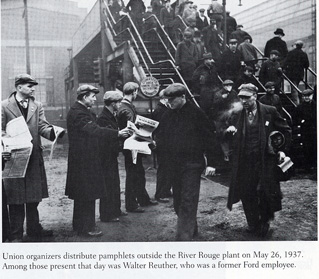
Union organzing in the 1930s.
He was very open about his manufacturing techniques. Competitors could study the new methodology, Fordism*, first hand. Neither did he patent advances that he believed would enhance safety. Other manufacturers were free to use them. As efficiency increased he lowered his selling prices and continued to reduce them almost every year well into the 1920s. If he was an effective automotive innovator he was also a devastating competitor and by the mid 1920s was selling more than 60% of all cars in America.
He was not an early advocate of the frequent styling changes that soon became institutionalized as the annual model change-over. And he famously offered his cars for years in any color so long as it was black. Neither was he attracted to sleek design. This would open the door for General Motors, in the 1930s, to build sleeker, mid-market cars in a variety of colors and to take from Ford market leadership. The early Fords were the VW Bugs of their day and Henry saw no need to annually revise them. GM sought to provide choices.
Henry Ford was an exceptional innovator but hardly perfect. You could take Henry out of the country but you couldn’t take the country out of Henry. Prejudice, the ever present social virus, found fertile soil in his soul and it would, as his role in the world became more public, become an embarrassment. He had an exceptional record of fairness toward blacks but was deeply infected with hatred for Jews. This would lead him, in the 1920s, into a very public anti-Semitism. He published The International Jew, a four volume anti-Semitic work as well as the Dearborn Independent, a weekly newspaper distributed to Ford dealers that published anti-Semitic material. Like Lindburgh he was later impressed with the reconstruction of Germany under Hitler but failed to understand that what was succeeding economically could also mask evil social policy. The certainty of his opinions that earlier made it possible for him to establish a unique approach to car manufacturing would in time deeply undermine his legacy. It is a stain that will not go away.
Ford Motors would a few years later, when called upon to support America's WWII industrial effort, set aside Mr. Ford's personal views and become a highly important supplier of Jeeps, tanks and aircraft. The skills that Ford has honed earlier, were when needed, provided with speed and efficiency in support of the United States. In doing so, the company moved beyond the man.
* Fordism is a term coined by Antonio Gramsci and used by critical analysts to designate a specifically 20th century corporate regime of mechanized production coupled with the mass consumption of standardized products. [www.lclark.edu/~soan221/fordism2.html]
Rare Book Monthly
-
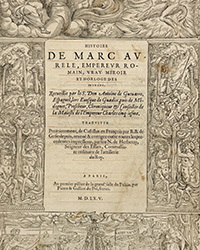
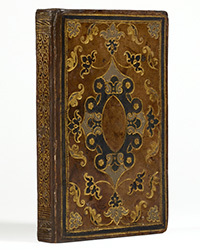
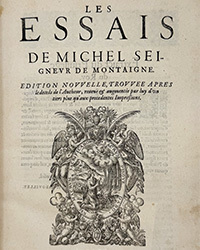
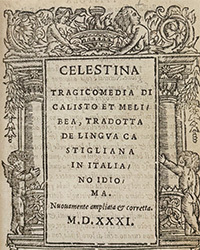
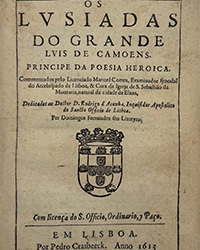
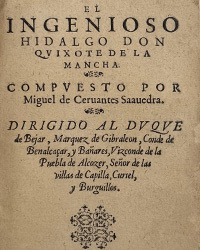
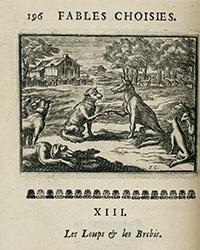
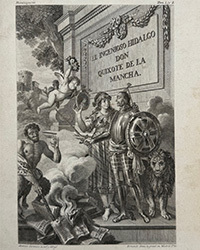
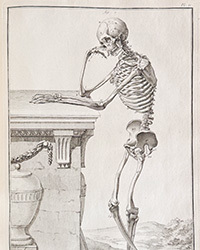
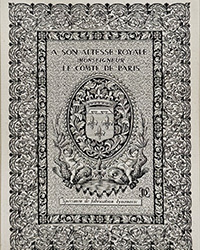
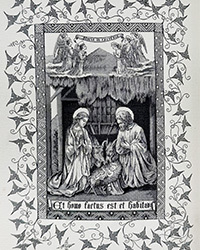 ALDE, Apr. 8: GUEVARA (ANTONIO DE). Histoire de Marc-Aurèle, Empereur Romain, vray miroir et horloge des Princes. Paris, Pierre et Galliot du Pré, frères, 1565. €3,000 to €4,000.ALDE, Apr. 8: HEURES DE LA VIERGE. Horæ in laudem beatissimæ virginis Mariæ ad usum Romanum. Paris, Charles L'Angelier, 1556. €4,000 to €5,000.ALDE, Apr. 8: MONTAIGNE (MICHEL DE). Les Essais. Édition nouvelle, trouvée après le deceds de l'autheur… Paris, Abel L'Angelier, 1595. €6,000 to €8,000.ALDE, Apr. 8: [ROJAS (FERNANDO DE)]. Celestina, tragicomedia di Calisto et Melibea, tradotta de lingua castigliana in italiano idioma… Venise, 1531. €2,000 to €3,000.ALDE, Apr. 8: CAMÕES (LUÍS DE). Os Lusiadas. Lisbonne, Pedro Crasbeeck, 1613. €2,000 to €3,000.ALDE, Apr. 8: CERVANTES (MIGUEL DE). El Ingenioso hidalgo Don Quixote de la Mancha. Bruxelles, Roger Velpius & Huberto Antonio, 1611. €6,000 to €8,000.ALDE, Apr. 8: LA FONTAINE (JEAN DE). Fables choisies, mises en vers. Paris, Denys Thierry et Claude Barbin, 1678-1694. €6,000 to €8,000.ALDE, Apr. 8: CERVANTES (MIGUEL DE). El Ingenioso hidalgo Don Quixote de la Mancha. Madrid, Joaquin Ibarra, 1780. €3,000 to €4,000.ALDE, Apr. 8: DIDEROT (DENIS) ET JEAN LE ROND D'ALEMBERT. Encyclopédie, ou dictionnaire raisonné des sciences, des arts et des métiers. Paris, 1751-1765. €15,000 to €20,000.ALDE, Apr. 8: [LIVRE TISSÉ]. LAMARTINE (Alphonse de). Les Laboureurs. Poème tiré de Jocelyn… Lyon, J. A. Henry, 1883. €8,000 to €10,000.ALDE, Apr. 8: [LIVRE TISSÉ]. Livre de prières tissé d'après les enluminures des manuscrits du XIVe au XVIe siècle. Lyon, [A. Roux], 1886. €5,000 to €6,000.
 -
Sotheby’s
Books, Manuscripts & Objects from Three Important Collections
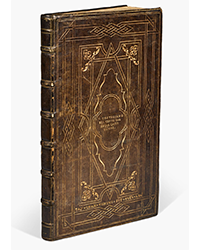
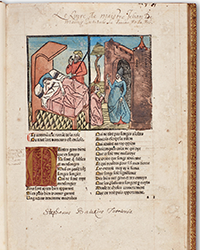
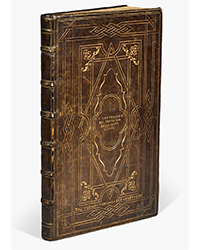
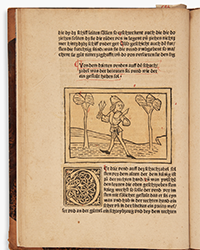
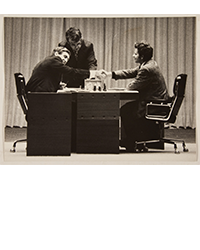
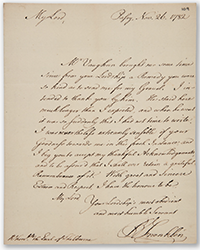
Open for Bidding 2-17 AprilSotheby’s, Apr. 2-17: [Guillaume de Lorris and Jean de Meun]. Le Roman de la Rose, [Geneva or Lyons, c.1481], first printed edition of the most important medieval French vernacular poem. £200,000 to £300,000.Sotheby’s, Apr. 2-17: Castiglione. Il libro del cortegiano. [Venice], April 1528, first edition, in a magnificent binding by Jean Picard for Jean Grolier. £100,000 to £150,000.Sotheby’s, Apr. 2-17: Jacobus de Cessolis. Schachzabelbuch, Strasbourg, 1483, von der Lasa copy. £50,000 to £70,000.Sotheby’s, Apr. 2-17: World Championship, 1972. A collection of 84 press photographs of the famed match between Spassky and Fischer. £2,000 to £3,000.Sotheby’s, Apr. 2-17: Ben Franklin. Autograph letter signed, to Lord Shelburne, British Prime Minister, during peace negotiations, November 1782. £15,000 to £20,000.