Rare Book Monthly

Articles - June - 2015 Issue

When Collecting Ends

At the end of the day

At the end of the day

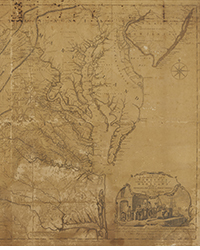
Recently at the New York Book Fair I saw two Albany maps that, although expensive, were very appealing.  I wanted to buy them.  As I often do when considering important material I asked others for their opinion and the endorsements were warm but somewhat cautionary.  This then inadvertently brought into focus what the final years of my collecting may entail, having to say no for no other reason than that there may not be enough time on the clock to overcome the markups I pay to buy.  Long ago I established the theory [and subsequently proved it] that the difference between what many dealers charge and what a collector can expect to recoup at auction ten years later is about a breakeven.  This is of course more complicated than simply paying asking prices and waiting ten years.  Establishing the correct current value is essential because dealer prices range from the occasionally seriously underpriced to the occasionally seriously overpriced.  Understanding actual value is therefore important when buying and the rate of price recovery about 30% per decade.  This means that purchases have to be carefully calculated if among the goals of the collector are both an impressive assembly and financial prudence.


Two collections I sent to auction in 2009 and 2010 to Bloomsbury [then in New York] and Bonhams today prospering in New York were very successful.  Between them they raised $7.3 million including about a $900,000 gain.  The average holding period was about 12 years, a few for most of 20 years and others for as few as 5.


So now I’m 68 and a high fraction and thinking these last collections of mine, all variations on a New York Hudson River theme, will be sold when I’m 75 +/- a year.  This means I no longer have the option to buy with the expectation of a 10-year hold to bring the price I sell for back into line with the price I pay.  And it’s unsettling because I enjoy collecting.  I have given advice to many to plan to sell in their lifetime, in particular not to expect that partners, widows, widowers, children or executers will do better.  That’s unlikely to happen because collecting is complex and takes years to accomplish.  A collector invests their time because they have the desire and no one else is going to feel the same way or invest the same energy so it is inescapably the collector’s responsibility to dispose.


There are of course many ways to do this; by gift [with a tax deduction], by sale to dealers [only the very best collections will qualify] or a library, or sell at auction in which case many decisions will be necessary.  Where to sell all or a part, whether to sell by category, whether to sell via a single house or several depending on their expertise, experience, following and interest; these are all factors to consider.


In other words, just when your knowledge and experience are peaking you have to begin to plan your withdrawal.  I suppose it’s like seeing a three-act play.  Even as the first and second acts are superb you can begin to feel the nag of regret for you know there are only so many acts – that this play will end.
Posted On: 2015-06-01 11:09
User Name: periodyssey

Hi Bruce,
This article surprises me. I like quoting your comment that the last words of a collector are "I'll take it." This sentiment, it seems to me, comes much closer to the heart of the collector than your cold calculus. The collector makes sense of history, gathering together objects that have a natural unity but have been dispersed by time. This is often an heroic feat of patience, perseverance, discrimination, and money. And enthusiasm! I suppose if all you care about as a collector is getting a return on value, then your emotionless (and suspect) math is worth considering. But if that is the case, I would suggest investing in stocks instead. Rich West/Periodyssey and Partners in Paper


Posted On: 2015-06-01 16:58
User Name: bookbones215

Thank you for your article. It is not a pleasant subject. I am a bookseller who started out as a book collector, now in my mid sixties. No kids, and a spouse who knows nothing about book values. Although my passion was ever hardly linked to the economics, my attention has been increasingly been drawn there. I would like to leave some kind of legacy for my wife in the event that I pass before her, which seems likely, looking at the Male vs female mortality rates. Anyway, although my collection is quite small and specific, I am interested in just compensation for the books I have...even though I didn't buy them "as an investment" per se, prudent dealings and cognizance of the marketplace has aided my purchasing decisions. When you say that it is up to collector to dispose of his/her collection, this hit a chord with me. The various venues available to me to sell presents a field I need to explore with care. I was quite surprised and pleased to see that the topic was up for discussion, and thanks again for your POV.


Posted On: 2015-06-02 16:44
User Name: Fattrad1

Bruce,

We booksellers will be anxiously awaiting some investment reporting from collectors, time weighted rate of return, diversified portfolios (genres), currency hedged collections.


Posted On: 2015-06-02 16:53
User Name: Fattrad1

Oh, I am short selling modern literature, predicting future declines, better dump those Gatsby's.


Posted On: 2015-06-02 21:06
User Name: greenbooks497

Great article. I’d love to hear the experiences of those collectors who, at the end of the collecting rainbow, decided to sell or auction their treasures. I’d be particularly interested to hear the delta between their perceived value of the collection and the actual return on the investment. The area that I collect is exceedingly narrow with a limited number of collectors. Many of us are friendly rivals for the same material (emphasis on the friendly). Releasing my rather large fish of a collection into this tiny pond of interested collectors would almost certainly depress prices during the time of the sale a quite sometime thereafter. My case is extreme given the specialist nature of the collection but in today’s interconnected world the risk of flooding a mirco-market (and hence shooting onesself in the financial foot) is very real, and significantly greater than in the pre-Internet era.


Rare Book Monthly

  • Rare Book Hub is now mobile-friendly!
  • Swann
    Maps & Atlases, Natural History & Color Plate Books
    December 9, 2025
    Swann, Dec. 9: Lot 156: Cornelis de Jode, Americae pars Borealis, double-page engraved map of North America, Antwerp, 1593.
    Swann, Dec. 9: Lot 206: John and Alexander Walker, Map of the United States, London and Liverpool, 1827.
    Swann, Dec. 9: Lot 223: Abraham Ortelius, Typus Orbis Terrarum, hand-colored double-page engraved world map, Antwerp, 1575.
    Swann
    Maps & Atlases, Natural History & Color Plate Books
    December 9, 2025
    Swann, Dec. 9: Lot 233: Aaron Arrowsmith, Chart of the World, oversize engraved map on 8 sheets, London, 1790 (circa 1800).
    Swann, Dec. 9: Lot 239: Fielding Lucas, A General Atlas, 81 engraved maps and diagrams, Baltimore, 1823.
    Swann, Dec. 9: Lot 240: Anthony Finley, A New American Atlas, 15 maps engraved by james hamilton young on 14 double-page sheets, Philadelphia, 1826.
    Swann
    Maps & Atlases, Natural History & Color Plate Books
    December 9, 2025
    Swann, Dec. 9: Lot 263: John Bachmann, Panorama of the Seat of War, portfolio of 4 double-page chromolithographed panoramic maps, New York, 1861.
    Swann, Dec. 9: Lot 265: Sebastian Münster, Cosmographei, Basel: Sebastian Henricpetri, 1558.
    Swann, Dec. 9: Lot 271: Abraham Ortelius, Epitome Theatri Orteliani, Antwerp: Johann Baptist Vrients, 1601.
    Swann
    Maps & Atlases, Natural History & Color Plate Books
    December 9, 2025
    Swann, Dec. 9: Lot 283: Joris van Spilbergen, Speculum Orientalis Occidentalisque Indiae, Leiden: Nicolaus van Geelkercken for Jodocus Hondius, 1619.
    Swann, Dec. 9: Lot 285: Levinus Hulsius, Achtzehender Theil der Newen Welt, 14 engraved folding maps, Frankfurt: Johann Frederick Weiss, 1623.
    Swann, Dec. 9: Lot 341: John James Audubon, Carolina Parrot, Plate 26, London, 1827.
  • SD Scandinavian Art & Rare Book Auctions
    The Odfjell Collection
    Polar – History – Ornithology – Colour Plate Books
    Ending December 4th
    Scandinavian Art & Rare Books Auctions, Dec. 4: ROALD AMUNDSEN: «Sydpolen» [ The South Pole] 1912. First edition in jackets and publisher's slip case.
    Scandinavian Art & Rare Books Auctions, Dec. 4: AMUNDSEN & NANSEN: «Fram over Polhavet» [Farthest North] 1897. AMUNDSEN's COPY!
    Scandinavian Art & Rare Books Auctions, Dec. 4: ERNEST SHACKLETON [ed.]: «Aurora Australis» 1908. First edition. The NORWAY COPY.
    Scandinavian Art & Rare Books Auctions, Dec. 4: ERNEST SHACKLETON: «The heart of the Antarctic» + SUPPLEMENT «The Antarctic Book», 1909.
    Scandinavian Art & Rare Books Auctions, Dec. 4: SHACKLETON, BERNACCHI, CHERRY-GARRARD [ed.]: «The South Polar Times» I-III, 1902-1911.
    SD Scandinavian Art & Rare Book Auctions
    The Odfjell Collection
    Polar – History – Ornithology – Colour Plate Books
    Ending December 4th
    Scandinavian Art & Rare Books Auctions, Dec. 4: [WILLEM BARENTSZ & HENRY HUDSON] - SAEGHMAN: «Verhael van de vier eerste schip-vaerden […]», 1663.
    Scandinavian Art & Rare Books Auctions, Dec. 4: TERRA NOVA EXPEDITION | LIEUTENANT HENRY ROBERTSON BOWERS: «At the South Pole.», Gelatin Silver Print. [10¾ x 15in. (27.2 x 38.1cm.) ].
    Scandinavian Art & Rare Books Auctions, Dec. 4: ELEAZAR ALBIN: «A natural History of Birds.» + «A Supplement», 1738-40. Wonderful coloured plates.
    Scandinavian Art & Rare Books Auctions, Dec. 4: PAUL GAIMARD: «Voyage de la Commision scientific du Nord, en Scandinavie, […]», c. 1842-46. ONLY HAND COLOURED COPY KNOWN WITH TWO ORIGINAL PAINTINGS BY BIARD.
    Scandinavian Art & Rare Books Auctions, Dec. 4: JAMES JOYCE: «Ulysses», 1922. FIRST EDITION IN ORIGINAL WRAPPERS.
  • Sotheby’s
    Book Week
    December 9-17, 2025
    Sotheby’s, Dec. 11: Darwin and Wallace. On the Tendency of Species to form Varieties..., [in:] Journal of the Proceedings of the Linnean Society, Vol. III, No. 9., 1858, Darwin announces the theory of natural selection. £100,000 to £150,000.
    Sotheby’s, Dec. 11: J.K. Rowling. Harry Potter and the Philosopher's Stone, 1997, first edition, hardback issue, inscribed by the author pre-publication. £100,000 to £150,000.
    Sotheby’s, Dec. 11: Wolfgang Amadeus Mozart. Autograph sketchleaf including a probable draft for the E flat Piano Quartet, K.493, 1786. £150,000 to £200,000.
    Sotheby’s, Dec. 12: Hooke, Robert. Micrographia: or some Physiological Descriptions of Minute Bodies made by Magnifying Glasses. London: James Allestry for the Royal Society, 1667. $12,000 to $15,000.
    Sotheby’s, Dec. 12: Chappuzeau, Samuel. The history of jewels, first edition in English. London: T.N. for Hobart Kemp, 1671. $12,000 to $18,000.
    Sotheby’s, Dec. 12: Sowerby, James. Exotic Mineralogy, containing his most realistic mineral depictions, London: Benjamin Meredith, 1811, Arding and Merrett, 1817. $5,000 to $7,000.

Article Search

Archived Articles