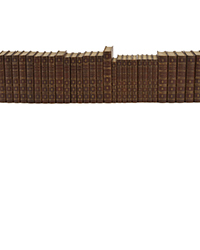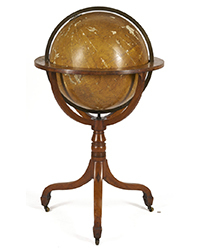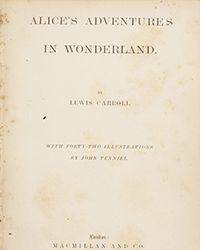
It was, not so long ago, established thinking that book collections, with some exceptions, would be a collection of books. This is the way it was for generations. The basic unit of book collections was of course the book, and over the past 150 years impressive, increasingly complete bibliographies were created and revised to reflect ever-broadening perspective. The book field and all its component parts became knowable.
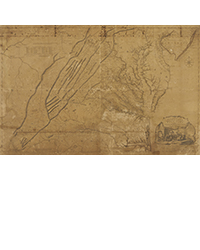
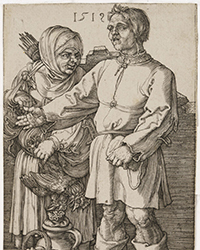
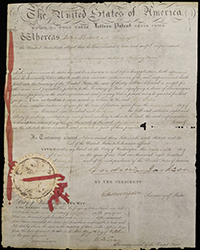
Books however were never the exclusive component of book collections, only their most common part. Manuscripts also found a place, as did maps, objects, and ephemera. But the bibliographic research documentation and focus of the dominant selling venues were, in the works on paper category, mainly books and these other categories much thinner and in some cases almost non-existent.
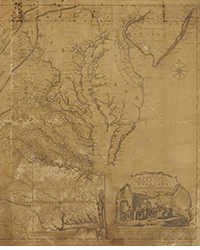
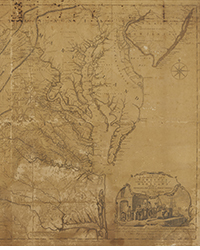
This circumstance kept books at the center, the best known and best understood component in the works on paper category. But these other portions were equally appealing, if not so well documented, and in time saw their sectors become important categories; for example, maps becoming collectible objects on their own.
Twenty-years ago, the Internet began to change the collecting game, first with the emergence of thousands of online sellers, and later with the development of what have become the premier selling platforms—eBay and Abe Books. For the first time, less appreciated and often less valuable, material began to be easily found and widely seen. Now two decades later, much that was once invisible has become visible, and we are learning that subject collecting rather than book collecting exclusively is increasingly the natural focus for many collectors. And it’s a huge change, - made possible by the minutia within collecting subjects that is now available. The impact has grown to be astounding. This almost always low level material, much of it ephemera and pamphlets, has made it possible for collectors and institutions to refocus their purchases [and their collecting] toward something they increasingly prefer—intense personal collecting—and something very different from pure book collecting.
For myself, my interest has been in the area where I grew up, generally the Hudson Valley, and Ulster County, mid-way between New York City and Albany, specifically. For me, this has meant an intensification of collecting I never thought would be possible.
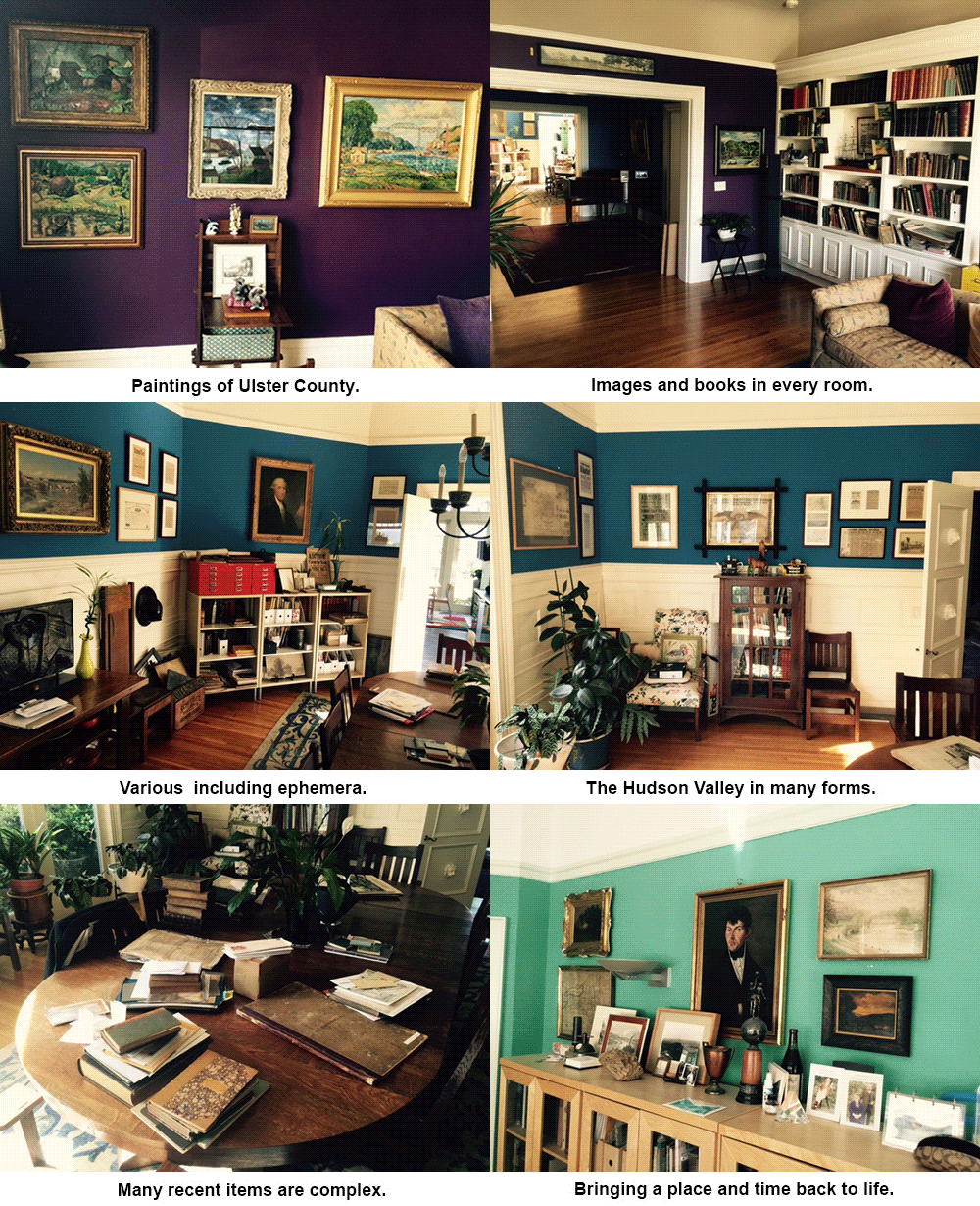
My collection, which holds about 4,000 items, is now a subject broken down into sub-categories. There are paintings, some of them valuable, all of them relevant to an Ulster County collection. There is a set of watercolors by Frederick Copley, some 160 of them painted between 1848 and 1858, of scenes along the Hudson River and inland along the emerging rail lines, photographic in their dimensional accuracy, a timeless picture of a world long gone. There are collections of the work of two printers, Joel Munsell of Albany and Paraclete Potter of Poughkeepsie. The Munsell imprints, more than 400 of them, are mainly works identified in Mr. Munsell’s Munselliana. The Potter imprints reflect the bibliographical work that the American Antiquarian Society has done, coupled with ten years of my searching for them. Neither printer is fabulously important, but they are terribly interesting.
And then there are the chance collections of assorted images on varying subjects. I have about 60, mostly photographs printed as post cards at the beginning of the 20th century, that document local trolley, boat, fire and railroad accidents in Ulster County. It’s a wonder anyone got out alive back then. There are also hundreds of pictures of Poughkeepsie fires. These photographs, which seem to have once been owned by the fire department, document fires fought over a 50-year period spanning 1890 to 1940. In a million years, I would never have expected such material to exist, much less be available. And then there is the ship building industry in Newburgh from 1880 to 1950. Newburgh had several boat builders and a beautiful habit of documenting boats at their launching. I have about sixty images of the yards and some of the boats, most notably the private yacht of John D. Rockefeller.
And there are, of course, run-of-the-mill post cards, possibly a thousand of them. They document the early decades of the 20th century when post cards were a cheap-to-mail obsession.
And there is manuscript material; maps, letters, documents and petitions including interesting letters, two from George Washington written to and from his Newburgh headquarters during the American Revolution.
And Sanborn Atlases, intense local maps created for insurance purposes, that show in spellbinding detail the physical composition of communities.
And money and early stock certificates.
And, furniture, much of it early Gustav Stickley.
And of course books; hundreds, perhaps a thousand of them. They are old friends if not quite the stalwart elements I expected them to be when first I collected the Hudson Valley almost 60 years ago.
So it is turning out that extraordinary collections can still be built, as much with diligence as with money. Certainly some of the material is quite valuable, but the essence of the collection is the thousands of mosaic pieces that together tell stories that probably cannot be divined or understood in any other way.
And this leads to what outcome? I have sold two book collections at auction, and they did well, in part because I acquired the material from exceptional dealers whose connection with these books made them more valuable. Their provenance attracted bids, and in some cases, spirited bidding. For such material there is a steady, certain market.
But for my Hudson River Valley collection, the future is less certain. Will some of the individual collections be sold to a single bidder, in which case some of the best auction houses in the world will sell them? Or, if such collections are sold as individual lots then the lot values will be much lower and the material going to less ambitious houses, even to eBay.
I think they will be sold intact. And in approaching it this way, we’ll learn something more about the nature of this new collecting. Many of the lots will be once in a lifetime groups.
Of course it’s my hope that I have many more years to collect and that there will be further collections and items within my focus to acquire. But I’ll have to know how to handle their dispersal. Years ago, I discovered how to find such material. In time I’ll have to figure out how to dispose of this both sprawling and intense collection. Collecting is catch and release.