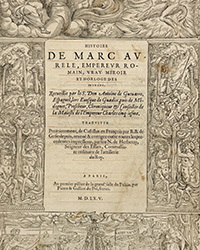
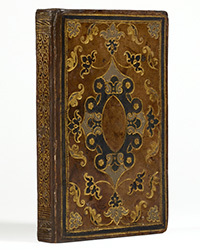
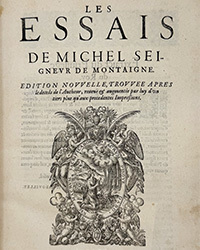
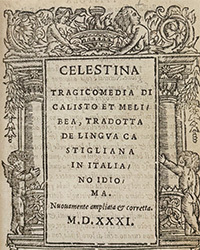
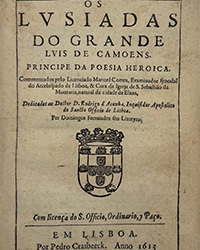
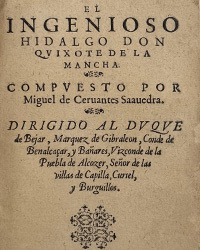
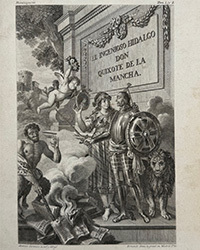
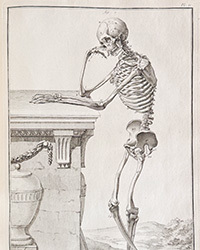
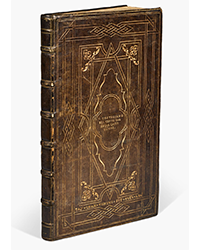
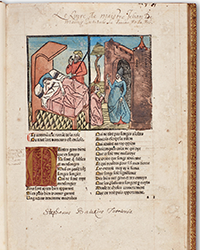
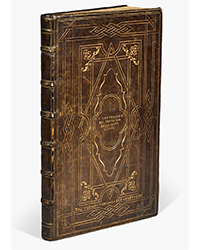
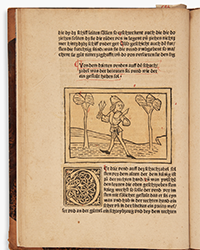
An unlikely institution recently received a surprising gift – a large collection of old, often valuable books. The King Edward VI High School for Girls in Birmingham, England, was given a significant collection through the bequest of Jean Wilks. Miss Wilks served as Headmistress of the school from 1964 until her retirement in 1977. That was a long time ago, the explanation being that Miss Wilks was 97 years old when she died this past July 1. She left her entire library to the school.
While Jean Wilks was not a wealthy woman, she loved books and bought many when they were new or relatively recent. So, we find works from writers of her youth, such as T.S. Eliot, Virginia Woolf, Evelyn Waugh, C.S. Lewis, and D.H. Lawrence. Many are first editions. She also had some of the very first editions of Penguin paperbacks ever published. There was a collection from a name not quite as well known, but still important - Scottish architect and designer Charles Rennie Mackintosh. Mackinstosh was born in Glasgow and became one of the most influential artists of the Art Nouveau movement in the U.K. Ms. Wilks had many of his books in her collection. These she had received from her friend and colleague Maggie Davidson. Ms. Davidson's grandfather was a Scottish merchant and patron of Mackintosh.
While the other books may be of interest to the students, the Mackintosh collection, though valuable, might be a stretch for high school girls. Fortunately, the school came up with a great idea. The Glasgow School of Art suffered a major fire last spring and lost many of its possessions. Mackintosh met his wife at the school in 1900 and designed its structure. King Edward VI High decided to give these art books to the Glasgow school, a fitting and generous gesture.
Antarctic Discovery
A few weeks ago, we reported on the discovery of one of the two ships used by Sir John Franklin on his Arctic expedition to discover a northwest passage. The ships had last been seen 170 years ago. All of Franklin's men died, with only a few bodies and notebooks ever recovered until this latest discovery. Franklin's expedition, and the dozens of rescue and recovery missions that followed it, form the heart of one of the more popular fields of collecting – polar exploration. This past month, artifacts were discovered from one of the most famous of expeditions to the other pole, Robert Falcon Scott's expedition to Antarctica in 1910. Scott's fate was no better than Franklin's, though it was not surrounded in nearly the degree of mystery.
Scott's story is a legendary tragedy. Having missed out on the opportunity to make the first attempt at the North Pole when Peary (allegedly) reached that destination, Scott turned his attention to the south. However, Norwegian Roald Amundsen had the same idea. Amundsen was a little faster. When Scott reached the South Pole, he found Amundsen's flag already planted, having arrived a month earlier. Disappointment turned to tragedy when weather turned much worse on the return trip. Scott and his accomplices were not sufficiently prepared and died trying to make their way back.
However, not all of those on the expedition were focused on the South Pole. A second group, which included zoologist and photographer George Murray Levick, traveled along the coast conducting scientific observations. They didn't have a particularly easy time either. When their ship was unable to make it through the ice to reach them, the group was forced to spend the Antarctic winter in a snow cave.
Before their group set off on the journey that forced them to spend their winter in a cave, Levick prepared a notebook with details of photographs he had taken in 1911. It was left behind outside of a hut at base camp, where it became buried in snow and ice. It remained there for a century until recently discovered by conservationists from the Antarctic Heritage Trust of New Zealand. Ice and water has damaged the book some, but the entries are still legible. The pages are being digitized, and then the repaired notebook will be sent back to Antarctica where it will be kept with 11,000 other artifacts at Cape Evans.
Water Damage Can Be A Menace
Water damage to books is a concern to collectors, but our worries pale in comparison to those experienced in Kashmir, according to the Greater Kashmir website. They have experienced serious flooding, resulting in books in both private and commercial establishments being soaked. However, the concerns go far beyond water stains and musty odors. They may be a health menace.
The problem is the flood waters are often seriously polluted. Dr. Ishtiyaq Ahmad was quoted as saying, "This is a dangerous situation as the books soaked in flood waters carry a number of viral, bacterial, fungal and other disease-causing agents. A large number of animals like cats, rats, dogs, cattle, etc. have died in these waters and by using these books a person can easily be inflicted by viral diseases like Lepto Spirosis that happens due to decaying feco-oral matter of rats and cats in water." He added, "These books can become a major cause for spreading diseases like cholera, typhoid, para typhoid, hepatitis A, hepatitis E and other deadly diseases." Another doctor noted that the American Centers for Disease Control calls for discarding books that have been soaked by flood waters as they cannot be safely cleaned and disinfected.
In the case of very rare and valuable books, extraordinary methods may be called on to preserve them, but for everything else, they should be discarded. Apparently, vendors in Kashmir have been selling some of these books at steep discounts, particularly to students, spreading the risk of disease.
Of course, serious book collectors already understand that condition matters. Sometimes, it matters even more than usual.