


• Sotheby’s
    Fine Books & Manuscripts
    June 24-25
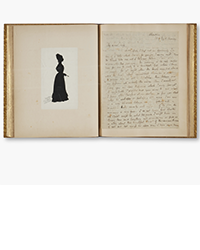
    Sotheby’s, June 25: Keats, John. The most significant collection of Keats’s love letters to come to market since 1885. $1,500,000 to $2,500,000.
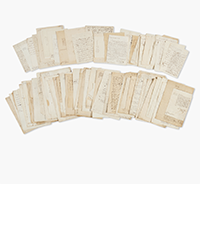
    Sotheby’s, June 25: Chassériau, Benoît. The “Expedicion secreta” of the Free State of Cartagena de Indias against the forts of Portobelo (Panama). $50,000 to $70,000.
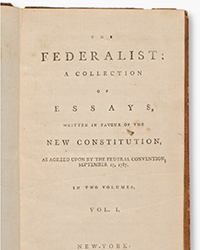
    Sotheby’s, June 25: (Hamilton, Alexander, James Madison, and John Jay). "One of the new nation's most important contributions to the theory of government”. $150,000 to $180,000.
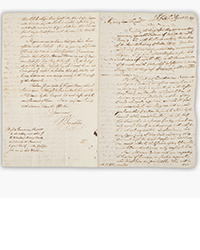
    Sotheby’s, June 24: Benjamin Franklin. "the Day of the Declaration of Independence is everywhere annually celebrated". $80,000 to $120,000.
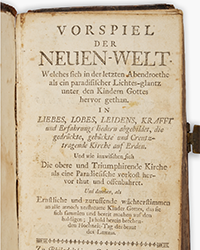
    Sotheby’s, June 24: (Johann Conrad Beissel). A Sammelband of two of Benjamin Franklin's rarest imprints. $70,000 to $100,000.
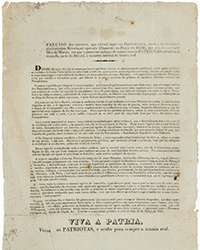
    Sotheby’s, June 25: [Pernambuco]. First printed work in favor of Brazilian Independence. $150,000 to $200,000.
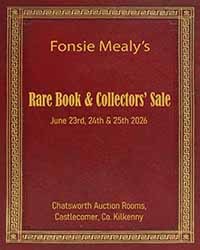
  • June 23rd, 24th & 25th 2026
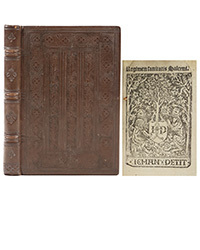
    Fonsie Mealy’s, June 23-25: Medical Incunabula: Petit (Jean)publisher & Kerver (Thielman)printer. Regimen Sanitatis Salernitanum, sm. 8vo, Paris [1498]
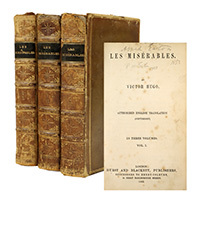
    Fonsie Mealy’s, June 23-25: Hugo (Victor) [Wraxall (Lascelles)]. Les Miserable, 3 vols., 8vo, L. (Hurst & Blackett) 1862, First Authorized English Translation (copyright).
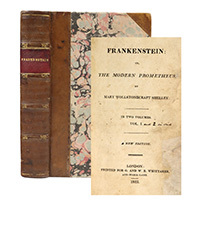
    Fonsie Mealy’s, June 23-25: Shelley (Mary Wollstonecraft). Frankenstein: or The Modern Prometheus, 8vo, 2 vols. in one, L. (G. & W.B. Whittaker, Ave-Maria-Lane) 1823.
    June 23rd, 24th & 25th 2026
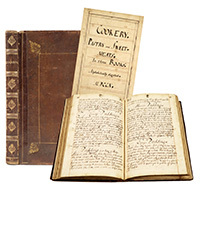
    Fonsie Mealy’s, June 23-25: Cuisine: Anon. Cookery, Pastry, and Sweet Meats in three Books, Alphabetically Digested, 8vo 1710.
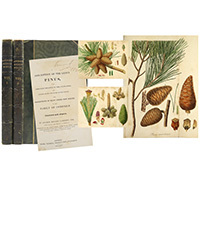
    Fonsie Mealy’s, June 23-25: Lambert (Aylmer Bourke). A Description of the Genus Pinus, with Directions Relative to the Cultivation…, 2 vols. Sm. folio L. (Messrs. Weddell) 1832.
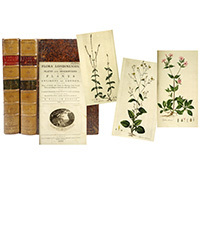
    Fonsie Mealy’s, June 23-25: Botany: Curtis (William). Flora Londinensis: or Plates and Descriptions of such Plants as Grow Wild in the Environs of London, 2 vols. folio, London (B. White) 1777 – 1798.
    June 23rd, 24th & 25th 2026
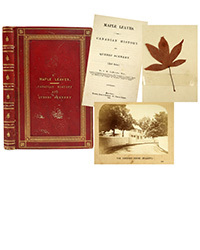
    Fonsie Mealy’s, June 23-25: Le Moire (J.M.) Maple Leaves, Canadian History and Quebec Scenery (Third Series) 8vo Quebec (Hunter, Rose & Co.) 1865. First Edn.
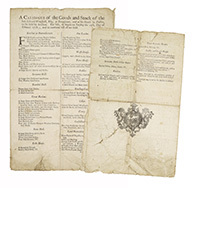
    Fonsie Mealy’s, June 23-25: The Earliest Extant Printed House Contents Sale Catalogue in Ireland: Baillie, Auctioneer, Abby Street. A Catalogue of the Goods and Stock of the late Edward Wingfield…
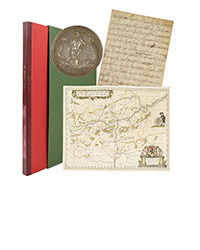
    Fonsie Mealy’s, June 23-25: William III King of England. Autograph Letter Signed ("William R") to an unnamed correspondent [possibly Charles-Henri de Lorraine] discussing his strategy against the French forces during the siege of Namur.
    June 23rd, 24th & 25th 2026
    Fonsie Mealy’s, June 23-25: [Austen (Jane) (1785-1817]. Pride and Prejudice, 3 vols. sm. 8vo, L. (T. Egerton) 1813.
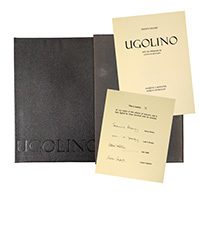
    Fonsie Mealy’s, June 23-25: Heaney (Seamus). Ugolino, sm. folio D. (Dolmen) 1979, Limited Edn. No. 78/125 Copies, Signed by Seamus Heaney, Louis le Brocquy, Liam Miller and Andrew Carpenter.
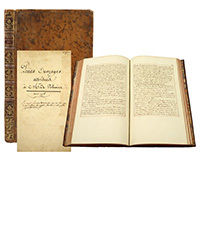
    Fonsie Mealy’s, June 23-25: Voltaire (F.M. Avouet de). Petits Ouvrages, attribues a M. de Voltaire, sm. folio manuscript, dated 1776, containing 9 works.
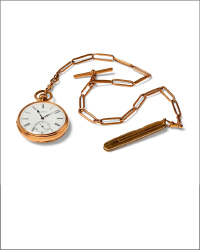
  • Bonhams, June 14-23: Franklin D. Roosevelt Presentation Gold Pocket Watch. Estimate: $20,000 - 30,000
    Bonhams, June 14-23: Presentation Copy of the First Issue of the Lincoln Douglas Debates Signed by Abraham Lincoln in Pencil to a Sangamon County Illinois Republican. Estimate: $150,000 - 250,000
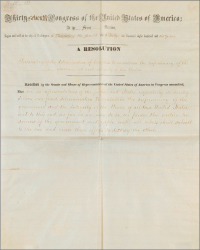
    Bonhams, June 14-23: A Senate Resolution Signed in the Tense Days After the Union's Humiliating Defeat at the First Battle of Bull Run. Estimate: $80,000 - $120,000
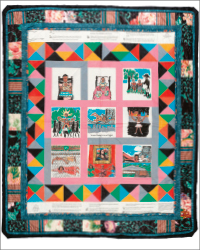
    Bonhams, June 14-23: Seven Passages to a Flight, an Artists Book with a Story Quilt by Faith Ringgold, the Publisher's Own Copy. Estimate: $80,000 - 120,000
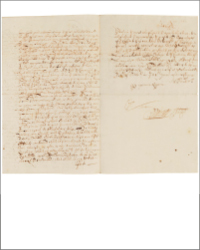
    Bonhams, June 14-23: A New Charter for Virginia, A Response to the First Armed Rebellion in the American Colonies. Estimate: $15,000 - 25,000
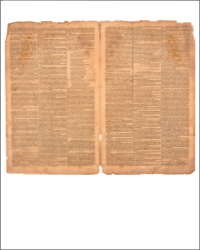
    Bonhams, June 14-23: Earliest obtainable printing of the Bill of Rights. Estimate: $8,000 - 12,000
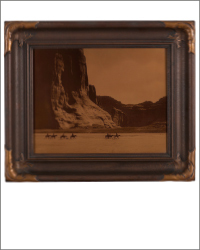
    Bonhams, June 14-23: Edward Curtis Orotone. Estimate: $7,000 - 9,000
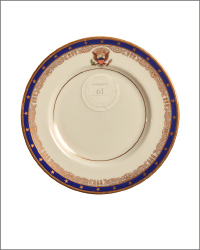
    Bonhams, June 14-23: Owned by Jacqueline Kennedy Onassis: A Butter or Dessert Plate from FDR's State Dinner Service. Estimate: $3,000 - 5,000
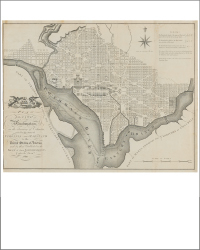
    Bonhams, June 14-23: An Early Large-Format Plan of the City of Washington. Estimate: $1,500 - 2,500
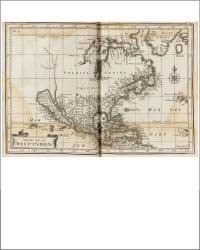
    Bonhams, June 14-23: Containing the First Map to Name the Hudson River. Estimate: $20,000 - 30,000
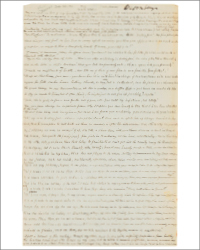
    Bonhams, June 14-23: America's First Major Novelist, a Complete Chapter in Autograph Manuscript by James Fenimore Cooper. Estimate: $15,000 - 20,000
    Bonhams, June 14-23: The Only Full-Length Book by Jefferson, with the Justly Famous Map. Estimate: $12,000 - 18,000
  • June 25, 2026
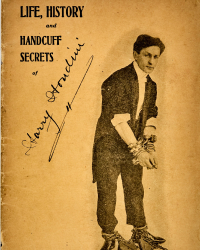
    Doyle, June 25: Houdini's biography, boldly signed. $3,000 to $5,000.
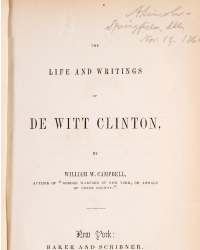
    Doyle, June 25: A volume from Abraham Lincoln's library, signed just before heading to Washington for his inauguration. $20,000 to $30,000.
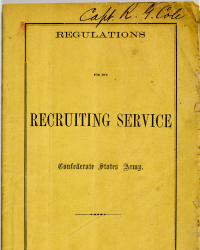
    Doyle, June 25: A very early Confederate recruiting manual belonging to the chief commissary in Lee's Army. $600 to $800.
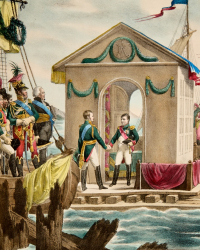
    Doyle, June 25: Rare hand-colored lithographs of the life of Napoleon. $20,000 to $30,000.
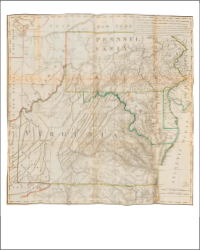
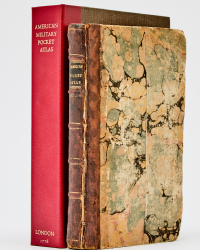
    Doyle, June 25: The "Holster Atlas" of the American Revolution. $5,000 to $8,000.
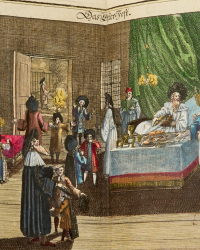
    Doyle, June 25: Jewish ceremonies in fine hand-colored engravings. $7,000 to $10,000.
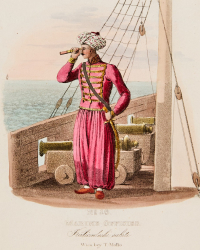
    Doyle, June 25: A very rare work on Turkish military costume. $1,000 to $1,500.
    June 25, 2026
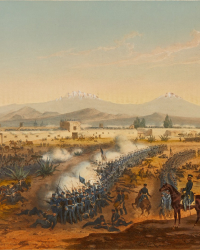
    Doyle, June 25: The most important illustrated work on the Mexican-American War. $10,000 to $15,000.
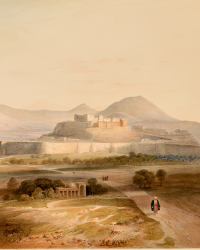
    Doyle, June 25: The finest illustrated book on Afghanistan. $10,000 to $15,000.
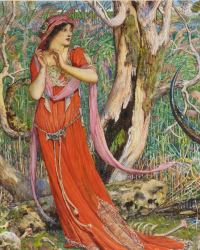
    Doyle, June 25: Henry Justice Ford St. George rescues the Princess from the horrible Dragon. $2,000 to $3,000.
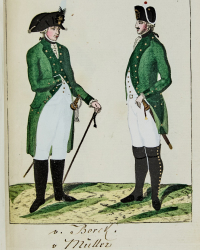
    Doyle, June 25: A rare work of Prussian Army uniforms under Frederick William II, with exquisite hand-colored engravings. $800 to $1,200.
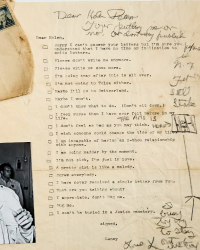
    Doyle, June 25: Lenny Bruce typed letter signed to a Village bohemian during his obscenity trials, with a manuscript note and drawing. $300 to $500.
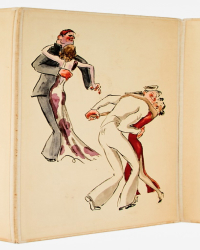
    Doyle, June 25: Schiff's scarce Shanghai Sketchbook. $300 to $500.
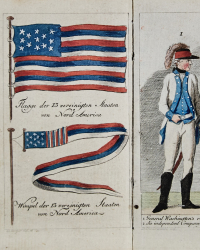
    Doyle, June 25: The first accurate published representation of the American flag. $2,000 to $4,000.

Rare Book Monthly

Articles - November - 2014 Issue

Blessed Mr. TIGER, or the Pilier Littéraire

The corner of Rue de la Huchette and Rue du Petit-Pont in Paris (where Tiger's shop once stood).

The corner of Rue de la Huchette and Rue du Petit-Pont in Paris (where Tiger's shop once stood).

At the turn of the 19th century, when printing went through major changes, one bookseller made a name for himself by publishing dozens of popular titles. Simple, short and of lower quality, they met the needs of the time, and thus became successful. Meet Mr Tiger, owner of the famous Pilier Littéraire, located at 10 rue du Petit-Pont, in Paris!


I went to Paris the other day, in the Latin Quarter. I reached rue du Petit-Pont, one of the oldest streets of the capital, and then I walked up to the corner of Rue de la Huchette. Here it was... well, here it once was—the small and dark workshop of Christophe-César-Jean-Baptiste Tiger (1759-1825), the famous Pilier Littéraire. It used to stand at number 10, according to the title pages of my books, “at the bottom of rue Saint-Jacques”. But things have changed, and number 10 stands far from the corner of rue de la Huchette—so which of the two corners was the right one? I entered the jewellery store on the right, but the young saleswoman had no idea what I meant by “long ago”. Nobody in the café on the left could help me either, and I couldn’t follow the indications left by Cordelier Delano any further—in 1834, he paid a tribute to the Pilier Littéraire in Le Diable Boiteux à Paris (Stuttgart): “When you enter rue Saint-Jacques, close to the Petit-Pont, you find a huge shop of novelties at the corner of rue de la Huchette. There used to stand the honourable workshop of Mr Tiger, the Pilier Littéraire, the sanctified ground where, from ancient times, were created the double almanac of Liège, the almanac of Paris, of Rouen, and the popular stories of Cartouche and Mandrin.”


These popular books that suddenly flooded the market at the turn of the 19th century became known as peddling books. Printed in a small format (in-18°) and huge quantities on a mediocre paper, they were usually illustrated with an engraved frontispiece, and they were the cornerstones of Mr Tiger’s empire of paper. We don’t know much about Mr Tiger, except that he started in 1786 as a master binder in Paris—he was then based on Place Cambrai. He published his first books at the same time, and claimed to decorate and look after private book collections, and to make covers for every kind of almanac. The French revolution of 1789 abolished all constraints on book printing, and Mr Tiger seized the opportunity. “He established himself as a printer-bookseller as well as a printer of steel engravings,” states the French National Library, “he was also doing type foundry.” He wasn’t the only opportunist at the time, as the amount of booksellers doubled between 1780 and 1800 in Paris.


Almanacs


Mr Tiger specialized in almanacs, annual publications that, apart from a regular calendar, featured various pieces of work such as recipes, riddles or songs. They became the most printed and the most read books of the time, just after the Bible. Cordelier Delanoue had a lot of respect for almanacs—and the people who printed them: “Not far from the former shop of the Pilier Littéraire,” he went on, “we can still see a small and smoky shop, with an almost unreadable old sign: Aux Associés, Demoraine & Thébaud, booksellers. Specialized in almanacs of all kinds, religious, hymns and prayer books. Blessed are these offices! Blessed is Mr Tiger! Blessed is Mr Demoraine! Here, in those mysterious laboratories, the moms and kids of the community, and the nuns (...) come to buy their prayer books, their calendars and their songbooks. (...) Ô Demoraine! Ô Tiger! Duet of athletes! Duet of elders! Eternal joy of small bookshops, and of the Petit-Pont! Your shop, dark and shadowy as it is, shines brighter than all the golden panels of the vain bookshops of the Palais-Royal.” In fact, Delanoue seems to be speaking of the same shop, as the widow Demoraine was the “successor of the famous Tiger of the Pilier Littéraire.” (Emile Morige, 1834). The same Emile Morige stated that she was then printing 180,000 copies a year of the Parisian Astrologue almanac!


The early Tiger editions—before 1800—are hard to spot. We know that he moved to the Collège des Cholets in 1797, before settling at rue du Mont-Hilaire in 1798; then he went to rue Etienne-des-Grès in 1799, came back to Place Cambrai in 1800, to eventually open his bookshop rue du Petit-Pont, n°10, “at the corner of la Huchette, at the bottom of rue Saint-Jacques”, as written on the title pages. By then, his productions become more frequent.


He obtained his licence of bookseller in 1812, but was denied the one of printer in 1811—we know that he complained to the Minister of Justice in April 1811. The free market applied to books had generated too much confusion (and maybe too many pamphlets?) and Napoleon decided to put an end to it in February 1810. To obtain their licence, booksellers had to go through a police investigation, and prove their good morals as well as their loyalty to their country. Anyway, Mr Tiger kept on selling books until he went bankrupt in 1811. But he wasn’t out of business and was certified bookseller again on September 11, 1818. When he died in Paris on April 30, 1825, his licence apparently went to his widow, then to Alexandre-François Selligue, an engineer from Geneva who, in 1829, recorded a patent for a typographic press with a continuous movement, “that can print on both sides, and works with a steam engine.” (Revue Encyclopédique,1821).


Tiger’s Plutarchs


Nobody really knows Mr Tiger or the Pilier Littéraire nowadays. After a prosperous period, peddling books were replaced by serialized novels around 1850, and were disregarded as worthless readings. Mr Tiger published short, attractive and efficient books—in a word, profitable. He needed to sell books, so he focused on simple topics. He talked about popular heroes such as Mandrin or Cartouche, he related well-known tragedies (the shipwreck of La Méduse), or contemporary stories (such as the Napoleonic wars). He was an opportunist, who published an ode to Napoleon in 1806, and then The Corsican bandit, or crimes, forfeits and sins of Nicolas Bonaparte, in 1816. In the former, Napoleon is “a God from the mount Olympus”; in the latter, “a man who, thanks to his boldness, his hypocrisy, his forfeits and crimes, has sat on the highest throne of Europe.” As a matter of fact, most of his books were anonymous; even his almanac of Liège, the heart of his empire, was a counterfeit publication of what M. Froment called “the true almanac of Liège printed by Madam Bourguignon,” and which “wasn’t officially distributed in France where it only entered surreptitiously.”(La Police dévoilée depuis la Restauration, 1829).


The same M. Froment reported a curious story involving Mr Tiger. The printer was sitting with one Sieur Henriquez one day, drinking wine at the corner of rue des Saints-Augustins, “talking about the articles they would insert in the next edition of the almanac”, when they saw some turkeys led by a butcher walking on the sidewalk. One of the turkeys was walking very proudly, and Mr Tiger laughed: “This General shall soon lose its life in the middle of its soldiers...” Henriquez, wrote Froment, “noted that this would be a very appropriate article for the almanac.” When the publication came out, a policeman read between the lines, and foretold “the assassination of a General and more than that, a provocation!” Mr Tiger was denounced, and summoned to the police station where a police officer heard him, smiled, and then “politely let him go.


Mr Tiger was a successful printer, but his books became a cliché. As soon as 1829, the Memoires de Vidocq made an ironical reference to them: “It became clear for the Magistrates that (this) incident (...) was an invention of my agents; so many fancies, more or less bizarre, have been built up around it; and the Plutarchs of the Pilier Littéraire won’t fail to acknowledge them as truthful, if the idea ever comes to the printer Tiger, or to his successor, to add a title to his collection of peddling books: The admirable yet true history, of facts and memorable, extraordinary or surprising adventures of the famous Vidocq; with the portrait of this famous informer.” Tiger’s books somewhat symbolize the impoverishment of printed materials at the time. Nonetheless, certain titles still attract book collectors. Those about Napoleon are very valuable to those who try to know how the emperor was perceived in his own time, for example. And others like the History of Saint-Domingue, or the portraits of the French buccaneers, have become very rare, and quite expensive. Even the almanacs have become quite rare. I have listed the titles of his catalogue that I’ve come across lately. Some are for sale on the Internet right now, and I’ve mentioned their price after the description. Here is a part of what the Pilier Littéraire left to the world. 
Rare Book Monthly

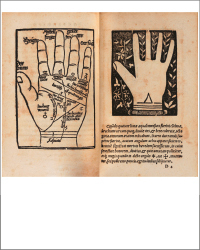
  • Bonhams, June 14-23: Palm-reading, astrology, and more. Estimate: $2,000 - 3,000
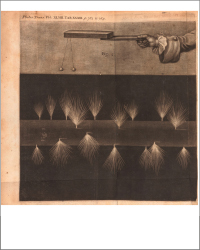
    Bonhams, June 14-23: Benjamin Franklin. Sammelband of 45 papers on electricity. Estimate: $8,000 - 12,000
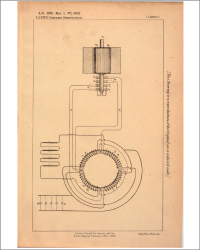
    Bonhams, June 14-23: The basis for the whole modern electric-power industry. Estimate: $4,000 - 6,000
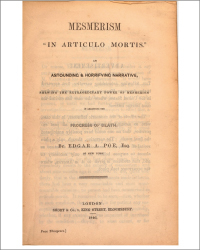
    Bonhams, June 14-23: Edgar Allen Poe. Poe on Mesmerism. Estimate: $2,500 - 3,500
    Bonhams, June 14-23: Reformation - The Architect of Lutheranism on Church Unity and Dissent. Estimate: $100,000 - 150,000
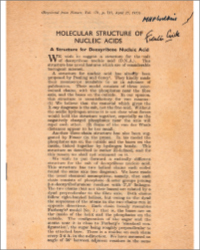
    Bonhams, June 14-23: The Rare 3-Paper Offprint Identifying the Double Helix Structure of DNA, Signed by Crick, Wilkins, Wilson, Stokes and Gosling. Estimate: $40,000 - 60,000
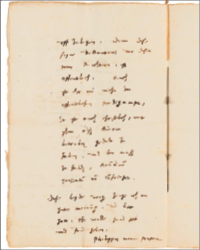
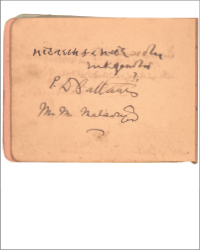
    Bonhams, June 14-23: Autograph book and Report from the Thirtieth Indian National Congress, featuring the signatures of Mahatma Gandhi, Rabindranath Tagore, and Dadabhai Naoroji. Estimate: $6,000 - 8,000
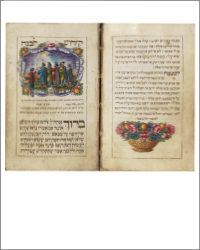
    Bonhams, June 14-23: An Illustrated Miniature Hebrew Prayerbook Manuscript. Estimate: $30,000 - 50,000
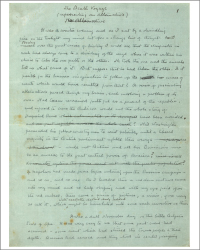
    Bonhams, June 14-23: Autograph Working Draft of Arthur Conan Doyle's The Death Voyage. Estimate: $30,000 - 50,000
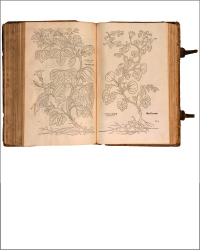
    Bonhams, June 14-23: "Perhaps the most celebrated and most beautiful herbal ever published." Estimate: $15,000 - 20,000
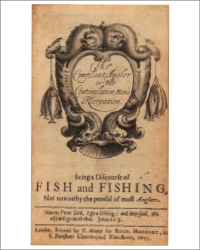
    Bonhams, June 14-23: Izaak Walton. The Compleat Angler or the Contemplative man's Recreation. Being a Discourse of Fish and Fishing. Estimate: $12,000 - 18,000
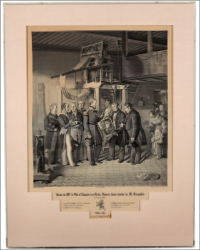
    Bonhams, June 14-23: A rare product of the Jaquard loom. Estimate: $8,000 - 12,000
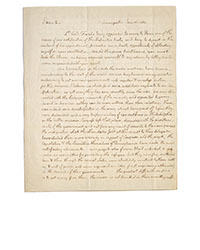
  • Freeman’s, June 30. Thomas Jefferson’s “Birth of the New Nation” letter, carried to Paris with the Treaty of Peace, by a Jewish patriot. $100,000-200,000.
    Freeman’s, June 30. “The rockets’ red glare.” A British midshipman’s log recording the bombardment of Fort McHenry. $60,000-80,000.
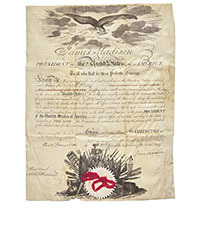
    Freeman’s, June 30. The Critical Promotion of a Naval Hero, Oliver Hazard Perry Commission signed by James Madison, 1812. $40,000-60,000.
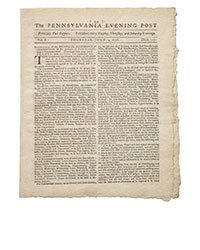
    Freeman’s, June 30. Born in the USA: First Day of Printing in the United States, July 4, 1776. $15,000-25,000.
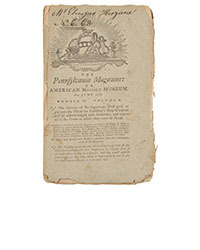
    Freeman’s, June 30. One of the Earliest Printed Announcements of American Independence, in the Exceedingly Rare Original Wrappers, 1776. $10,000-15,000.
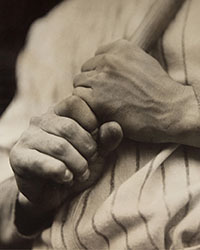
    Freeman’s, June 30. "The Two Big Guns of the N.Y. Yanks": A Striking Type 1 Press Photograph of Lou Gehrig's Hands. $8,000-12,000.
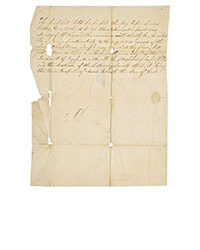
    Freeman’s, June 30. A Unique Contemporary Manuscript Account of Joseph Smith's Final Words to His Followers, the Day Before his Violent Death. $8,000-12,000.
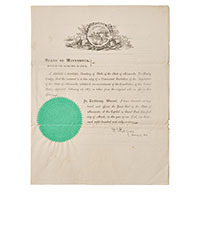
    Freeman’s, June 30. The State of Minnesota Officially Certifies the Fourteenth Amendment to the Constitution Of the United States. $8,000-12,000.
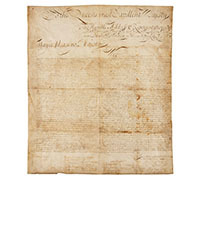
    Freeman’s, June 30. Extraordinarily Large Manuscript Petition Signed by a Who's Who of Colonial New York to Queen Anne from the Colony of New York. $8,000-12,000.
    Freeman’s, June 30. Mickey Mantle's First Cover: The Earliest Front-Page Newspaper Image of Mickey Mantle, "Something Good from Joplin". $8,000-12,000.
    Freeman’s, June 30. A Call to Arms in the Months Following the Declaration of Independence: An Early Continental Army Recruitment Poster. $6,000-9,000.
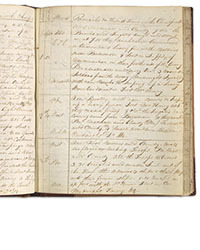
    Freeman’s, June 30. Samuel Jones, the Statesman Behind the Newly Discovered "Jones Declaration": His Annotated Set Used in His Working Law Library. $6,000-9,000.

Article Search

Archived Articles