It would certainly be the literary find of the century if true. It would also be the greatest piece of advertising imaginable for eBay. A pair of New York booksellers see a 16th century annotated English dictionary for sale on eBay. Thoughts of whose copy it might have been race through their minds. The handwriting is described only as “contemporary” annotations. The writer is unknown. They decide to roll the dice, placing the winning bid, reportedly $4,300. Thus begins a six-year journey to discover the annotator, or perhaps more accurately, to confirm their wildest hopes and dreams. Their conclusion could indeed be described as “self-serving.” Then again, self-serving does not necessarily mean inaccurate. They may well have been trying to prove what they wanted to believe, rather than conducting an objective analysis. Under the circumstances, how could they not? Still, that does not make their conclusion wrong. That conclusion was, of course, that this dictionary was William Shakespeare’s personal annotated copy.
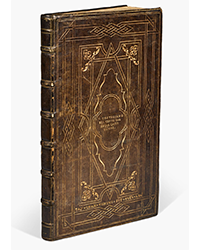
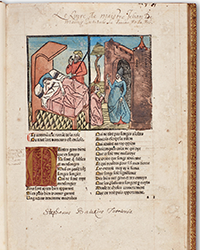
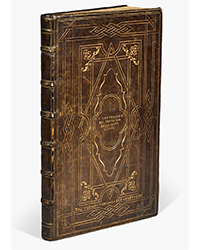
The book is question is John Baret’s Alvearie or Quadruple Dictionarie, published in London in 1580. Printed in four languages (hence quadruple), the timing is right for Shakespeare to have owned a copy. It is known that Shakespeare used various historical books to research his plays. It is certainly not a big step to imagine he used a dictionary. However, there is no record that he did, or this one in particular. That is mere conjecture, though logical enough.
The annotations that booksellers George Koppelman and Daniel Wechsler believe establish Shakespeare’s ownership are not lengthy. They consist of what the booksellers refer to as “spoken” and “mute” annotations. “Spoken” ones are words, “mute” ones markings, like underlines and dashes. There are no phrases like “to be or not to be,” or “Alas poor Yorick,” writings that would make it clear this was Shakespeare’s copy (or a deliberate forgery). There is no smoking gun. They have had to make many deductions from what they found, which in time will be seen as either outstanding research or flights of fantasy.
Of course, the nature of this book makes connections more difficult. A history book with notations about Richard III or Hamlet might imply something. While Shakespeare’s plays are undoubtedly filled with words in Baret’s dictionary, so is every other contemporary writing. It is hardly surprising that his writings would be filled with words found in a dictionary. So are mine. Koppelman and Wechsler have attempted to make a case that the uses of annotated words in his plays is such as to show a particular interest by Shakespeare in these particular ones. As to how strong is their case, that is something that will have to be left to scholars and experts. They have spent six years preparing their case, which was just released in book form a few days ago. We will undoubtedly see others now attempt to unravel it, leaving it to the objective to decide.
Unfortunately, some of the more obvious forms of identification are not available. The owner of this book never put his name to it. Handwriting would be an obvious source of comparison, but there are virtually no certain samples of Shakespeare’s handwriting, just a few signatures and a couple of pages whose authorship is uncertain. The paucity of such written material has encouraged people in the past to attempt to forge his work. There is not much that can be used to disprove the claims.
We don’t know whether testing has been done on the manuscript ink to determine whether it was contemporary to Shakespeare. That test could disprove, though not prove, a connection. It seems unlikely that someone added these annotations in an attempt to create value by pawning it off as Shakespeare’s copy. Such a forger would want to do something to better tie it to the Bard, perhaps writing the name “Hamlet” next to the word prince, not overly blatant, but something that would appear to make a connection. Besides, the price Koppelman and Wechsler paid for it on eBay does not suggest an elaborate forgery. It is likely an ancient dictionary, with very old annotations, but whose old annotations is not clear.
Some may be a bit troubled by the way the news has been presented. Koppelman and Wechsler conducted their own research, wrote a book about their find (which they are offering for sale on a website), and invited in a writer from the New Yorker Magazine for a lengthy interview. This is not exactly the academic/expert/library authentication route one might expect for scholarly research. Academics may not care for this. One might think that the owners would take this dictionary to the Folger Shakespeare Library for deeper research.
Still, it is understandable that a private owner might want an opportunity to conduct their own research first. Some academics will automatically try to knock it down. That’s just the way they are. They may be no more objective than the owners. Obviously, Koppelman and Wechsler aren’t objective observers. Their possession could be worth something less than $4,300, or some incredible number of millions of dollars. If this were my book, I know what I would be trying to prove. They are entitled to make their best case before letting the wolves at it. But now that the cat is out of the bag, the buzzards will begin circling. The dissecting will begin. In time, we will see whether their case can withstand such scrutiny. My own best guess is that neither side will be able to establish the authenticity, or lack thereof, beyond a doubt, but one side will be accepted as more likely than the other.