Electronic books offer many conveniences for readers, but are not of much use to collectors. Collecting digital copies imbedded within the tiny microchips of an electronic reader seems to be missing something important, like the touch, feel, and look of a tangible object. And, when e-books can be so easily duplicated in unlimited quantities, how would one ever know the difference between a first edition and a counterfeit? Some kind of internal date stamp? This is all terribly unsatisfying.
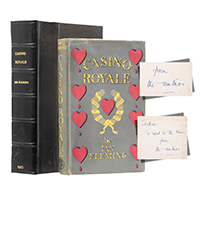
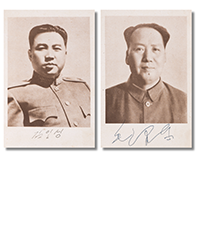
However, if this isn't bad enough, how do we deal with the most desirable of copies – the signed book? How can an author sign a digital copy? Do you bring your e-reader to a book signing and ask the author to sign the back of your device? Good luck getting a signature to stay on a plastic backing. Besides which, that still doesn't sign his book. You may have thousands stored in your electronic reader. Do e-books mean the end of signed editions? The obvious answer is “yes.” Apple, the giant computer and smart phone manufacturer, says “no.” They have filed a patent to solve this not exactly age-old problem.
Apple has come up with some of the greatest inventions of this century (admittedly not all that old yet). In the process, they have become the most valuable company on earth. That is a tribute to their creative genius. Nonetheless, that doesn't mean every new idea they come up with is wonderful. This idea is positively awful. Still, we will hear them out. Creative genius is not always recognized immediately.
In describing the need for their signed e-books, Apple's patent application tells us, “The electronic versions have some advantages over paper media products such as containing additional content, are user interactive, are cheaper to purchase, and are more convenient to carry around. However, some users still prefer paper media products for the physical attributes of paper media products, which include the ability to have a copy of a book personalized. For example, a user can go to a book signing and get his copy of the book autographed by the author. The autographed copy can hold some special meaning to the reader. Thus, there is a need for improved techniques for embedding autographs in electronic books.”
The patent attempts to be as broad as possible, as all patents do, but the most common example seems to work like this. You go to a book signing with your e-reader, where you presumably download the author's book. The author possesses some sort of autographed form on his/her electronic device. Likely, it's a page with an electronic facsimile of his autograph. Or, perhaps, the author has an electronic form where he can “sign” it with a personalized inscription. He then transfers it to your e-reader. Perhaps it's one of those things where you put the two devices close together and the form transfers via radio waves. Maybe the two devices need to be plugged in to each other. Whichever, an autographed title page, or some other page, arrives in your reader as part of the book. Voila! You now have a “signed” book.
Apple also provides for various ways of authenticating the signature. No fake electronic signatures are allowed. That would be too easy. There are various ways this might be achieved. A clever one allows a picture to be taken of you next to the author. This verifies that the author really “signed” your copy. At least it verifies it until you figure out how to photoshop your image next to the author and attach that to the appropriate electrons spinning around in your electronic device. Undoubtedly, Apple will build in all kinds of controls to prevent cheating, but will they hold up against cheating technology created 10, 20 or 50 years from now? Good luck.
If you care to delve into the details of this patent application, you can find it here: www.google.com/patents/US20130254284. Perhaps tomorrow's collectors will enjoy scrolling through their e-books and seeing copies with authors' signatures on them. They can hand the e-reader to their friends to display their fantastic collection. Maybe. The idea leaves me cold. E-books are wonderful for reading. They are not so good for collecting. Author signatures are for collecting, not reading. Apple seems to have this one backwards.