However, in 2008 the court said it must approve of any such transfer. In stepped Ray Messenger, who was appointed Adminstrator of Seward III's estate by the court. Messenger is a great-great grandson of the original William H. Seward. On behalf of the family, Messenger said not so fast.
Messenger does not want to see the painting leave Auburn. It hung in the Seward homestead from 1839 until 2013. In the family's opinion, it belongs there. That is not sufficient legal grounds to overturn the Foundation's judgment, but Messenger believes that William III's will is. That gave the homestead, “together with all articles of furniture, furnishings, portraits, paintings, books and souvenirs” (with certain exceptions) to the Foundation “to be maintained by it as a memorial for my grandfather...and for my father...” The intention seems clear, though it is unlikely William III ever imagined this one item would ever become so valuable. An appraisal at the time of his death valued it at just $100, though that seems a bit low (Cole was paid $1,000 to paint it in 1839, a lot of money then).
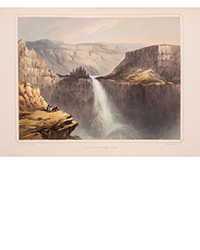
Another local concern revolves around the painting's subject. The Genesee River, like Auburn, is in the Finger Lakes region of western New York. While once an important industrial area, it is not so prosperous today. Auburn's population peaked from the 1920's through the 1950's. It has been declining ever since. A house museum in this community of under 30,000 in a mostly rural area is an odd place for a major work by one of America's most important painters. Then again, it is a painting of their land, their river. It is a piece of the heritage of western New York. A buyer of a painting of this value is more likely to come from a major city far away, perhaps a museum in New York, Washington, or even more distant cities. Unless a wealthy local investor can be found, it will not likely see Auburn or its neighborhood again once a sale is made.
Mr. Messenger has gained the support of a powerful ally in his quest to keep the painting in his ancestors' home. The New York Attorney General has written that he can see no reason for not returning the painting to the Seward house and that the Foundation's tax return shows that it is capable of providing the necessary financial support to keep the museum in operation.
Of course, there are two sides to every story. Both the museum and foundation approved the sale for a reason. The museum spelled out two major reasons why it supports the sale. The first involves the cost of maintaining and protecting this valuable painting now that its value is known. A $20 million item can't be left on a wall without extensive security arrangements, from theft, disasters, and deterioration. Insurance alone is estimated at $20,000 annually. According to the museum's website, “This resulted in a conclusion that it was not practical, feasible or prudent for SHM [Seward House Museum] to own and maintain the Painting because it could not provide a safe and secure environment for the Painting.” The museum even went so far as to imply that, for this reason, even if someone bought the painting and gave it directly to the museum (as opposed to the foundation) they would not want the responsibilities inherent in taking it back.
The other reason was financial. Already, the museum receives approximately half of its $450,000 annual budget from the foundation. It needs alternate sources of income and the foundation has other causes it needs to support. The proceeds could help both organizations achieve their goals.
Finally, the museum said that the painting is not a fundamental part of their mission. That they described as recognizing the Sewards and the values they espoused. Maintaining one painting that hung on their wall would not seem to be critical to that mission. The museum also noted that a professional reproduction of the painting will be created to continue the appearance of the home as it was while the Sewards resided there. It should be noted that the Seward family strongly disagrees, believing maintaining the painting to be a fundamental part of the Seward House's mission as well as a requirement of the original will.
There is no easy answer here. Whatever the decision, one side will believe it is a second “Seward's Folly.” Then again, Seward's first folly turned out to be one of the greatest decisions an American leader ever made. It was the last chance for America to significantly expand its territory and William Seward didn't miss the opportunity. Whatever the decision, it will not only be measured today, but also in time. Let's hope that the choice is as wise as the one Seward made. Arguments next will be heard in court on October 3.