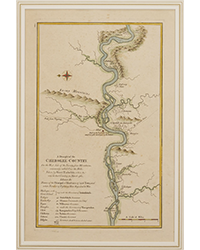
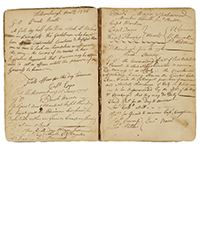
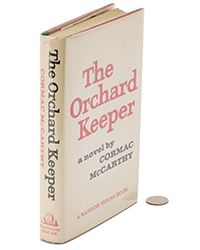
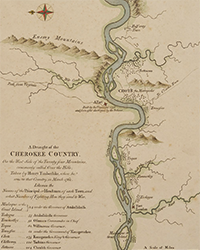
For many reasons books, manuscripts, maps and ephemera get sold. In the collectible field we tend to think of single items but there are reasons for selling larger quantities too. It can be someone who is narrowing his or her focus or a dealer preparing to retire. For collectors it’s the material personally appreciated but outside the current collecting scope or already passed over as other items have been sold or been consigned, in other words; the residue. For material in all these categories and, inevitably others I simply haven’t thought of, there comes a time when the need to dispose becomes pressing, even necessary.
Such material isn’t necessarily unimportant but it probably has become difficult to sell. There’s money in it but no liquidity. As an example many, and I assume most, dealers have material they acquired for a song or perhaps for real money with the expectation it would sell but simply hasn’t. The best dealers look ahead buying the next big thing that sometimes never becomes the next big opportunity. Sometimes it becomes the forgotten thing. Eventually such material will be sold or given away.
The same is true for the collector who sold his high points easily and has been left with the residue he still believes has value. Libraries too have material that never make it into the stacks and now won’t. Such material too needs a path to the exit, one providing a fair prospect for an adequate price and a high probability of sale.
My suggestion to achieve this is a process called Slow Auction.
Auctions are events, the material selected, described and advertised. This is what auction houses believe will sell. In selecting 500 items they considered thousands of others. They use rules and experience and make, because they have to, categorical judgments. This leaves interesting, if sometimes a bit too common or marginal, material out. These rejected things stay on the shelves or are placed in boxes, their day will come but never did.
In a Slow Auction they will have their chance. Here is how it works.
Most dealers have their inventory on line. For those that do they simply select what they propose to sell. It’s already priced. Let’s say they select 1000 items to post.
The entire sale will take 63 days and the timing is important. Auctions are intense events built around well-researched and illustrated catalogues and plenty of advertising. Slow sales lack most of these attributes but they do have two things regular auctions don’t, a long time for interest to build and software that captures buyer interest [and bids] in a convenient way. Here is what the auction schedule looks like -
Day 1 to day 7: $100 [the listed price]
Day 8 to Day 15 $ 80 [less 20% discount if still unsold]
Day 16 to day 21 $ 60 [less 40% discount]
Day 22 to day 28 $ 40 [less 60% discount ]
Day 29 to day 35 $ 20 [less 80% discount]
Day 36 to 42 $ 10 [less 90% discount]
Day 43 to 49 $ 5 [less 95% discount]
Day 50 to day 56 $ 1
57 to 63 Free to a good home
Each item has a “I’d like to follow this item” link as well as a “submit my offer if this item becomes available at $--.” Thereafter, whenever there is a change, be it a sale or price reduction, the person following receives an email or instant message updating the status.
I think there should be various statistics for each item:
1. the number of times an item has been seen;
2. the number of people following;
3. the number of bids pending
4. the history of the listing from first posting through to any announcements of outcomes such as “Lot 341, Lefevre’s History of New Paltz, second edition. Sold for $60, initial price $100, sold on the 22nd day.
If hosted on AE there would be a nominal starting fee. If the outcome is reported, half the listing fee would be credited against further listings. The listing fee would be a percentage of the starting price so those posting may feel a desire to start lower.
Such a service can be provided on any listing site. I’m describing what I believe has become necessary to help the field clear the accumulating millions of books. Any site can do it.
If you have a response, questions or suggestions post them to this story. I, and other readers, will read your comments and respond.
And personally, I can’t wait.