






































If we examine the right of the master to the property of the slave, as it exists in the South, we shall find it, equally with the right to any other species of property, based on the law of the land, as it has existed for more than two hundred years, with no variation in principle. In addition to this, the constitution of the United States, which is the paramount law, although with a sort of squeamishness savouring of affectation it forbears all mention of slaves, is known to have had a direct reference to them in the following provisions:—
"Representatives and direct taxes shall be apportioned among the states which may be included within this Union, according to their respective numbers, which shall be determined by adding to the whole number of free persons, including those bound to service for a term of years, and excluding Indians not taxed, three fifths of all other persons.These three articles, as we before observed, are known to have had a direct reference to slaves, and indeed can apply to no others. The first distinctly recognizes the right to the property in slaves, by making it the basis of taxation and representation. The second sustains the right, by admitting the migration or importation of slaves until a certain specified period; and the third protects it, by enabling the master to reclaim his slave in any state where he may take refuge. These distinct provisions constitute a guarantee, more complete as well as specific, than was thought necessary to any other species of property; and it was given to protect the South against a newborn spirit of philanthropy which menaced their rights. No historical fact is better known or more completely established, than that the southern states would not have acceded to the Union, under the new constitution, without this security to their possessions. It constituted the condition of their acquiescence, and its infraction will be a virtual dissolution of the confederacy, because it violates a provision without which it never would have existed. The general government and the sister states, therefore, owe it to their own obligations as well as their own honour, not only to refrain from tampering with these rights, but to secure the southern states in their possession, by every means not forbidden by the instrument which guaranties them. Those, the sole basis of whose proceedings is laid in a violation of the constitution and laws, have no right to complain should they receive the benefit of their own latitudinarian principles, and be punished for those wholesale libels, which, if uttered against individuals, would subject them to the severest penalties.
"The migration or importation of such persons as any of the states now existing shall think proper to admit, shall not be prohibited by Congress, prior to the year one thousand eight hundred and eight; but a tax may be imposed on such importation not exceeding ten dollars for each person.”
"No person held to service or labour in one state under the laws thereof, escaping into another, shall, in consequence of any law or regulation therein, be discharged from such service or labour; but shall be delivered upon the claim of the party to whom such labour or service may be due."
The local laws of the states in which slavery prevails, are still more specific in recognizing slaves as property, as may be seen in the abstract of the statutes of Virginia, which will be given hereafter. With these, however, we of the other states have nothing to do, nor do we possess a right to interfere with them, any more than with the distinction of castes among the Hindoos, or the slavery of the boors of Russia. If they are repugnant to our feelings, so are these. The lower castes among the Hindoos are condemned to a state to which that of the slaves of the United States is a paradise. They are the slaves of the higher castes, without any of the benefits of slavery which will be hereafter stated; and they are condemned to an hereditary degradation, lower, by a thousand degrees, than that of any negro that ever existed among us. Why does not England exert its power over the destinies of Hindostan, to remedy these crying outrages on the principles of universal philanthropy, instead of sending missionaries among us to preach sedition, and advocate the cutting of throats, besides employing the whole force of her press to sow the seeds of contention among us? It is not our cue, however, to turn Quixotes in philanthropy, or to go about freeing banditti from chains and lions from cages. It is not our interest, to inundate that vast region with pictures calculated to excite insurrection and murder, reinforced by reviews, sermons, tracts, and resolutions, distinctly and vehemently exhorting them to indiscriminate massacre. We have as good a right, and the duty to do this is equally imperative, with that of striving all in our power to inflict a servile war on our brethren of the South, for whose civil institutions we are no more responsible than for those of India or Russia. Nay, the project would be far more judicious, since the liberation of the Russian white slave would naturally lead to at least a gradual regeneration and amalgamation; for there are none of those natural and invincible barriers, no contrast of colour, or odours, or hair, or physical conformation, or mental organization, to create an incompatibility between the different orders of people. The emancipation of the peasantry and labouring classes of Europe, by which is meant placing them on a level with the aristocracy in regard to civil rights, might therefore rationally be desired as the prelude to a salutary equality; whereas that of the slaves of the United States, if our former reasonings are well founded, would be the forerunner of the destruction of rational liberty, and the introduction of barbarism.
We of the North possess no right, as members of the confederation, much less are we under any obligation, to interfere with the relations of master and slave in the South. We have no obligation to pursue a course which cannot fail of producing the most disastrous consequences to our political union, as well as to the master and slave. We have no obligation to do evil that good may ensue. We have no obligation to deprive, or take indirect means of depriving, a large portion of our fellow-citizens of their property, or to render its possession a curse instead of a blessing, on the ground of an abstract principle, sustained neither by reason nor religion. We have no obligation to sacrifice our white brethren and their families on the altar of an experiment which all past experience repudiates as fallacious; nor have we any obligation to sport with human rights, legally and constitutionally secured, in affecting to redress human wrongs.
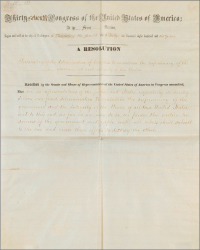
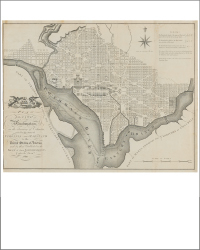
The petitions for the abolition of slavery, every year presented to Congress, signed by people who neither see nor feel its consequences, whatever they may be, we consider an abuse of a constitutional right. The civil institutions of a state, so long as they are not repugnant to the fundamental principles of the general government, as declared in the constitution, are beyond the reach of the other states, who possess no right whatever to interfere with them. The same with the District of Columbia, where Congress can NO more legislate in the teeth of that constitution, than in any one of the states. It has no more right to vote away the property in slaves than any other property, and the attempt would be a gross violation of the rights of the citizens, even though a majority of them should assent to the measure; for a majority has no power over the rights of property, nor can it sanction their violation. The whole power of the state cannot take away any portion of private property without paying for it, even should it be absolutely required for the public good. It may tax us, in common with all other citizens, but that is the extent of its prerogative. But to return to the subject of petitions. That which does not either immediately or remotely affect our rights, our interests, our prosperity, or our happiness, by some outward and visible agency which all men distinctly comprehend, can be no "grievance;" it therefore requires no "redress" in regard to us, and consequently no petition on our part.
Suppose the people of the South should be afflicted with an acute pang of sensibility, at hearing that in the middle, and most especially the eastern states, the daughters of the independent villagers and farmers performed all the menial offices of the household, and at public houses waited at table on all classes of travelers. Suppose they were to get another severe twinge of philanthropy, at seeing thousands and tens of thousands of white children working fourteen hours in the day at unwholesome employments in manufactories, at an age when the young slaves of the South are enjoying all the sweets of luxurious idleness. And suppose, taking example from the friends of the "entire human race," the people of the South were to institute societies, and send forth missionaries, and petition Congress to abolish such barbarous servitude, on the ground of its being contrary to the law of God and the rights of nations. Would not such petitions be hooted out of Congress, as impertinent intermeddlings with the habits, manners, and civil institutions of the people of the North? Is the task of waiting on strangers in a public house less unpleasant, to a delicate female, than the service of a slave to his master? Or is the labour of the white children in the manufactories one whit more voluntary in fact than that of a slave in the South?
Yet we do not find them getting into a paroxysm of commiseration at these crying enormities, which to them are as offensive to the feelings of humanity as the condition of the slave is to the sentimentalism of the day, which seems to have abandoned anti-masonry and gone over to anti-slavery. Were the people of the different sections of the United States to undertake to petition against everything that happened to be disagreeable to each other, Congress would have a fine time of it, and that fraternal feeling so essential to the existence of the Union, would become a sacrifice to this modern, mischievous, meddling spirit, which is the offspring of fanaticism begot on ignorance or hypocrisy.
It might be well for the libertines of philanthropy, who consider all things possible, to bear in mind that a large portion of the real evils of this world has originated in wild attempts to cure imaginary ones. Empires have been laid waste and nations exterminated in abortive efforts to change the long established system of Providence, or in combating with what seemed evils, but which were only necessary ingredients in the various cup of life, and contributed to the great end of universal good. The fanatics of religion and philanthropy have inflicted more miseries on the human race than they ever alleviated. They rush from one extreme to another with daring impetuosity, not choosing to remember that all extremes are pernicious, or that the Great Dispenser of wisdom and virtue, the Creator of man and the Sovereign of the universe, hath ordained that none of his blessings shall contribute to human happiness unless they are enjoyed in moderation. Overheated zeal, even in a good cause, has in every age of the world been the parent of persecution, slander, and bloodshed; and more victims have been offered up at the shrine of imaginary good than of real evil.