A “comprehensive review” of U.S. copyright law was recently announced by House Judiciary Committee Chairman Bob Goodlatte (he really should be Chairman of Starbucks). U.S. copyright law has been stuck well back in the twentieth century for quite awhile. Current technology has left it as outdated as the antenna televisions, huge mainframe computers, dial telephones, 8-track tapes, and AMC Gremlins popular the last time the code was seriously overhauled. Even the more recent changes enacted 15 years ago date to the infancy of the internet. This will be a long and contentious process, but it is overdue and necessary. Nothing will be affected more by this process than books.
The Register of Copyrights, Maria Pallante, appeared before the committee earlier, and announced, “I think it is time for Congress to think about the next great copyright act...”, words the Chairman cited approvingly. Among her comments was that “authors do not have effective protections,” while “consumers and other private citizens are increasingly frustrated.”
Getting to specifics, Ms. Pallante told the congressmen, “Congress has requested a number of studies from the Copyright Office in recent years, on a variety of timely topics, including the first sale doctrine, orphan works, library exceptions, statutory licensing reform, federalization of pre-72 sound recordings, and mass digitization of books.” We will take a look at a couple of those issues as they have led to major lawsuits involving books in recent days – orphan works/mass digitization of books, and the first sale doctrine.
The mass digitization of books, and so-called “orphan books” in particular, is a real can of worms. It led to the Google Books lawsuit, which has dragged on for years, and now has as many parties as a small city. The decisions have, for the most part, gone against Google, though much remains to be resolved.
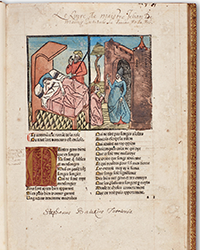
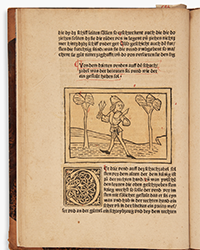
It used to be if you were doing research, or simply wanted to read an old book, you would go to the library. A large library would likely have a copy. However, with countless more new books being published every year, libraries facing budget problems, and the advent of a far more practical means of preserving old and seldom used works – digital copies – it's not so easy to find your book at a library.
As long as there was a physical copy of the book you wanted on the shelf, there were no copyright issues. The book was legally purchased years ago, and as such, could be legally accessed forever without permission of the copyright holder. Electronic books, however, must be copied. Therefore, they run into copyright restrictions. As long as the library handed you the physical copy, everything was fine, but if the library scans their legally purchased copy and lets you read it online, that is a copyright violation. The copyright law, which allows for permanent access to a library's physical “books,” does not function in the digital age. Electronic books allow for much greater access to obscure old books, and even from the convenience of your own home, rather than searching many libraries. Unfortunately, while making access much more practical, it also makes accessing the books illegal. Technological advances have the unintended consequence of making it harder to find the text of old books as libraries dispose of physical copies.
Congress, which heeds the call of special interests, not public interest, has made the problem greater in recent years by extending the length of copyrights. Most recently, in 2003, another 20 years was tacked on. That was done at the behest of the Disney Company, which contributes more to political campaigns than you do. The copyrights on early Mickey Mouse material were about to expire, so to protect Disney, Congress interfered with digital access to another twenty years worth of old books whose copyrights would have expired. Surely there is something ironic about a law, which is designed to protect what is known in the trade as “intellectual copy,” being expanded to protect Mickey Mouse.
So now, every book copyrighted after 1922 may be under copyright. In some cases it is not clear, depending on long ago renewals, but you are under risk if you digitize any book published after 1922. That covers a lot of important but obscure material, hard if not impossible to find in physical copies any more, and never to be published again. Google Books and possibly others wanted to make it available to you, but Congress said “no.” You didn't contribute enough to their campaigns. Thank you, Mickey.
Current law provides that a copyright (for works published after 1977) is for the life of the author plus 70 years. That's a long time. It used to be 28 years plus another 28 if you applied for an extension. Copyrights owned by corporations in most cases are good for 95 years. So we are generally talking about a century before electronic copies can be made of old books without permission of the author, which leads to the second issue, “orphan books.”
Copyright law provides you must get the copyright holder's permission to make an electronic copy of his/her work. If you want to make an electronic copy of Harry Potter, you can easily determine how to contact J.K. Rowling. How about if you want to make a copy of a book published in a single edition in 1925 by a long forgotten author? Let's say he died in 1928. Perhaps he willed all of his property to be divided equally among his ten children. Of course, his children, and perhaps even his grandchildren are all gone now too. Perhaps the rights now belong to 100 great-grandchildren. Where are they? How does one contact them? But, wait a minute. That assumes each was willed an equal share. Maybe some of the author's children favored one of their children over another, or died childless, sold their rights, or willed them to someone else. How can we possibly know now or track down all of these people? In other words, what it means is that it is impossible to obtain the copyright holders' permission to make an electronic copy, despite the fact that no one will be harmed by the electronic copy since this book has not earned a dime in royalties in almost a century and never will again. If this book is not in a library you can access, you cannot read it. An outdated copyright law denies the public access to a book while benefiting no one at all.