
-
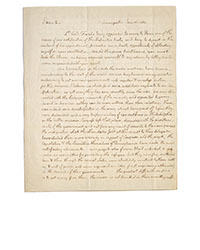
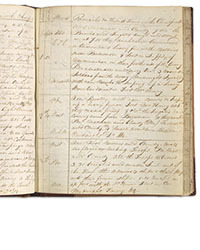
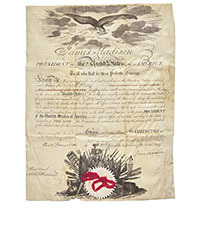
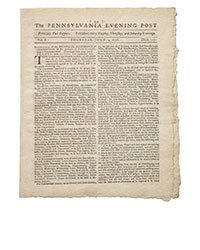
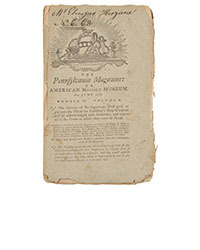
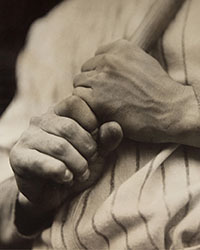
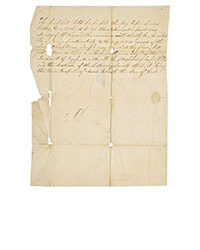
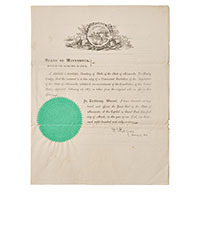
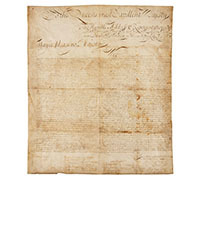
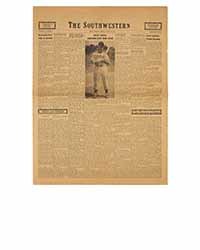
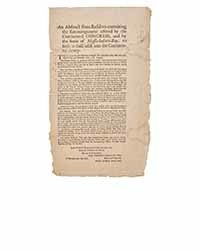
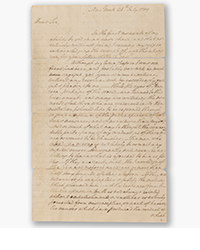
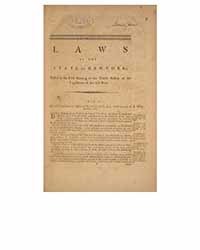 Freeman’s, June 30. Thomas Jefferson’s “Birth of the New Nation” letter, carried to Paris with the Treaty of Peace, by a Jewish patriot. $100,000-200,000.Freeman’s, June 30. “The rockets’ red glare.” A British midshipman’s log recording the bombardment of Fort McHenry. $60,000-80,000.Freeman’s, June 30. The Critical Promotion of a Naval Hero, Oliver Hazard Perry Commission signed by James Madison, 1812. $40,000-60,000.Freeman’s, June 30. Born in the USA: First Day of Printing in the United States, July 4, 1776. $15,000-25,000.Freeman’s, June 30. One of the Earliest Printed Announcements of American Independence, in the Exceedingly Rare Original Wrappers, 1776. $10,000-15,000.Freeman’s, June 30. "The Two Big Guns of the N.Y. Yanks": A Striking Type 1 Press Photograph of Lou Gehrig's Hands. $8,000-12,000.Freeman’s, June 30. A Unique Contemporary Manuscript Account of Joseph Smith's Final Words to His Followers, the Day Before his Violent Death. $8,000-12,000.Freeman’s, June 30. The State of Minnesota Officially Certifies the Fourteenth Amendment to the Constitution Of the United States. $8,000-12,000.Freeman’s, June 30. Extraordinarily Large Manuscript Petition Signed by a Who's Who of Colonial New York to Queen Anne from the Colony of New York. $8,000-12,000.Freeman’s, June 30. Mickey Mantle's First Cover: The Earliest Front-Page Newspaper Image of Mickey Mantle, "Something Good from Joplin". $8,000-12,000.Freeman’s, June 30. A Call to Arms in the Months Following the Declaration of Independence: An Early Continental Army Recruitment Poster. $6,000-9,000.Freeman’s, June 30. Samuel Jones, the Statesman Behind the Newly Discovered "Jones Declaration": His Annotated Set Used in His Working Law Library. $6,000-9,000.
 -
Sotheby's Book Week
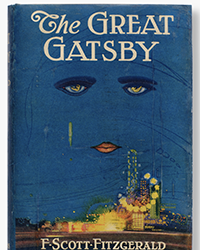
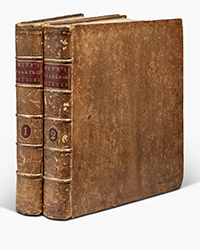
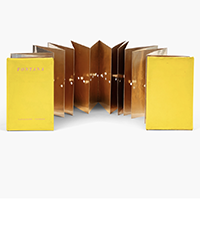
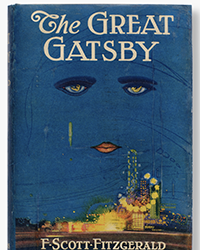
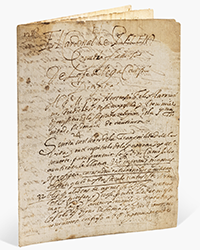
2 June - 9 JulySotheby’s, June 25: Smith, Adam. The Wealth of Nations, on its 250th anniversary. $180,000 to $250,000.Sotheby’s, June 17: Fontana, Lucio. Concetto Spaziale. 1967. Leporello en papier doré. Bel exemplaire signé. €4,000 to $€,000.Sotheby’s, June 25: Fitzgerald, F. Scott. "So we beat on, boats against the current, borne back ceaselessly into the past”. $150,000 to $200,000.Sotheby’s, June 25: Washington, George (as First President). Washington decries “an ostentatious imitation, or mimickry of Royalty” in his Presidency. $250,000 to $500,000.Sotheby’s, June 17: Lope de Vega. Rare manuscrit autographe signé de la préface dédicatoire de "El Cardenal de Belen" (le cardinal de Bethléem), pièce composée en 1610. €40,000 to €60,000. -
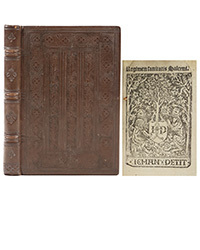
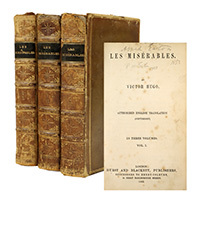
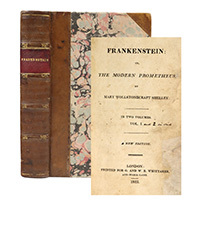
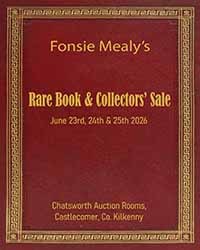
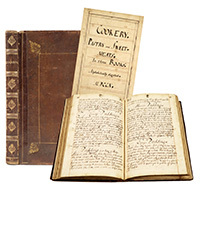
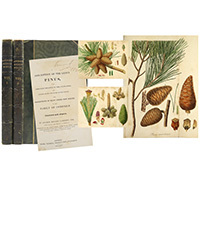
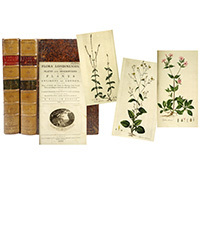
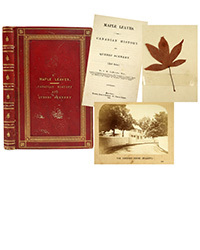
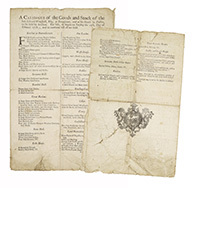
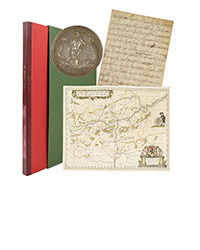
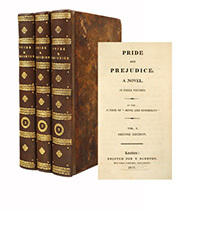
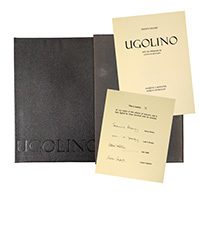
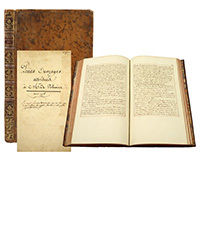
June 23rd, 24th & 25th 2026 Fonsie Mealy’s, June 23-25: Medical Incunabula: Petit (Jean)publisher & Kerver (Thielman)printer. Regimen Sanitatis Salernitanum, sm. 8vo, Paris [1498]Fonsie Mealy’s, June 23-25: Hugo (Victor) [Wraxall (Lascelles)]. Les Miserable, 3 vols., 8vo, L. (Hurst & Blackett) 1862, First Authorized English Translation (copyright).Fonsie Mealy’s, June 23-25: Shelley (Mary Wollstonecraft). Frankenstein: or The Modern Prometheus, 8vo, 2 vols. in one, L. (G. & W.B. Whittaker, Ave-Maria-Lane) 1823.June 23rd, 24th & 25th 2026 Fonsie Mealy’s, June 23-25: Cuisine: Anon. Cookery, Pastry, and Sweet Meats in three Books, Alphabetically Digested, 8vo 1710.Fonsie Mealy’s, June 23-25: Lambert (Aylmer Bourke). A Description of the Genus Pinus, with Directions Relative to the Cultivation…, 2 vols. Sm. folio L. (Messrs. Weddell) 1832.Fonsie Mealy’s, June 23-25: Botany: Curtis (William). Flora Londinensis: or Plates and Descriptions of such Plants as Grow Wild in the Environs of London, 2 vols. folio, London (B. White) 1777 – 1798.June 23rd, 24th & 25th 2026 Fonsie Mealy’s, June 23-25: Le Moire (J.M.) Maple Leaves, Canadian History and Quebec Scenery (Third Series) 8vo Quebec (Hunter, Rose & Co.) 1865. First Edn.Fonsie Mealy’s, June 23-25: The Earliest Extant Printed House Contents Sale Catalogue in Ireland: Baillie, Auctioneer, Abby Street. A Catalogue of the Goods and Stock of the late Edward Wingfield…Fonsie Mealy’s, June 23-25: William III King of England. Autograph Letter Signed ("William R") to an unnamed correspondent [possibly Charles-Henri de Lorraine] discussing his strategy against the French forces during the siege of Namur.June 23rd, 24th & 25th 2026 Fonsie Mealy’s, June 23-25: [Austen (Jane) (1785-1817]. Pride and Prejudice, 3 vols. sm. 8vo, L. (T. Egerton) 1813.Fonsie Mealy’s, June 23-25: Heaney (Seamus). Ugolino, sm. folio D. (Dolmen) 1979, Limited Edn. No. 78/125 Copies, Signed by Seamus Heaney, Louis le Brocquy, Liam Miller and Andrew Carpenter.Fonsie Mealy’s, June 23-25: Voltaire (F.M. Avouet de). Petits Ouvrages, attribues a M. de Voltaire, sm. folio manuscript, dated 1776, containing 9 works. -
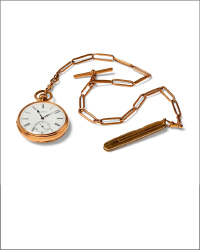
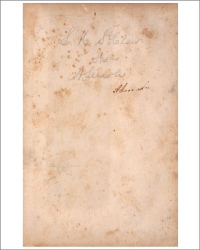
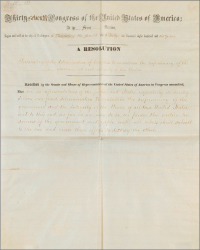
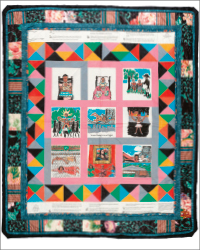
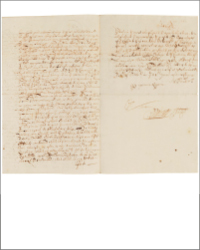
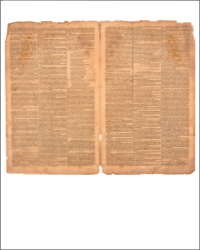
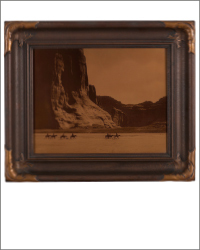
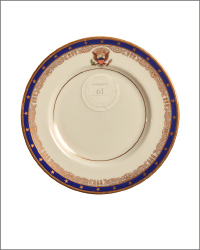
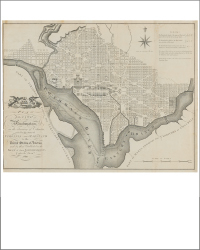
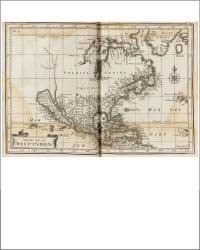
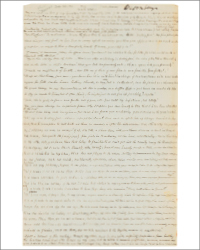
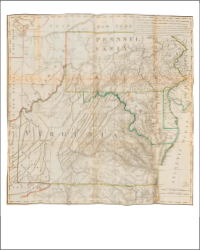 Bonhams, June 14-23: Franklin D. Roosevelt Presentation Gold Pocket Watch. Estimate: $20,000 - 30,000Bonhams, June 14-23: Presentation Copy of the First Issue of the Lincoln Douglas Debates Signed by Abraham Lincoln in Pencil to a Sangamon County Illinois Republican. Estimate: $150,000 - 250,000Bonhams, June 14-23: A Senate Resolution Signed in the Tense Days After the Union's Humiliating Defeat at the First Battle of Bull Run. Estimate: $80,000 - $120,000Bonhams, June 14-23: Seven Passages to a Flight, an Artists Book with a Story Quilt by Faith Ringgold, the Publisher's Own Copy. Estimate: $80,000 - 120,000Bonhams, June 14-23: A New Charter for Virginia, A Response to the First Armed Rebellion in the American Colonies. Estimate: $15,000 - 25,000Bonhams, June 14-23: Earliest obtainable printing of the Bill of Rights. Estimate: $8,000 - 12,000Bonhams, June 14-23: Edward Curtis Orotone. Estimate: $7,000 - 9,000Bonhams, June 14-23: Owned by Jacqueline Kennedy Onassis: A Butter or Dessert Plate from FDR's State Dinner Service. Estimate: $3,000 - 5,000Bonhams, June 14-23: An Early Large-Format Plan of the City of Washington. Estimate: $1,500 - 2,500Bonhams, June 14-23: Containing the First Map to Name the Hudson River. Estimate: $20,000 - 30,000Bonhams, June 14-23: America's First Major Novelist, a Complete Chapter in Autograph Manuscript by James Fenimore Cooper. Estimate: $15,000 - 20,000Bonhams, June 14-23: The Only Full-Length Book by Jefferson, with the Justly Famous Map. Estimate: $12,000 - 18,000
Rare Book Monthly
Slavery in the United States <br> Chapter 4

none
The idea of educating the children of the free white citizens of the United States to consider the blacks their equals, is founded on a total ignorance of nature, its affinities and antipathies. These antipathies may be for a moment overcome or forgotten in the madness of sensuality, but they return again with the greater force from their temporary suspension. White and black children never associate together on terms of perfect equality, from the moment the former begin to reason. There exist physical incongruities which cannot be permanently reconciled; and let us add, that we have a right to conclude, from all history and experience, that there is an equal disparity of mental organization. The difference seems more than skin-deep. The experience of thousands of years stands arrayed against the principle of equality between the white men and the blacks. Thousands, tens of thousands, of the former, in all ages and nations, have triumphed over every barrier of despotism and slavery; have overcome all the obstacles of their situation, the deficiencies of education, the prejudices of their age and country, the sense of degradation, the laws, as it were, of fate itself, and become lights of the age, leaders of their race. Has the black man ever exhibited similar energies, or achieved such triumphs in his native land or anywhere else? All that he has ever done is to approach to the lowest scale of intellectual eminence; and the world has demonstrated its settled opinion of his inferiority, by pronouncing even this a wonder. Within the last half century, the benefits of education, and the means of acquiring property as well as respectability, have been afforded to great numbers of free blacks, and every means has been resorted to for the purpose of instilling into them ideas of equality.
And what has been the result, ninety-nine times in a hundred? Idleness, insolence, and profligacy. Instead of striving to approach the sphere of the white man by becoming expert in some trade or business—some liberal pursuit or daring adventure—his ambition is limited to aping his dress, imitating his follies, caricaturing his manners. In the city of New-York are upward of twenty thousand free blacks; and the right of suffrage is given by the constitution to all who possess a freehold of one hundred dollars, if we do not mistake the sum. Out of all these thousands, not more than a hundred freeholders are found. What prevents them from acquiring property? They have precisely the same incentives as the white man; like him they have wants to supply and families to maintain; they have civil rights like him to exercise their ambition; and though they may not successfully aspire to high offices of state, there is no obstacle to their becoming of consequence by acquiring an influence over their own colour, which is assuredly a noble object of ambition.
There is nothing under heaven to prevent an industrious, honest, prudent free negro from acquiring property here. On the contrary, there is every disposition to encourage and foster his efforts. He is looked upon as something remarkable; an exception to his kind—a minor miracle; and having once established a character, there is a feeling of kindness, mingled with a sentiment of pity, which operates highly in his favour. He meets men of business at least on equal terms; and though this may not be the case in his social relations, still, the advantages he derives from his integrity and talents, are such as in all ages have been found sufficient to stimulate the white man to the highest efforts of body and mind. Still less has the negro, whether free or a slave, in his own country or elsewhere, ever attained distinction in intellectual acquirements, in arts, science, or literature, although the means have been afforded in thousands of instances. He has scarcely reached the confines of mediocrity, and appears indifferent to almost every acquirement except dancing and music—one, the favourite accomplishment of weak and frivolous minds, the other, the divinity of worn-out nations. Even in these they do not arrive at originality, and have never been known to make any improvement on others. It cannot be said that they are depressed here by the consciousness that all their efforts would fail in acquiring those rewards that wait on genius. In the present state of public feeling, there can be no doubt that a tolerable African poet, novelist, artist, philosopher, or musician, would meet with a patronage and excite an admiration, beyond anything which a white man of equal talents could hope to receive.
It may be urged, in reply to this, that the negroes labour under the consciousness of being looked upon as an inferior race, and that their genius is repressed by the sense of degradation; that their minds are fettered, their intellects deadened and paralyzed by a conviction that, do what they will, they cannot overcome the disadvantages of their peculiar state, or rise to the level of the white man. But has not the latter, in every age and nation, been some time or other fettered by similar disadvantages? The time has been when the people of Europe were subjected to a state of hereditary vassalage, carrying with it all the attributes of slavery. They possessed no property—they enjoyed no political rights; and the distance between them and the feudal lords was as broad, and apparently as impassable, as that between the slave of the United States and his master. The distinction of colour alone was wanting to render the similitude complete. Yet the mind of the white man, gradually, by mighty efforts, and by a series of irresistible expansions, rose superior to all the disadvantages of his situation, and achieved victory after victory over what seemed invincible to human efforts. He never sunk to the level of the negro; his mind was not subjugated; he possessed within himself the principle of regeneration, and to this day continues marching steadily, resolutely, irresistibly forward to his destiny, which is to be free.
The mind of the African, not only in his native country, but through every change, and in all circumstances, seems in a great degree divested of this divine attribute of progressive improvement. In his own country he has, for a long series of ages, remained in the same state of barbarism. For aught we can gather from history, the woolly-headed race of Africans had the same opportunities for improvement that have fallen to the lot of the inhabitants of Asia and Europe. A portion of them lived contiguous to the Mediterranean— that famous sea along whose shores was concentrated the arts and literature of the world; the Carthaginians, rivals of Rome in war, in commerce, and in civilization, long flourished on their borders; the Romans established provinces among them; and the Saracens, then the most polished race of mankind, founded an empire at their doors. Yet they have never awakened from their long sleep of barbarism. They remained, and still remain, savages and pagans, destitute of the rudiments of civilization; three-fourths of them hereditary slaves, and the remainder subject to the will of little arbitrary despots, whose tyranny is proportioned to the insignificance of their dominions. Without the virtues of barbarians, they possess the vices of a corrupted race; and no one can peruse the travels of Mungo Park without receiving the conviction that they are a treacherous, inhospitable, and worthless breed. Even at this moment the news has arrived, that they have massacred a colony of their own colour, established for the most benevolent purposes, on their shores, and on a plan which, if ultimately successful, may free millions of their race from bondage, while it introduces, if any means are adequate to such a purpose, civilization and Christianity into the bosom of their country.
Rare Book Monthly
-
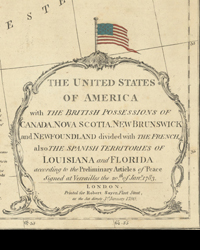
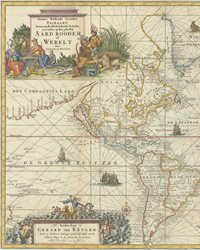
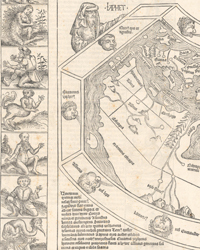

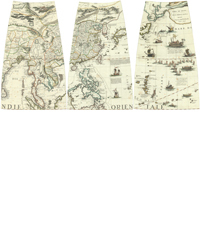
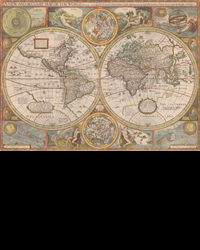
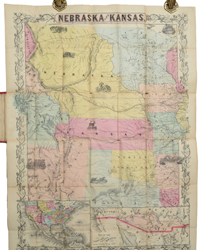

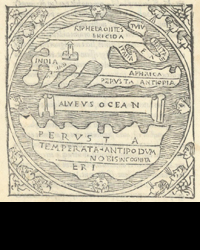
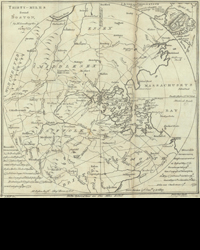
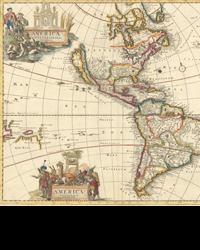
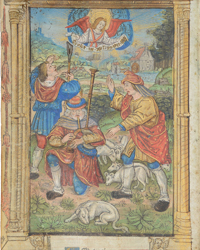
 Old World Auctions (June 17): Lot 123. Celebrate 250 Years of Independence with Original Stars and Stripes (1790) Est. $1,400 - $1,700Old World Auctions (June 17): Lot 20. Keulen's Spectacular Chart of the World Featuring California as an Island (1728) Est. $12,000 - $15,000Old World Auctions (June 17): Lot 42. Schedel's Ancient World Map with Fantastic Humanoid Creatures (1493) Est. $14,000 - $17,000Old World Auctions (June 17): Lot 591. Matching Set of 3 Stunning Globe Gores of Eastern Asia from Coronelli's 3.5 Foot Globe (1688) Est. $5,500 - $7,000Old World Auctions (June 17): Lot 9. Speed's Popular World Map with Allegorical Representations of the Elements (1651) Est. $14,000 - $17,000Old World Auctions (June 17): Lot 168. First Separate Map of Kansas & Nebraska Territories (1854) Est. $5,500 - $7,000Old World Auctions (June 17): Lot 43. Only Macrobius Map with Britain Attached to Europe (1515) Est. $800 - $950Old World Auctions (June 17): Lot 250. Rare Map of Boston and One of the Earliest Maps of the Revolutionary War (1775) Est. $2,000 - $2,300Old World Auctions (June 17): Lot 79. Schenk's Uncommon Map Featuring Two Figurative Title Cartouches (1696) Est. $1,200 - $1,500Old World Auctions (June 17): Lot 681. Hand-Colored Image of the Annunciation to the Shepherds (1502) Est. $800 - $950
 -

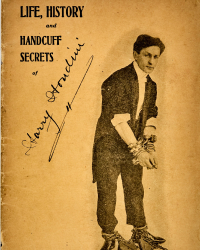
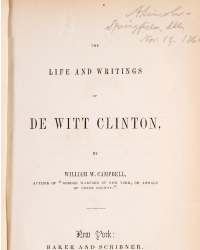
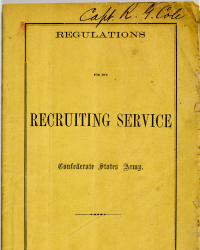
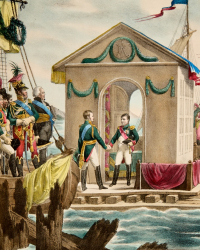
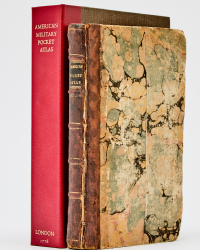
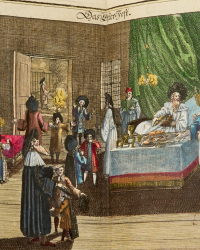
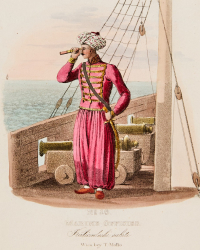

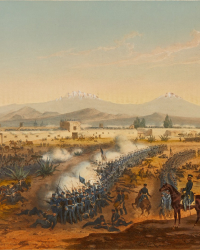
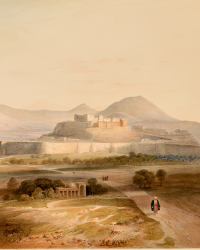
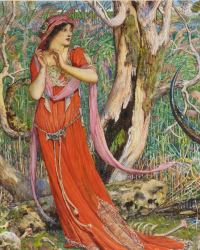
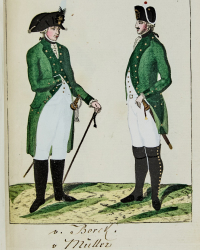
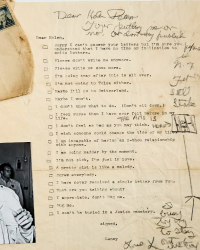
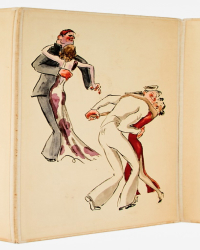
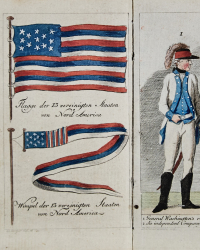
June 25, 2026 Doyle, June 25: Houdini's biography, boldly signed. $3,000 to $5,000.Doyle, June 25: A volume from Abraham Lincoln's library, signed just before heading to Washington for his inauguration. $20,000 to $30,000.Doyle, June 25: A very early Confederate recruiting manual belonging to the chief commissary in Lee's Army. $600 to $800.Doyle, June 25: Rare hand-colored lithographs of the life of Napoleon. $20,000 to $30,000.Doyle, June 25: The "Holster Atlas" of the American Revolution. $5,000 to $8,000.Doyle, June 25: Jewish ceremonies in fine hand-colored engravings. $7,000 to $10,000.Doyle, June 25: A very rare work on Turkish military costume. $1,000 to $1,500.June 25, 2026 Doyle, June 25: The most important illustrated work on the Mexican-American War. $10,000 to $15,000.Doyle, June 25: The finest illustrated book on Afghanistan. $10,000 to $15,000.Doyle, June 25: Henry Justice Ford St. George rescues the Princess from the horrible Dragon. $2,000 to $3,000.Doyle, June 25: A rare work of Prussian Army uniforms under Frederick William II, with exquisite hand-colored engravings. $800 to $1,200.Doyle, June 25: Lenny Bruce typed letter signed to a Village bohemian during his obscenity trials, with a manuscript note and drawing. $300 to $500.Doyle, June 25: Schiff's scarce Shanghai Sketchbook. $300 to $500.Doyle, June 25: The first accurate published representation of the American flag. $2,000 to $4,000. -
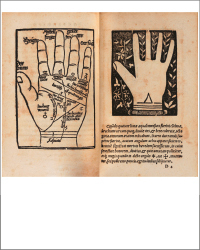
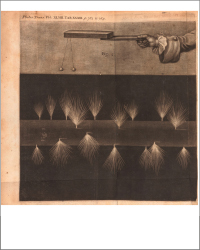
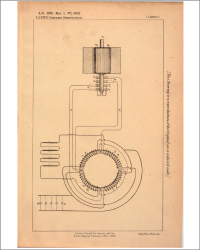
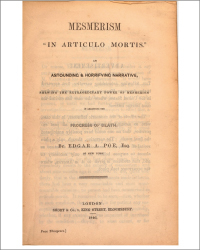
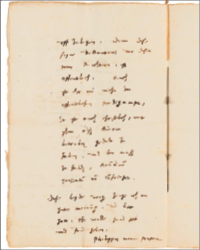
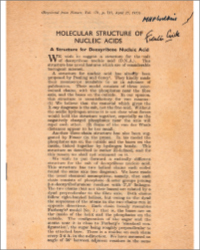
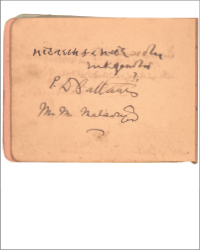
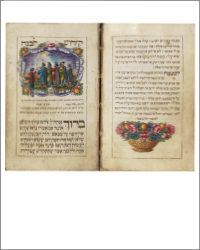
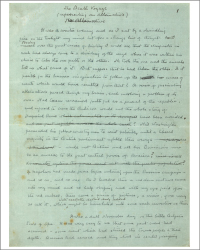
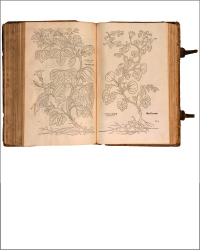
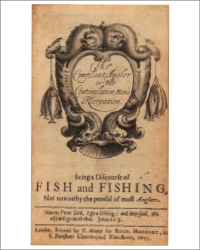
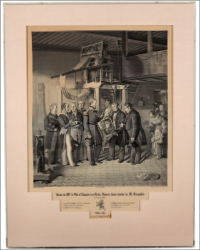 Bonhams, June 14-23: Palm-reading, astrology, and more. Estimate: $2,000 - 3,000Bonhams, June 14-23: Benjamin Franklin. Sammelband of 45 papers on electricity. Estimate: $8,000 - 12,000Bonhams, June 14-23: The basis for the whole modern electric-power industry. Estimate: $4,000 - 6,000Bonhams, June 14-23: Edgar Allen Poe. Poe on Mesmerism. Estimate: $2,500 - 3,500Bonhams, June 14-23: Reformation - The Architect of Lutheranism on Church Unity and Dissent. Estimate: $100,000 - 150,000Bonhams, June 14-23: The Rare 3-Paper Offprint Identifying the Double Helix Structure of DNA, Signed by Crick, Wilkins, Wilson, Stokes and Gosling. Estimate: $40,000 - 60,000Bonhams, June 14-23: Autograph book and Report from the Thirtieth Indian National Congress, featuring the signatures of Mahatma Gandhi, Rabindranath Tagore, and Dadabhai Naoroji. Estimate: $6,000 - 8,000Bonhams, June 14-23: An Illustrated Miniature Hebrew Prayerbook Manuscript. Estimate: $30,000 - 50,000Bonhams, June 14-23: Autograph Working Draft of Arthur Conan Doyle's The Death Voyage. Estimate: $30,000 - 50,000Bonhams, June 14-23: "Perhaps the most celebrated and most beautiful herbal ever published." Estimate: $15,000 - 20,000Bonhams, June 14-23: Izaak Walton. The Compleat Angler or the Contemplative man's Recreation. Being a Discourse of Fish and Fishing. Estimate: $12,000 - 18,000Bonhams, June 14-23: A rare product of the Jaquard loom. Estimate: $8,000 - 12,000