Rare Book Monthly

Articles - December - 2012 Issue

What Do Newsweek and Twinkies Have in Common?

The iconic Twinkies.

The iconic Twinkies.

Food for the soul? No, that's not it. Unless you have spent the last few weeks hiding under a rock, you undoubtedly know that both will cease to exist as we have known them. Newsweek, the venerable weekly news magazine, was founded in 1933 as an alternative to Time. It has spent most of the past 80 years as number 2, but still a large circulation, successful alternative. However, the past few years have been rocky – declining circulation, sales to new ownership, and mergers dotting the way. Ultimately, they were but a delaying tactic. Newsweek's story is the same as that of so many other newspapers and magazines. Free, instant news from the internet stole their audience. Paper and ink could not compete with electronic impulses. Newsweek will continue in a different form. No more paper and ink, it will no longer appear on newsstands, no longer show up in your mailbox. It will, instead, become a website only. Why there is a need for a weekly review of the news website in a day when people want news the moment it happens is unclear, but we wish them well. Presumably, they will at least offer a more thorough presentation.

The end of Newsweek was a brief story. Most heard about it, but if anyone rushed out to the newsstand to pick up some last copies, it did not make the news wires. It was nice to have known you, goodbye. The Twinkies story was more momentous. People did fly to their grocers to pick up last available packages of these favorites, and the other snack cakes made by the dying Hostess Brands. Newsweek was respected, Twinkies are an icon.

The demise of Twinkies is a bit more complicated a story. They were invented three years before Newsweek, and they and the stable of Hostess cakes have filled grocers' shelves from coast to coast for generations. Changing tastes, and particularly more focus on healthy foods, hurt their popularity, but their parent bakery's bankruptcies - it is now on its second – costly reorganization, debts, Wall Street ownership, and an unwillingness by some workers to accept further wage cuts, signaled their end. They will not be replaced by digital versions, nor by carrots either, no matter what nutritionists tell us. Rights to their brands will likely be bought by someone else, who will then bake “new” Twinkies. Whether they will be the same is anyone's guess. Replicating the astonishing list of ingredients won't be easy.

It is that list of ingredients, along with the iconic name, that made Twinkies such a symbol of 20th century America. It is also what makes this story appropriate for a book website. Five years ago, I reviewed the book Twinkie, Deconstructed, by Steve Ettlinger, for this website. Click here for the review. The author tracked down the myriad of strange sounding ingredients and what role each played in creating a Twinkie. Suffice it to say, a single Twinkie has more ingredients then a typical seven-course dinner, and most of them are unfamiliar and difficult to pronounce.

The strange ingredients led to much bad press for the Twinkie. It may have been unfair. The ingredients in a Twinkie, like fresh fruits and vegetables, arise from the good earth. The only difference is, instead of being grown, they are mined. Some people are troubled by this.

While Twinkies were the star, Hostess provided many other varieties of snack cakes, and delicious as they were, I would only put Twinkies in the middle. Superior, in my estimation, were the Suzy Q's, with the greatest quantity of Hostess's chemically wondrous “creme” filling, their cupcakes with the squiggly lines on top (among the ingredients in those squiggly lines is pig fat), and greatest of all, nature's perfect food, the Sno Ball. An unscientific lifelong survey tells me that 90% of the public detests these pink and white round combinations of coconut, marshmallow, chocolate cake, and, of course, “creme.” For the other 10%, they are the most wonderful things ever created. Count me in the 10%.

Going down with the Hostess cakes is another classic American brand owned by its corporate parent – Wonder Bread. Probably every young person of my generation ate sandwiches made with Wonder Bread everyday for their entire youth, such was its popularity. Wonder Bread was the whitest of white breads, thoroughly bleached of anything that might conceivably be good for you. Somehow, it still “built strong bodies 12 ways,” but nutritionally certainly wasn't one of those twelve ways. I can't imagine what they were.
Rare Book Monthly

  • Sotheby's Book Week
    2 June - 9 July
    Sotheby’s, June 25: Smith, Adam. The Wealth of Nations, on its 250th anniversary. $180,000 to $250,000.
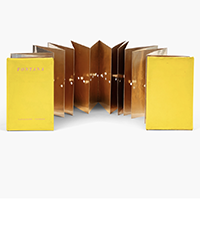
    Sotheby’s, June 17: Fontana, Lucio. Concetto Spaziale. 1967. Leporello en papier doré. Bel exemplaire signé. €4,000 to $€,000.
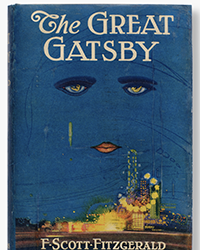
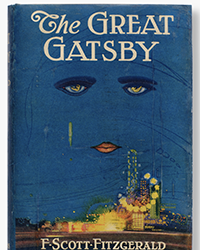
    Sotheby’s, June 25: Fitzgerald, F. Scott. "So we beat on, boats against the current, borne back ceaselessly into the past”. $150,000 to $200,000.
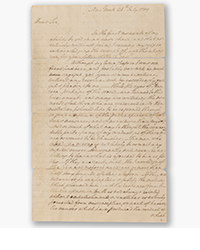
    Sotheby’s, June 25: Washington, George (as First President). Washington decries “an ostentatious imitation, or mimickry of Royalty” in his Presidency. $250,000 to $500,000.
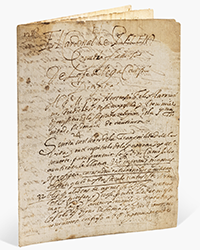
    Sotheby’s, June 17: Lope de Vega. Rare manuscrit autographe signé de la préface dédicatoire de "El Cardenal de Belen" (le cardinal de Bethléem), pièce composée en 1610. €40,000 to €60,000.
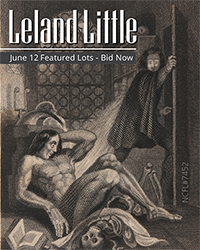
  • Leland Little, June 12: The First Illustrated Edition of Mary Shelley's Frankenstein.
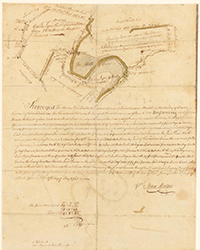
    Leland Little, June 12: John Morton, Signer of the Declaration of Independence, Signed Pennsylvania Land Survey.
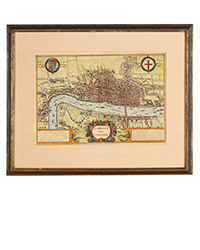
    Leland Little, June 12: The Scarce Jansson Edition of a Remarkable Early View of London.
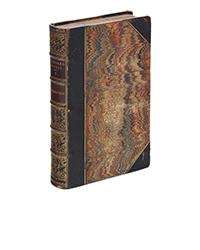
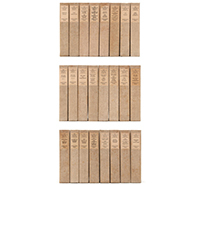
    Leland Little, June 12: Signed Limited Edition of The Works of Sir Arthur Conan Doyle.
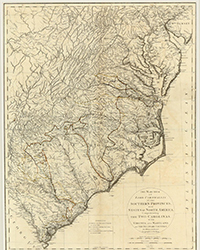
    Leland Little, June 12: Faden’s Important and Scarce Map of the Southern Campaign of the American Revolution.
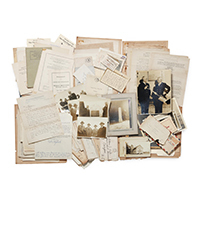
    Leland Little, June 12: William J. Tate (NC, 1869-1953), Archive of the "Original host to the Wright brothers at Kitty Hawk.”
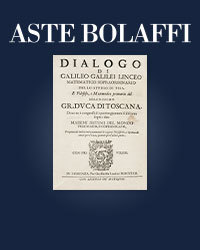
  • Aste Bolaffi, June 17-18: Galileo Galilei. Dialogo sopra i due massimi sistemi del mondo tolemaico, e copernicano. Firenze, 1632
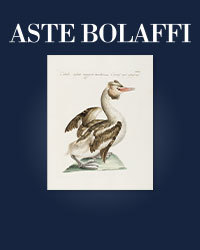
    Aste Bolaffi, June 17-18: Saverio Manetti. Storia naturale degli uccelli. Firenze, 1771-76
    Aste Bolaffi, June 17-18: Fortunato Depero. Depero futurista. Rovereto, 1927
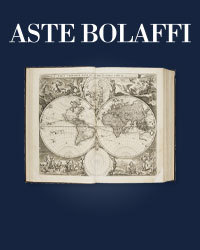
    Aste Bolaffi, June 17-18: Nicolas Visscher. Atlas minor sive totius orbis terrarum contracta delineat ex conatibus. Amsterdam, circa 1649-95
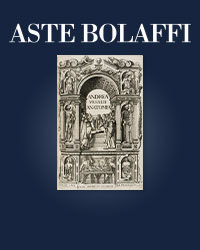
    Aste Bolaffi, June 17-18: Andreas Vesalius. Anatomia. Addita nunc. Antiquorum Anatome. Venezia, 1604
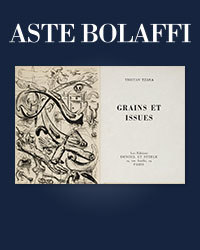
    Aste Bolaffi, June 17-18: Tristan Tzara and Salvador Dalì. Grains et Issues. Parigi, 1935
  • June 25, 2026
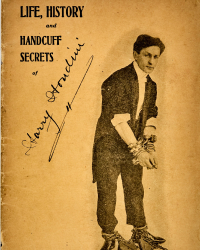
    Doyle, June 25: Houdini's biography, boldly signed. $3,000 to $5,000.
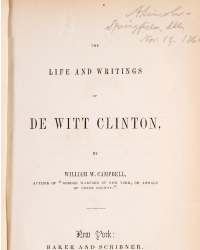
    Doyle, June 25: A volume from Abraham Lincoln's library, signed just before heading to Washington for his inauguration. $20,000 to $30,000.
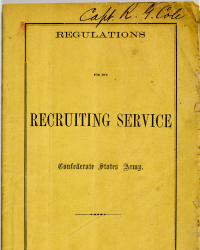
    Doyle, June 25: A very early Confederate recruiting manual belonging to the chief commissary in Lee's Army. $600 to $800.
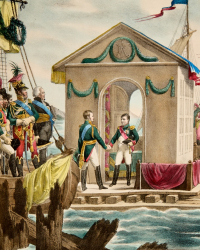
    Doyle, June 25: Rare hand-colored lithographs of the life of Napoleon. $20,000 to $30,000.
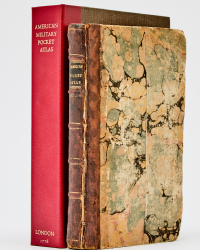
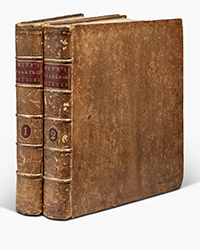
    Doyle, June 25: The "Holster Atlas" of the American Revolution. $5,000 to $8,000.
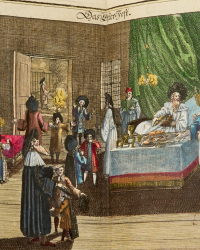
    Doyle, June 25: Jewish ceremonies in fine hand-colored engravings. $7,000 to $10,000.
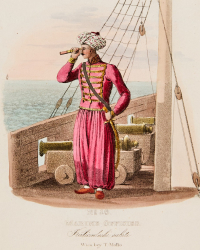
    Doyle, June 25: A very rare work on Turkish military costume. $1,000 to $1,500.
    June 25, 2026
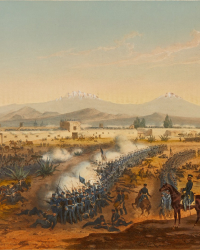
    Doyle, June 25: The most important illustrated work on the Mexican-American War. $10,000 to $15,000.
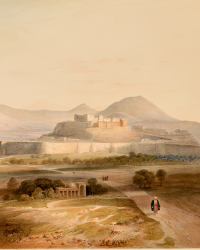
    Doyle, June 25: The finest illustrated book on Afghanistan. $10,000 to $15,000.
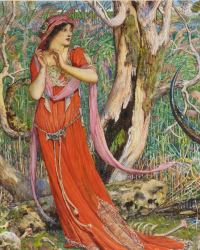
    Doyle, June 25: Henry Justice Ford St. George rescues the Princess from the horrible Dragon. $2,000 to $3,000.
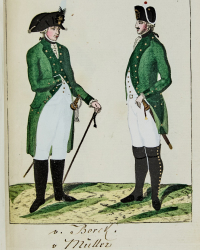
    Doyle, June 25: A rare work of Prussian Army uniforms under Frederick William II, with exquisite hand-colored engravings. $800 to $1,200.
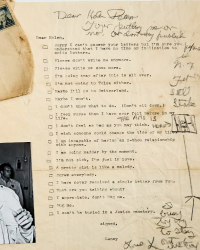
    Doyle, June 25: Lenny Bruce typed letter signed to a Village bohemian during his obscenity trials, with a manuscript note and drawing. $300 to $500.
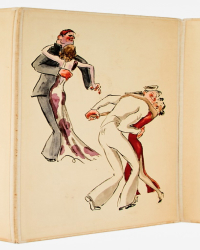
    Doyle, June 25: Schiff's scarce Shanghai Sketchbook. $300 to $500.
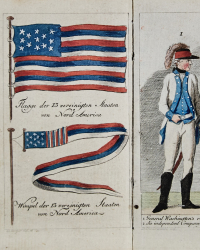
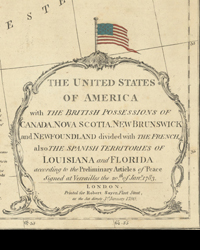
    Doyle, June 25: The first accurate published representation of the American flag. $2,000 to $4,000.
  • Old World Auctions (June 17): Lot 123. Celebrate 250 Years of Independence with Original Stars and Stripes (1790) Est. $1,400 - $1,700
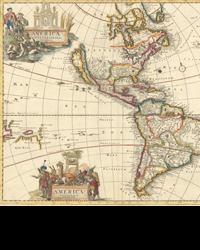
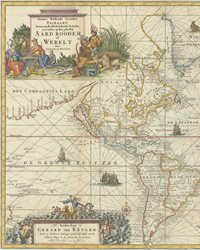
    Old World Auctions (June 17): Lot 20. Keulen's Spectacular Chart of the World Featuring California as an Island (1728) Est. $12,000 - $15,000
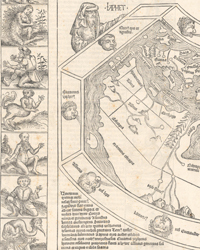
    Old World Auctions (June 17): Lot 42. Schedel's Ancient World Map with Fantastic Humanoid Creatures (1493) Est. $14,000 - $17,000
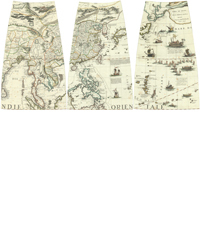
    Old World Auctions (June 17): Lot 591. Matching Set of 3 Stunning Globe Gores of Eastern Asia from Coronelli's 3.5 Foot Globe (1688) Est. $5,500 - $7,000
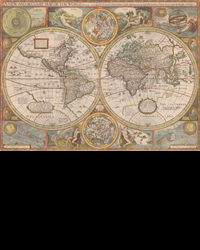
    Old World Auctions (June 17): Lot 9. Speed's Popular World Map with Allegorical Representations of the Elements (1651) Est. $14,000 - $17,000
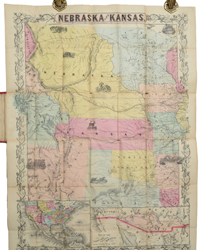
    Old World Auctions (June 17): Lot 168. First Separate Map of Kansas & Nebraska Territories (1854) Est. $5,500 - $7,000
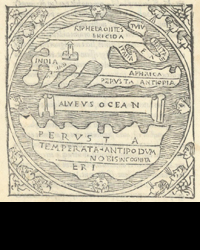
    Old World Auctions (June 17): Lot 43. Only Macrobius Map with Britain Attached to Europe (1515) Est. $800 - $950
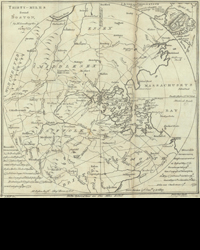
    Old World Auctions (June 17): Lot 250. Rare Map of Boston and One of the Earliest Maps of the Revolutionary War (1775) Est. $2,000 - $2,300
    Old World Auctions (June 17): Lot 79. Schenk's Uncommon Map Featuring Two Figurative Title Cartouches (1696) Est. $1,200 - $1,500
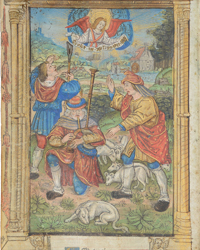
    Old World Auctions (June 17): Lot 681. Hand-Colored Image of the Annunciation to the Shepherds (1502) Est. $800 - $950

Article Search

Archived Articles