We saw great celebrations around the land when America observed the 200th anniversary of the Revolution. Similar events have been featured at notable anniversaries of Civil War events. This month, we note the 200th anniversary of the beginning of America's first real, post-independence war. Celebrations will be more subdued.
The Revolutionary, Civil, First and Second World Wars gather the most attention, but more of America's skirmishes have been akin to the War of 1812. Not a lot was accomplished, and in hindsight, one wonders why this thing couldn't have been avoided. The War of 1812 was the ultimate stalemate. Both sides could claim victory, because no one really won. However, one notable result did come from this war. Outside of some minor border scraps along the U.S. Canadian line, it marked the end of hostilities between America and its former colonial ruler, Great Britain. The terrible confrontations and fights between the two were over, and one of the strongest and longest-lasting friendships was about to be forged. Unlike World War I, at least in this limited sense, the War of 1812 proved to be the war to end all wars.
If the War of 1812 is a minor memory in American history, it must be virtually invisible in England. At least at the time, it was a major event for Americans. Great Britain had been fighting in some war or other almost constantly for about a thousand years. Who could tell one war from another? They were always fighting the French, the Spanish, the Dutch, or all of them at any given moment. In fact, the British had just concluded a war with Sweden. Sweden! Who fights Sweden? It was more a war on paper than actual fighting, but war had been declared. The British fought in so many wars against the Europeans they had to resort to naming them by the number of years – the Seven Years' War, the Thirty Years War, the Hundred Years War. This was a nation that went to war over someone's ear, the infamous War of Jenkins' Ear. Even as they went to battle with the United States, they were engaged in a much more serious war in Europe, against Napoleon. Who would be surprised if the British couldn't remember much about the War of 1812?
Through the first dozen years of the 19th century, America was regularly in disputes with both England and France. Those two nations, as usual, were fighting over whatever they were fighting over at that particular moment. Neither wanted other nations trading with their enemy, so they regularly intercepted U.S. shipping. This incensed America, which, as a neutral nation, asserted its right to trade with whomever it chose. The U.S. tried various embargoes against the European combatants, but to no avail. However, the British particularly angered Americans by their policy of impressment of American seamen. England believed that American seamen had been born British subjects, and therefore they had the right to draft them into the Royal Navy. They accomplished this on the spot, forcing them off of U.S. merchant ships and into their navy. Add to that, the British liked to stir up trouble from Canada, such as encouraging western Indians to attack far off American outposts. It was just too much. On June 18, 1812, President Madison selected the British as the worst offender, and the War of 1812 was on.
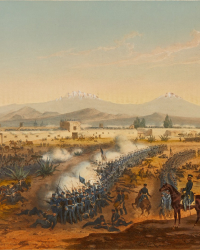
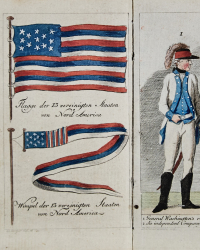
The Americans attacked the British in Canada, but to no avail. The British pushed them back, but never penetrated that deeply into the U.S. either. It was essentially a stalemate. Once Napoleon had been put in his place, in the year 1814, it freed up more British forces to deal with those American upstarts. The British Navy entered Chesapeake Bay and began wreaking havoc on America. They burned down Washington, and then moved on to Baltimore. On that famous night, the Americans held off British bombardments of Fort McHenry. In the morning, our flag was still there. The Americans may not have gained any territory through the war, but they did gain a national anthem. And Francis Scott Key's words were set to the melody of an old British drinking song no less. The British got the last laugh on that, as we notice every time some poor celebrity attempts to sing that tortured melody before a ballgame.
There really wasn't much more to fight about after that. In December of 1814, the two sides decided to call it off. In those days, communications were really slow, so the message did not reach British forces set to attack New Orleans. They attacked anyway, and were surprisingly routed by Andrew Jackson's defenders. America finally had its rousing victory, even if it came after the war was over. Along with The Star Spangled Banner, the War of 1812 gave us one of the top selling songs of the 1950s, The Battle of New Orleans.
So, Americans should raise a toast to their brave citizens who fought off the affront to their honor, and defended their homeland between 1812 and 1815. And, the British too, should honor their noble warriors who went off once again to fight over something or other. If nothing else, it provided practice for whatever their next war would be. A list of British wars indicates that later in 1815, the British would be back in battle again, in the Hundred Days (as opposed to Years) War and the Second Kandyan War. Don't ask me. I have no idea what that last one was about.
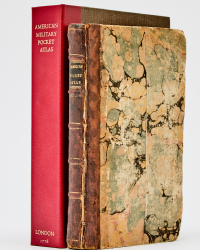
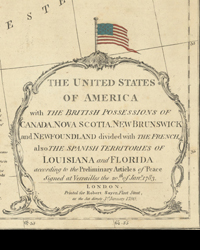
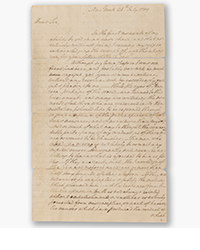
For collectors of books and other works on paper, the War of 1812 is a field not nearly so crowded as the better known wars. The competition is less fierce, and fewer people will be able to match your expertise. Along with remembering the battles themselves, the war thrust two generals into the White House, the aforementioned Andrew Jackson, and many years later, William Henry Harrison, who promptly died in office. Both are highly collectible, one for being a major force in American history, the other for the extreme rarity of material he signed as President (he served only 30 days, mostly from a sick bed). This is a field ripe for collecting. Oh say, can you see?