Court Strikes Down Google Settlement and Part of Google Books
- by Michael Stillman
Court rules that fewer titles can be made available in Google Books.
"The benefits of Google's book project are many. Books will become more accessible. Libraries, schools, researchers, and disadvantaged populations will gain access to far more books. Digitization will facilitate the conversion of books to Braille and audio formats, increasing access for individuals with disabilities. Authors and publishers will benefit as well, as new audiences will be generated and new sources of income created. Older books -- particularly out-of-print books, many of which are falling apart buried in library stacks -- will be preserved and given new life."
- from the Judge's decision in the Google settlement case, before striking it down
Naturally, the Court struck down the deal that would have allowed all of these great things to go forward. This is Wonderland we inhabit, where up is down, good is bad, and old laws are applied in such a literalistic fashion as to have no relation to reality. It's like saying the government can tap your phone whenever it likes because the founders never specifically said you couldn't tap phones when they wrote the Bill of Rights in 1787.
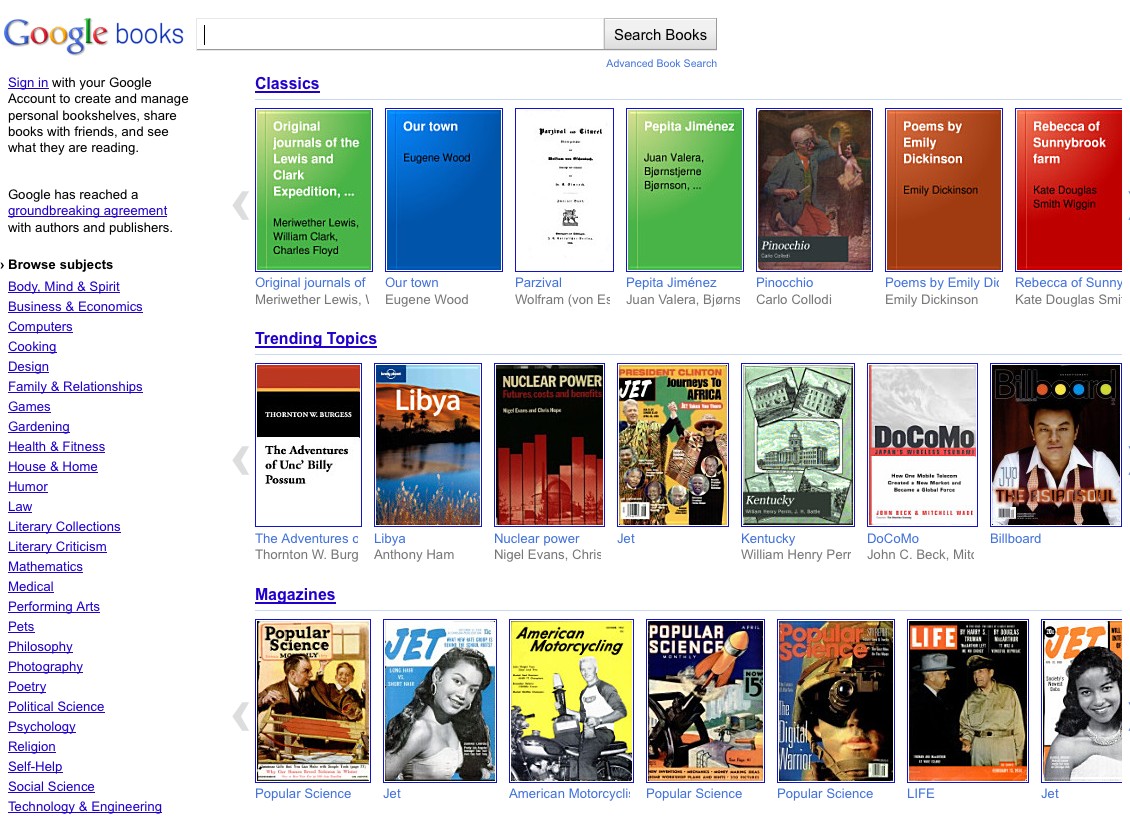
The Google settlement arose out of Google's massive digitization project for old books. Google has scanned millions of books, and now makes them available online, some in totality, some through "snippets," some free, others for a fee.
There are three types of books: (1) out of copyright (pre-1923), (2) out of print but (maybe) still under copyright, and (3) in print. Google has a legal right to digitize and make available to the public those in #1 (out of copyright). Google has not attempted to digitize those in #3 (in print). The problem arises with those in the middle, books no longer in print, but possibly still under copyright.
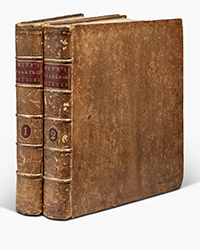
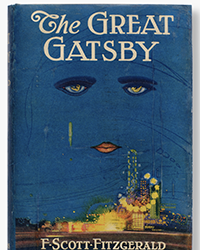
Normally, if you want to use and republish someone's copyrighted work, you should first seek their permission. This was essentially the basis of Judge Denny Chin's decision. However, there is a problem here, what is generally referred to as "orphan books." Locating the holders of the copyrights of these books is virtually impossible. Anyone, with a little digging, can figure out who still holds the copyright for Gone With the Wind or The Great Gatsby. However, for every Gatsby there are thousands of books that disappeared from print decades ago, their authors long dead and forgotten, and whoever may own their copyrights essentially impossible to find. Chances are the legal copyright holders are a bunch of grandchildren or great grandchildren who don't know they hold these legal rights. They may not even know that Grandma wrote a book in 1925 that has been out of print and hasn't earned a nickel for anyone in 85 years. These books may be valuable for researchers and others, but fewer and fewer copies can still be found in libraries. Then, along comes Google, digitizes them for nothing, makes it possible to do keyword searches inside the book to find obscure references, and makes them instantly available to everyone around the world through the internet. Too good to be true? Apparently.
Organizations representing writers and publishers sued Google to prevent it from making these books available to the public without proper recompense. Fair enough. The copyright holders have legitimate rights. So, they sued. After long negotiations, Google reached a settlement with these organizations, the settlement that was just struck down by the court. It essentially provided that 63% of the proceeds from selling digital copies of these books would go to funds on behalf of the copyright holders, while Google would get the rest for the enormous investment in digitizing the books and making them available. Authors who put in their claims would be paid, funds due those who could not be found would be held for five years, and then given to literary charities. Any authors who objected to this arrangement could opt out and Google would strike their books from their database. This appeared to be a reasonable enough settlement for all parties involved.
Not so fast. A whole host of objections were raised, but the two that seemed to most reach the Judge's ear were copyright violation and anti-trust concerns. First come the copyright issues. We can have children living in rat-infested hovels, no food on the table, crime at the door, parents on drugs, and you will not get anywhere near the indignation that you will over the copyright rights of a long-dead person to a book no one has bought in decades. It's touching. The number of corporations, organizations, and individuals standing up to this terrible wrong was overwhelming. Some 500 petitions were filed with the court, the "vast majority" in opposition. It may be too late to protect Grandma, but we can still protect the rights of her 40 great-grandchildren to their 1/40th share in something financially worthless, and prevent the world from having access to this material in the process. Microsoft, Amazon, Yahoo, and a host of others, many competitors, objected. And, even though the settlement required Google to use "commercially reasonable efforts" to locate the rights holders, and let any who wished withdraw their books from the settlement's terms, the court just could not abide the injustice.
The court quoted a letter from two literary agents who "expressed this concern eloquently": "The situation we find ourselves in now is one of dismay and powerlessness, with only the weak ability to "object" or opt out. We beseech you to give authors back their rights." Powerlessness? Dismay? Weak ability to opt out? They send one notice to Google and they are out of this agreement forever. This is powerlessness? Literary agents don't know how to send a letter? We beseech you to get real.
Sotheby’s, June 25: Smith, Adam. The Wealth of Nations, on its 250th anniversary. $180,000 to $250,000.
Sotheby’s, June 17: Fontana, Lucio. Concetto Spaziale. 1967. Leporello en papier doré. Bel exemplaire signé. €4,000 to $€,000.
Sotheby’s, June 25: Fitzgerald, F. Scott. "So we beat on, boats against the current, borne back ceaselessly into the past”. $150,000 to $200,000.
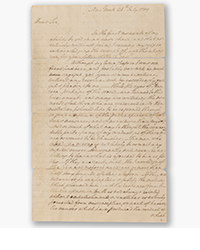
Sotheby’s, June 25: Washington, George (as First President). Washington decries “an ostentatious imitation, or mimickry of Royalty” in his Presidency. $250,000 to $500,000.
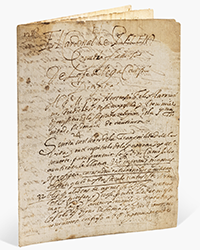
Sotheby’s, June 17: Lope de Vega. Rare manuscrit autographe signé de la préface dédicatoire de "El Cardenal de Belen" (le cardinal de Bethléem), pièce composée en 1610. €40,000 to €60,000.
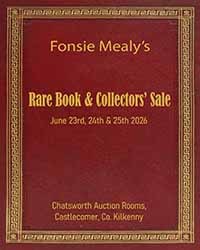
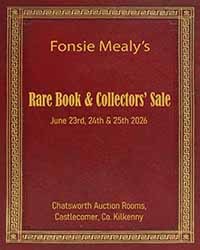
June 23rd, 24th & 25th 2026
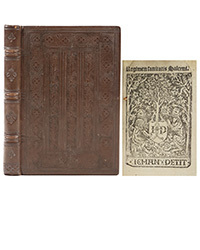
Fonsie Mealy’s, June 23-25: Medical Incunabula: Petit (Jean)publisher & Kerver (Thielman)printer. Regimen Sanitatis Salernitanum, sm. 8vo, Paris [1498]
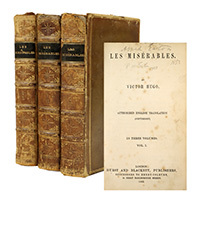
Fonsie Mealy’s, June 23-25: Hugo (Victor) [Wraxall (Lascelles)]. Les Miserable, 3 vols., 8vo, L. (Hurst & Blackett) 1862, First Authorized English Translation (copyright).
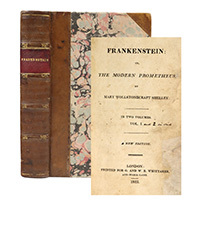
Fonsie Mealy’s, June 23-25: Shelley (Mary Wollstonecraft). Frankenstein: or The Modern Prometheus, 8vo, 2 vols. in one, L. (G. & W.B. Whittaker, Ave-Maria-Lane) 1823.
June 23rd, 24th & 25th 2026
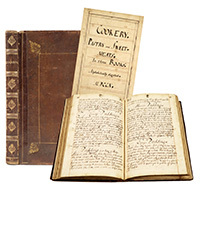
Fonsie Mealy’s, June 23-25: Cuisine: Anon. Cookery, Pastry, and Sweet Meats in three Books, Alphabetically Digested, 8vo 1710.
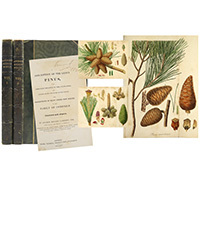
Fonsie Mealy’s, June 23-25: Lambert (Aylmer Bourke). A Description of the Genus Pinus, with Directions Relative to the Cultivation…, 2 vols. Sm. folio L. (Messrs. Weddell) 1832.
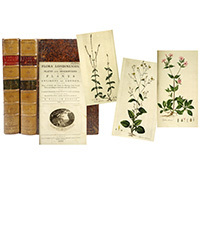
Fonsie Mealy’s, June 23-25: Botany: Curtis (William). Flora Londinensis: or Plates and Descriptions of such Plants as Grow Wild in the Environs of London, 2 vols. folio, London (B. White) 1777 – 1798.
June 23rd, 24th & 25th 2026
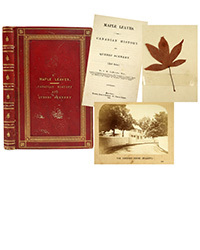
Fonsie Mealy’s, June 23-25: Le Moire (J.M.) Maple Leaves, Canadian History and Quebec Scenery (Third Series) 8vo Quebec (Hunter, Rose & Co.) 1865. First Edn.
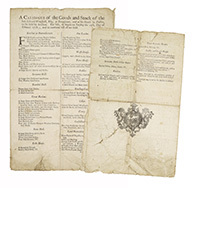
Fonsie Mealy’s, June 23-25: The Earliest Extant Printed House Contents Sale Catalogue in Ireland: Baillie, Auctioneer, Abby Street. A Catalogue of the Goods and Stock of the late Edward Wingfield…
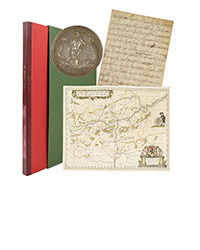
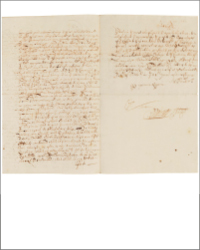
Fonsie Mealy’s, June 23-25: William III King of England. Autograph Letter Signed ("William R") to an unnamed correspondent [possibly Charles-Henri de Lorraine] discussing his strategy against the French forces during the siege of Namur.
June 23rd, 24th & 25th 2026
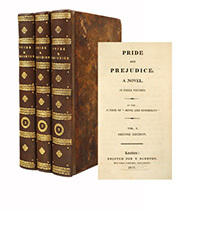
Fonsie Mealy’s, June 23-25: [Austen (Jane) (1785-1817]. Pride and Prejudice, 3 vols. sm. 8vo, L. (T. Egerton) 1813.
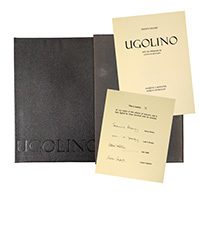
Fonsie Mealy’s, June 23-25: Heaney (Seamus). Ugolino, sm. folio D. (Dolmen) 1979, Limited Edn. No. 78/125 Copies, Signed by Seamus Heaney, Louis le Brocquy, Liam Miller and Andrew Carpenter.
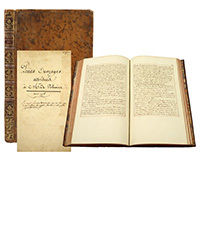
Fonsie Mealy’s, June 23-25: Voltaire (F.M. Avouet de). Petits Ouvrages, attribues a M. de Voltaire, sm. folio manuscript, dated 1776, containing 9 works.
Bonhams, June 14-23: Franklin D. Roosevelt Presentation Gold Pocket Watch. Estimate: $20,000 - 30,000
Bonhams, June 14-23: Presentation Copy of the First Issue of the Lincoln Douglas Debates Signed by Abraham Lincoln in Pencil to a Sangamon County Illinois Republican. Estimate: $150,000 - 250,000
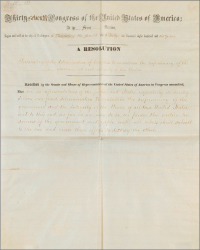
Bonhams, June 14-23: A Senate Resolution Signed in the Tense Days After the Union's Humiliating Defeat at the First Battle of Bull Run. Estimate: $80,000 - $120,000
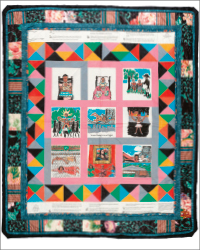
Bonhams, June 14-23: Seven Passages to a Flight, an Artists Book with a Story Quilt by Faith Ringgold, the Publisher's Own Copy. Estimate: $80,000 - 120,000
Bonhams, June 14-23: A New Charter for Virginia, A Response to the First Armed Rebellion in the American Colonies. Estimate: $15,000 - 25,000
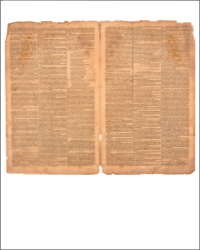
Bonhams, June 14-23: Earliest obtainable printing of the Bill of Rights. Estimate: $8,000 - 12,000
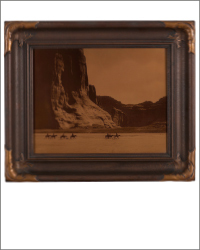
Bonhams, June 14-23: Edward Curtis Orotone. Estimate: $7,000 - 9,000
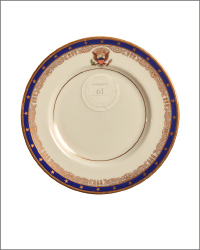
Bonhams, June 14-23: Owned by Jacqueline Kennedy Onassis: A Butter or Dessert Plate from FDR's State Dinner Service. Estimate: $3,000 - 5,000
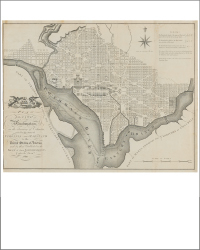
Bonhams, June 14-23: An Early Large-Format Plan of the City of Washington. Estimate: $1,500 - 2,500
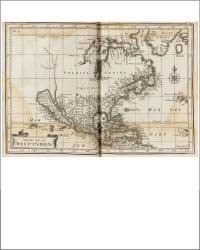
Bonhams, June 14-23: Containing the First Map to Name the Hudson River. Estimate: $20,000 - 30,000
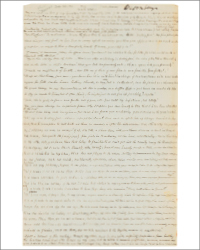
Bonhams, June 14-23: America's First Major Novelist, a Complete Chapter in Autograph Manuscript by James Fenimore Cooper. Estimate: $15,000 - 20,000
Bonhams, June 14-23: The Only Full-Length Book by Jefferson, with the Justly Famous Map. Estimate: $12,000 - 18,000
June 25, 2026
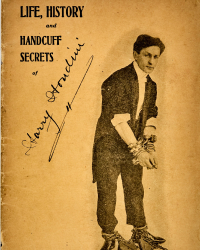
Doyle, June 25: Houdini's biography, boldly signed. $3,000 to $5,000.
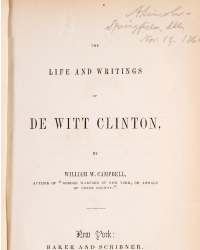
Doyle, June 25: A volume from Abraham Lincoln's library, signed just before heading to Washington for his inauguration. $20,000 to $30,000.
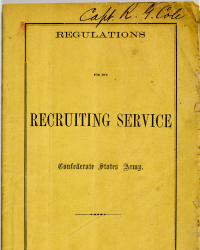
Doyle, June 25: A very early Confederate recruiting manual belonging to the chief commissary in Lee's Army. $600 to $800.
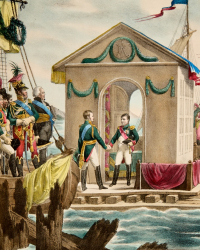
Doyle, June 25: Rare hand-colored lithographs of the life of Napoleon. $20,000 to $30,000.
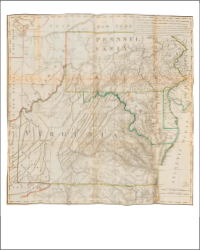
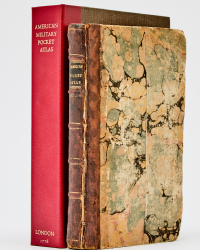
Doyle, June 25: The "Holster Atlas" of the American Revolution. $5,000 to $8,000.
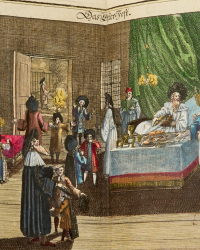
Doyle, June 25: Jewish ceremonies in fine hand-colored engravings. $7,000 to $10,000.
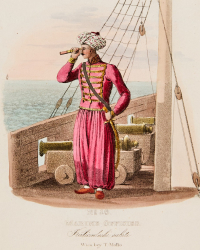
Doyle, June 25: A very rare work on Turkish military costume. $1,000 to $1,500.
June 25, 2026
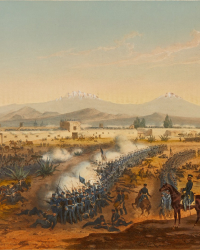
Doyle, June 25: The most important illustrated work on the Mexican-American War. $10,000 to $15,000.
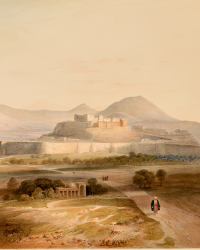
Doyle, June 25: The finest illustrated book on Afghanistan. $10,000 to $15,000.
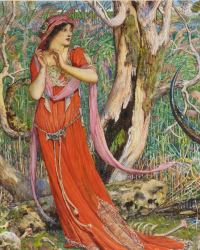
Doyle, June 25: Henry Justice Ford St. George rescues the Princess from the horrible Dragon. $2,000 to $3,000.
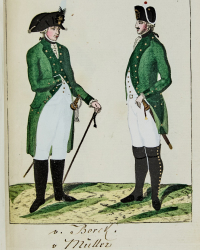
Doyle, June 25: A rare work of Prussian Army uniforms under Frederick William II, with exquisite hand-colored engravings. $800 to $1,200.
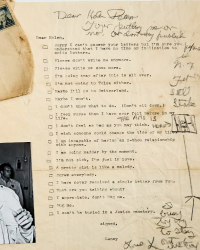
Doyle, June 25: Lenny Bruce typed letter signed to a Village bohemian during his obscenity trials, with a manuscript note and drawing. $300 to $500.
Doyle, June 25: Schiff's scarce Shanghai Sketchbook. $300 to $500.
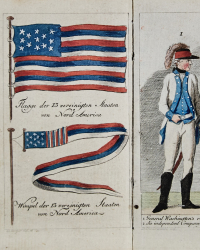
Doyle, June 25: The first accurate published representation of the American flag. $2,000 to $4,000.
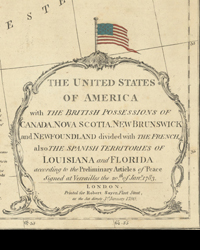
Old World Auctions (June 17): Lot 123. Celebrate 250 Years of Independence with Original Stars and Stripes (1790) Est. $1,400 - $1,700
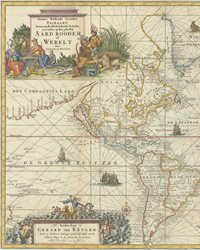
Old World Auctions (June 17): Lot 20. Keulen's Spectacular Chart of the World Featuring California as an Island (1728) Est. $12,000 - $15,000
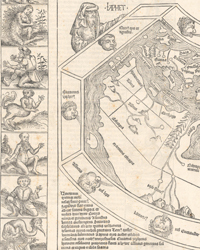
Old World Auctions (June 17): Lot 42. Schedel's Ancient World Map with Fantastic Humanoid Creatures (1493) Est. $14,000 - $17,000
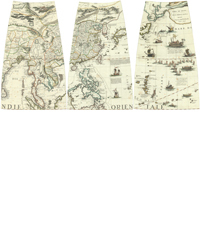
Old World Auctions (June 17): Lot 591. Matching Set of 3 Stunning Globe Gores of Eastern Asia from Coronelli's 3.5 Foot Globe (1688) Est. $5,500 - $7,000
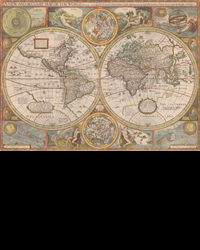
Old World Auctions (June 17): Lot 9. Speed's Popular World Map with Allegorical Representations of the Elements (1651) Est. $14,000 - $17,000
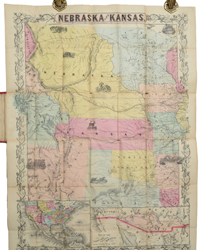
Old World Auctions (June 17): Lot 168. First Separate Map of Kansas & Nebraska Territories (1854) Est. $5,500 - $7,000
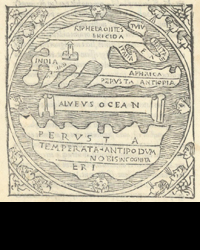
Old World Auctions (June 17): Lot 43. Only Macrobius Map with Britain Attached to Europe (1515) Est. $800 - $950
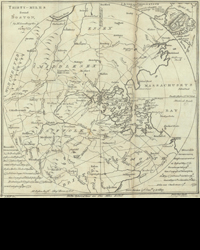
Old World Auctions (June 17): Lot 250. Rare Map of Boston and One of the Earliest Maps of the Revolutionary War (1775) Est. $2,000 - $2,300
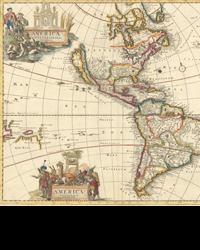
Old World Auctions (June 17): Lot 79. Schenk's Uncommon Map Featuring Two Figurative Title Cartouches (1696) Est. $1,200 - $1,500
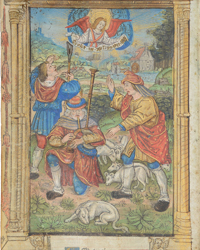
Old World Auctions (June 17): Lot 681. Hand-Colored Image of the Annunciation to the Shepherds (1502) Est. $800 - $950