The ALA at Chicago
- by Bruce E. McKinney
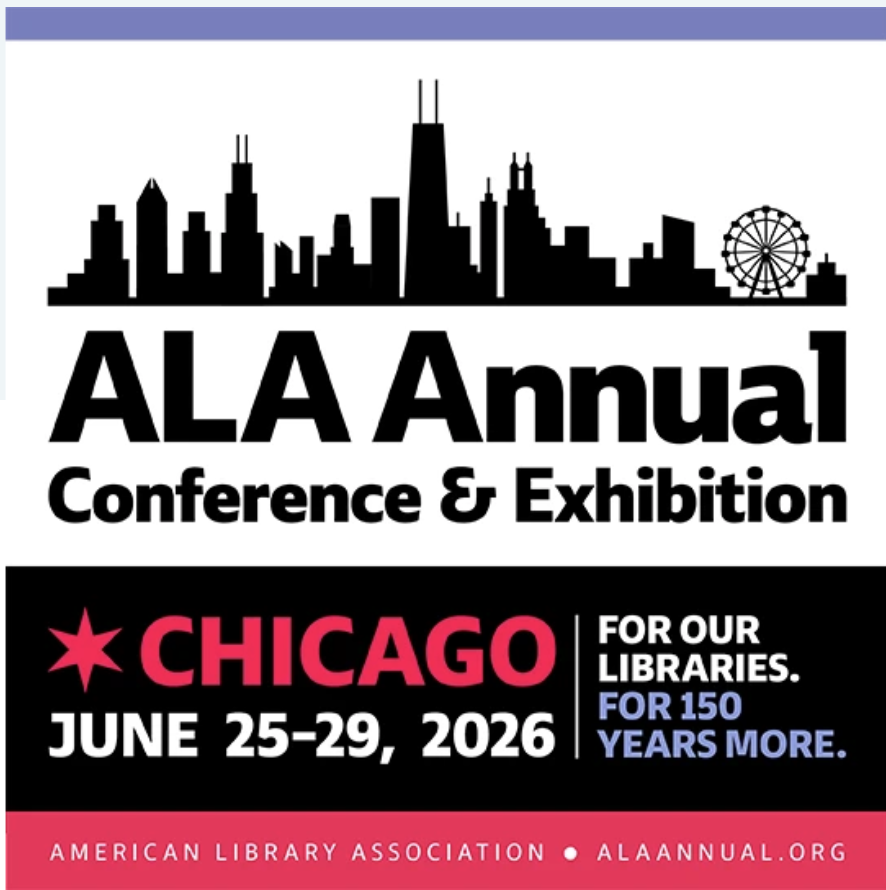
Rare Book Hub recently exhibited our Bound to be Found services during the American Library Association’s 150th Anniversary extravaganza in Chicago. We weren’t alone. It’s been said that more than 15,000 members of America’s library community joined their 5-day annual event June 25-29. They had plenty to do to keep themselves busy. The ALA provided headliners to inspire, 200 educational programs and a wide variety of roundtables and get togethers. Cross-pollination was one of their terms of the day.
As well, they provided a four-day marketplace for firms that sell services to libraries. In total more than 630 exhibitors – including 130 first timers, offered their products, publications, and services. We were among them.
Certainly 2026 is the year that AI has reached into every nook and cranny. Big cities have long had extensive resources, and city folks are accustomed to them. What’s unusually transforming today is that the broadest and deepest resources are becoming equally accessible to the more distant places via the internet. Now America’s access to these services are increasingly explained and supported by communities who are supporting their libraries through this great transition.
It’s not surprising that libraries are playing a major role in the AI revolution, given they have long been one of the most important agents of cultural transfer of human society via reading. They made the printed word universal in 19th century America. These days the distinction between printed and electronic text has blurred because it’s clear the words matter, not their form.
This could leave traditional libraries in an awkward place if they simply saw themselves as depositories of the printed word. Very few will because AI is also transforming their approaches to the study of old and ancient printing. Simply stated, AI will affect all.
That said, the great mass of libraries today exist to support and improve their communities. For them, the emergence of AI represents an extraordinary opportunity to again become primary agents as they once were in the 19th century when they supported universal education through open access to the printed word. For them, their challenge is to invent, discover, poke and prod these emerging capabilities.
For them, whether the future of words is to be seen printed on paper or composed of electric dots and dashes on phones and computer screen, it’s no longer a meaningful distinction. For them, job one to is to strengthen their communities. That suggest libraries will be assuming the role of interpreter to their populations who are quickly benefiting by the surge of information.
As an exhibitor at the recent fair, in our case, our 3.4 billion words found within 42,000 completed auctions and their 16 million lots represent a previously unimagined surge of data. How our scale of data will fit into the world of libraries is now in the hands of about 100 institutions to consider. We came to the show to introduce a simple straightforward access and it looks promising. We call it “Bound to be Found” and we believe they’ll find it fast, quick and helpful.
We’re looking for another 100 institutions to try it. Our 200 scan trials are fun and interesting. We’re part of the history of the printed word and we’re committed to be part of your futures. Let us know you’re interested. This exploration will quickly begin.