Roots Banned by Knox County Tennessee School Libraries
- by Susan Halas
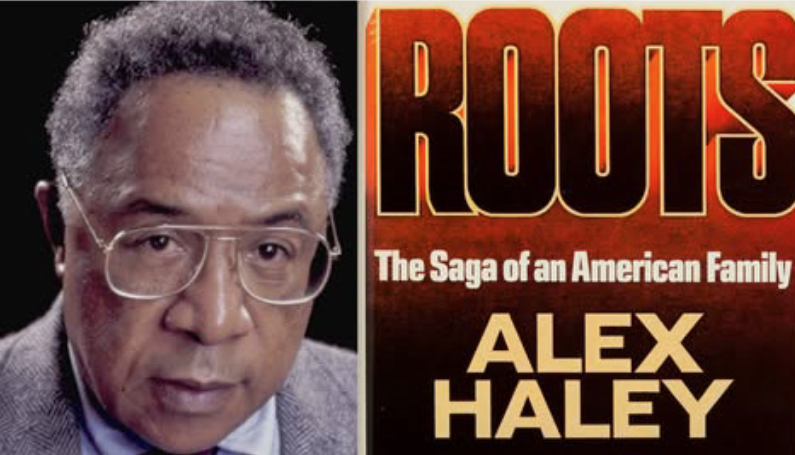
When the Knox County Tennessee School Libraries pulled Roots from the shelves the action drew headlines across the country.
Tennessee voted Roots, the Pulitzer prize winning historical novel by Black author Alex Haley, the Tennessee state book. They put up a statue and plaques to honor Haley, who lived the later part of his life in the state, and then, invoking a 2022 Age-Appropriate Materials Act state law, they banned his famous book.
The May action taken by the Knox County Tennessee School Libraries to pull the volume from the shelves drew headlines across the country. Roots, first published in 1976, tells a multi-generational story tracing the transatlantic slave trade and Haley’s own ancestry.
On May 15, the Guardian wrote,“The 2022 state law saw book-banning across the state soar to become third-highest in the country. It required Tennessee schools to have a public list of the materials in their libraries and to have a policy for reviewing them for appropriateness after feedback from parents, guardians, students or school employees. “The law also broadly prohibited titles if they were found to contain nudity, sexual abuse, sexual content or “excessive violence.”
“A KCS spokesperson, Carly Harrington, confirmed the district’s decision to remove Roots from school library shelves under that law. “The decision to remove Roots from school libraries is in no way a commentary on the literary or cultural value of the novel, but the result of adherence to state law. “The decision means that the material can still be taught in classes; but it will not be available on library shelves” https://www.theguardian.com/us-news/2026/may/15/tennessee-book-ban-alex-haley-roots MSN reported “Roots is now one of 119 titles KCS has banned in the past two years, echoing other school districts that have banned books for perceived sexual references to LGBTQ or race related issues.”
Another take on the impact came from euroweb.com which noted,“Few novels before it brought the horrors of the Middle Passage into such vivid focus for mainstream American readers, tracing the journey of enslaved Africans across the Atlantic over nearly three centuries. Annastasia Williams, the Bookstore Director for The Bookshop at the Bottom in Knoxville, Tennessee, described the book’s lasting significance in stark terms. “Prior to its release, the impact of slavery was easy to diminish or deny by those that benefited the most from that system,” Williams said.
“‘Roots created an opening to reengage with how the history of slavery is taught in American schools and to the American public. Haley’s work showcased the violence, brutality, and aftermath of slavery, but it also showcased the resilience and resistance of Black people and families that spans generations. Both the book and subsequent TV miniseries were cultural phenomenons that started conversations, shifted perspectives, and contributed to a collective empathy that the U.S. had not seen or heard before.”
Repercussions:
At the time of the action, the district committee did not have an established process to appeal the decision, though board members have pushed for a reversal or a clearer appeal.
On May 21, the Nashville News Sentinel reported that Lamar Alexander condemned the Knox County Schools administrators' decision. "This is a mistake." Alexander, a former Tennessee U.S. Senator and Tennessee Governor, as well as friend of author Haley, posted his objections on his social media X account. Alexander called Roots essential reading for children and all Americans "to learn the story of how Africans came to America."
Other criticism came from Haley family members, who, along with civil rights advocates and local historians, heavily criticized the decision. Many consider removing such a key text an attempt to erase history, especially during the year celebrating the book's 50th anniversary.